Mastering the Peak-End Rule: Boost Customer Satisfaction by 14% in US Service Industries
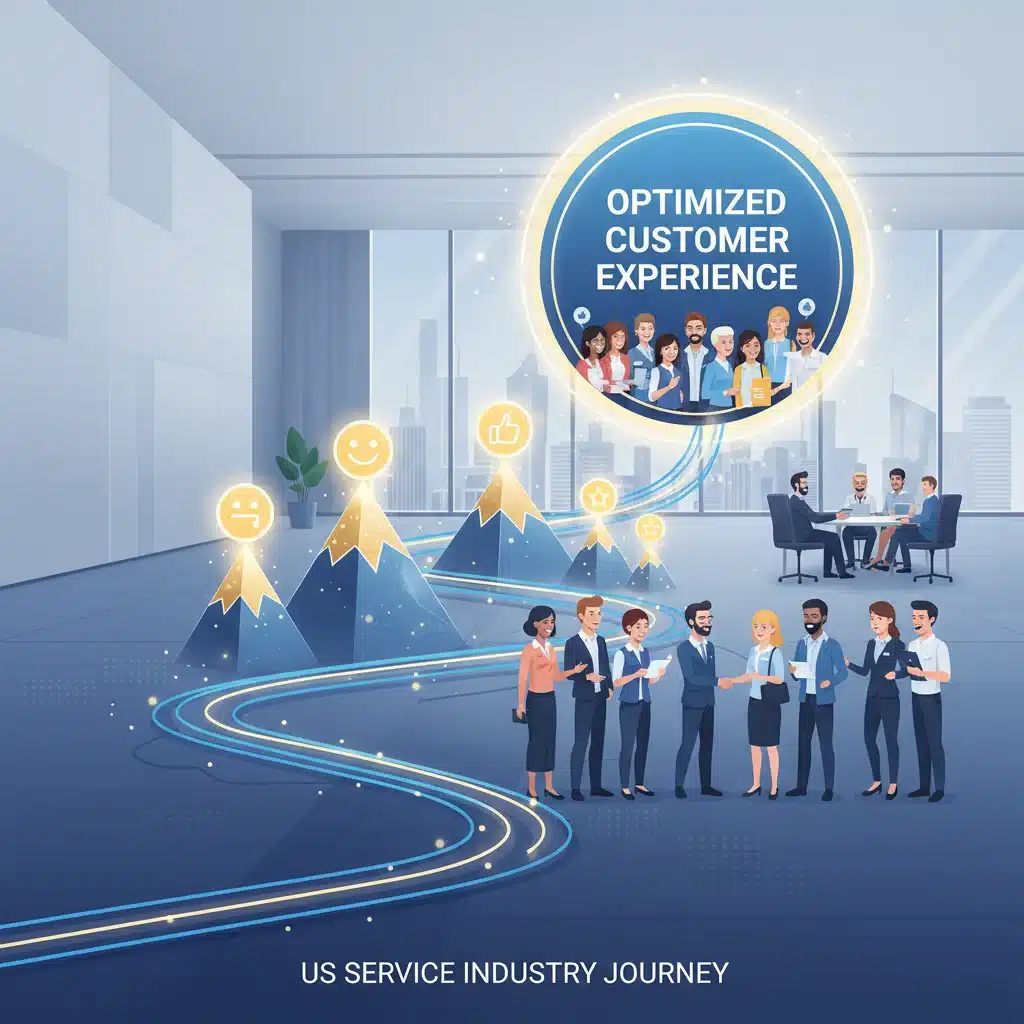
The Peak-End Rule: Elevating Customer Experience and Satisfaction by 14% in US Service Industries
In today’s highly competitive landscape, customer experience (CX) is no longer just a buzzword; it’s the bedrock of sustained business success, particularly within the US service industries. From hospitality to healthcare, retail to finance, businesses are constantly seeking innovative ways to differentiate themselves and cultivate unwavering customer loyalty. While many focus on optimizing every touchpoint of the customer journey, a lesser-known but profoundly impactful psychological principle offers a powerful shortcut to superior satisfaction: the Peak-End Rule Customer Experience. This cognitive bias suggests that people judge an experience largely based on how they felt at its most intense (peak) point and at its conclusion (end), rather than on the sum total or average of every moment.
Imagine a customer’s journey through your service. It’s a series of interactions, some mundane, some critical, some potentially frustrating. The Peak-End Rule posits that even if the middle of an experience was less than perfect, a strong, positive peak and a memorable, satisfying ending can dramatically elevate the overall perception. Conversely, a fantastic journey can be marred by a poor ending. Understanding and strategically applying the Peak-End Rule Customer Experience can lead to a remarkable increase in customer satisfaction, with studies suggesting improvements of up to 14% in US service industries, translating into higher retention, stronger word-of-mouth, and ultimately, greater profitability.
This comprehensive guide will delve deep into the Peak-End Rule, exploring its psychological underpinnings, practical applications, and actionable strategies for businesses across various US service sectors. We’ll show you how to identify and engineer ‘peak’ moments and craft ‘endings’ that resonate positively, transforming ordinary interactions into extraordinary memories. By mastering the Peak-End Rule Customer Experience, you’re not just improving service; you’re shaping perceptions and building lasting relationships.
Understanding the Psychology Behind the Peak-End Rule Customer Experience
The Peak-End Rule, first proposed by Nobel laureate Daniel Kahneman and his colleagues, challenges the traditional notion that our overall evaluation of an experience is an average of all its moments. Instead, it highlights the disproportionate influence of two specific points: the moment of highest (or lowest) intensity (the ‘peak’) and the final moment (the ‘end’). This cognitive bias helps our brains process complex experiences efficiently, but it also presents a powerful opportunity for businesses.
Consider a patient’s visit to a hospital. They might endure long wait times (a negative middle), but if the doctor delivers crucial information with empathy and clarity (a positive peak) and the discharge process is seamless and supportive (a positive end), their overall perception of the hospital experience will likely be positive. Conversely, a smooth process throughout could be undermined by a rushed, impersonal discharge, leaving a sour taste.
The science behind this phenomenon lies in how our memories are formed and retrieved. Our brains tend to prioritize salient, emotionally charged moments and recent events when recalling an experience. The ‘peak’ often represents an emotionally charged moment, whether positive or negative, that stands out. The ‘end’ is the most recent information our brain has to process, making it highly influential in our final judgment. For businesses in the US service sector, this means that investing in these specific moments can yield a far greater return on investment in terms of customer satisfaction than trying to perfect every single micro-interaction.
The Power of Peaks: Crafting Memorable High Points
A ‘peak’ doesn’t necessarily have to be an over-the-top, expensive gesture. It’s about creating a moment that stands out positively and evokes a strong, positive emotion. These moments can be intentionally designed or organically emerge from exceptional service. Identifying potential peak moments requires a deep understanding of your customer journey and their emotional landscape at each stage. What are the critical touchpoints where a customer is most engaged, most vulnerable, or most receptive to a positive surprise?
For example, in a hotel, a peak could be a personalized welcome amenity, a concierge going above and beyond to secure a last-minute reservation, or a stunning view from the room. In a retail setting, it might be a highly knowledgeable salesperson offering expert, tailored advice, or a seamless, joyful unboxing experience for an online purchase. In healthcare, it could be a nurse’s compassionate communication during a difficult moment, or a doctor clearly explaining a complex diagnosis with genuine care.
The key is to make these peaks genuinely remarkable. They should feel authentic, personal, and exceed expectations in some way. When a customer experiences such a moment, it creates a powerful emotional anchor that significantly contributes to their overall positive perception of the Peak-End Rule Customer Experience.
The Significance of the End: Leaving a Lasting Impression
If peaks are about creating memorable highs, the ‘end’ is about ensuring the final impression is unequivocally positive. This is often the last interaction a customer has with your service, and it’s what they’ll remember most vividly when reflecting on their experience. A strong ending can mitigate minor frustrations encountered earlier and reinforce the positive aspects of the service.
Think about a restaurant experience. Even if the food was excellent, a slow, botched bill payment process can leave a diner feeling irritated and diminish their overall satisfaction. Conversely, a complimentary dessert, a warm farewell from the staff, or a quick, efficient payment system can leave them feeling valued and eager to return. In a financial service context, a clear, concise summary of the transaction and a polite, appreciative closing from a bank teller can be a powerful ending. For an airline, a smooth disembarkation process, clear directions for connecting flights, or even a simple thank you from the flight crew can make a significant difference.
The ‘end’ must be deliberate and well-executed. It’s not an afterthought; it’s a critical component of the overall experience. By focusing on a strong conclusion, businesses can ensure that customers leave with a positive memory, fostering loyalty and positive word-of-mouth – essential for the success of any US service industry business applying the Peak-End Rule Customer Experience.
Practical Strategies for Implementing the Peak-End Rule Customer Experience
Translating the psychological insights of the Peak-End Rule into actionable business strategies requires a systematic approach. Here’s how US service industries can effectively implement this principle to boost customer satisfaction and loyalty.
1. Map the Customer Journey with a Peak-End Lens
Before you can optimize peaks and ends, you need to understand your current customer journey in detail. This involves mapping out every touchpoint a customer has with your business, from initial awareness to post-service follow-up. However, instead of just charting interactions, you need to identify the emotional highs and lows at each stage. Where do customers typically feel most engaged? Where do frustrations often arise? Where are the critical decision points? And most importantly, what is the very last interaction they have?
Once mapped, you can pinpoint existing peaks (both positive and negative) and identify opportunities to create new ones. Similarly, analyze the ‘end’ of each significant interaction or the entire service journey. Is it currently a strong, positive conclusion, or is it an area for improvement? This mapping exercise is foundational to strategically applying the Peak-End Rule Customer Experience.
2. Engineer Positive Peak Moments
Creating memorable peaks doesn’t always require grand gestures. Often, it’s the small, thoughtful details that make the biggest impact. Here are some ideas:
- Personalization: Use customer data to offer tailored recommendations, address them by name, or acknowledge their preferences. A hotel remembering a guest’s preferred pillow type, or a coffee shop knowing a regular’s order, can create a powerful peak.
- Surprise and Delight: Unexpected positive moments can be incredibly impactful. This could be a complimentary upgrade, a small gift, an exclusive offer, or simply an employee going out of their way to help.
- Exceptional Problem Resolution: While ideally, problems wouldn’t occur, how you handle them can become a powerful positive peak. Resolving an issue quickly, efficiently, and with empathy can turn a negative experience into a positive one, demonstrating your commitment to the customer.
- Sensory Engagement: Engage multiple senses to create a richer experience. The aroma in a spa, the curated music in a retail store, or the visual appeal of a perfectly presented dish can all contribute to a peak.
The goal is to make these moments stand out from the ordinary, creating a positive emotional imprint that customers will remember. 
3. Design Flawless Endings
The ending is your last chance to leave a positive impression. It should be smooth, efficient, and reinforce the positive aspects of the entire interaction. Consider these strategies:
- Express Gratitude: Always thank customers for their business, their time, or their feedback. A sincere thank you can go a long way.
- Summarize and Confirm: For complex services, a clear summary of what was accomplished or what to expect next can provide reassurance and a sense of completion. This is crucial in financial or healthcare services.
- Offer a Clear Call to Action/Next Steps: If there’s a next step for the customer, make it incredibly clear and easy. This reduces anxiety and provides a sense of control.
- Solicit Feedback Gracefully: If you ask for feedback, make the process quick and easy. A simple ‘How was your experience today?’ with a quick rating option is better than a lengthy survey at the very end.
- Provide a Small Token of Appreciation: A small, relevant gesture, like a personalized follow-up email, a discount code for future service, or a small complimentary item, can sweeten the ending.
Remember, the ending doesn’t have to be grand; it just needs to be positive, professional, and leave the customer feeling valued and satisfied with their overall Peak-End Rule Customer Experience.
Case Studies: Peak-End Rule in Action Across US Service Industries
Let’s look at how the Peak-End Rule Customer Experience manifests in various US service sectors:
Hospitality: The Ritz-Carlton’s Legendary Service
The Ritz-Carlton is renowned for its exceptional service, largely due to its mastery of creating peak and end moments. Their ’20/10 Rule’ empowers employees to spend up to $2,000 to resolve guest issues without management approval. This ability to instantly fix a problem, turning a potential negative into a positive, creates powerful ‘peaks’ of problem resolution. The personalized farewells, remembering guest preferences, and ensuring a seamless check-out process all contribute to a strong, positive ‘end,’ leaving guests with a feeling of being genuinely cared for and valued. This focus has cemented their reputation for luxury and outstanding customer satisfaction.
Healthcare: Cleveland Clinic’s Patient-Centered Approach
In healthcare, emotional peaks and ends are particularly critical. Cleveland Clinic has invested heavily in patient experience, training staff not just in medical care but in empathetic communication. A peak moment might be a doctor spending extra time to clearly explain a diagnosis, or a nurse providing comfort during a difficult procedure. Their discharge process is designed to be as smooth and supportive as possible, with clear instructions, follow-up calls, and resources for post-hospital care. This strong ‘end’ ensures patients feel supported even after leaving the facility, contributing significantly to their overall positive perception of their treatment journey and the Peak-End Rule Customer Experience.
Retail: Apple Store’s Genius Bar Experience
The Apple Store’s Genius Bar is a prime example of the Peak-End Rule in retail. Customers often arrive with frustration or anxiety about a broken device. The ‘peak’ is the moment a Genius Bar technician, with their expert knowledge and calm demeanor, quickly diagnoses the issue and offers a solution. This moment of relief and competence is a powerful positive peak. The ‘end’ is usually a clear explanation of the repair, a quick checkout, and often, an unexpected resolution (like a free replacement or a quick fix). This leaves customers feeling helped, understood, and satisfied, reinforcing their loyalty to the Apple brand through a well-executed Peak-End Rule Customer Experience.
Financial Services: USAA’s Member-Centric Model
USAA, known for its exceptional service to military members and their families, leverages the Peak-End Rule by focusing on high-stakes interactions. A ‘peak’ could be a highly efficient and empathetic claims process after a major life event, or a financial advisor providing genuinely insightful, personalized advice during a critical financial decision. The ‘end’ is consistently positive, whether it’s a seamless transaction confirmation, a clear summary of benefits, or a reassuring follow-up call. Their commitment to making these crucial moments effortless and supportive ensures a consistently high level of member satisfaction and retention, embodying the best of the Peak-End Rule Customer Experience.
Measuring and Optimizing Your Peak-End Strategy
Implementing the Peak-End Rule isn’t a one-time project; it’s an ongoing process of measurement, analysis, and refinement. To truly leverage the Peak-End Rule Customer Experience, businesses need to continuously monitor its impact and adapt their strategies.
Key Metrics to Track:
- Net Promoter Score (NPS): While NPS measures overall loyalty, understanding how peak and end moments influence it is crucial. Survey customers immediately after key interactions or at the conclusion of a service to gauge the impact.
- Customer Satisfaction (CSAT): Similar to NPS, CSAT surveys after specific touchpoints can reveal whether your engineered peaks and ends are having the desired effect.
- Customer Effort Score (CES): A low CES indicates an easy, seamless experience. Focusing on the ‘end’ of a process (like checkout or problem resolution) can significantly reduce customer effort and improve perceptions.
- Qualitative Feedback: Surveys, interviews, and online reviews are invaluable for understanding what customers remember most vividly. Look for mentions of specific positive or negative moments that indicate peaks and ends.
Continuous Improvement Cycle:
- Analyze Feedback: Regularly review all customer feedback, specifically looking for comments related to the most intense parts of the experience and the conclusion. Are your intended peaks shining through? Are your endings consistently positive?
- A/B Testing: Experiment with different approaches for peak and end moments. For example, try different closing statements, different surprise elements, or different problem-resolution scripts.
- Employee Training: Ensure your frontline staff are fully aware of the Peak-End Rule and empowered to create these moments. Training should focus on empathy, problem-solving, and the importance of a strong finish.
- Technology Integration: Use CRM systems and other technologies to personalize interactions and streamline processes, making it easier to deliver impactful peaks and smooth ends.
By systematically measuring and optimizing your peak-end strategy, US service businesses can ensure they are consistently delivering experiences that not only meet but exceed customer expectations, leading to sustained growth and competitive advantage. 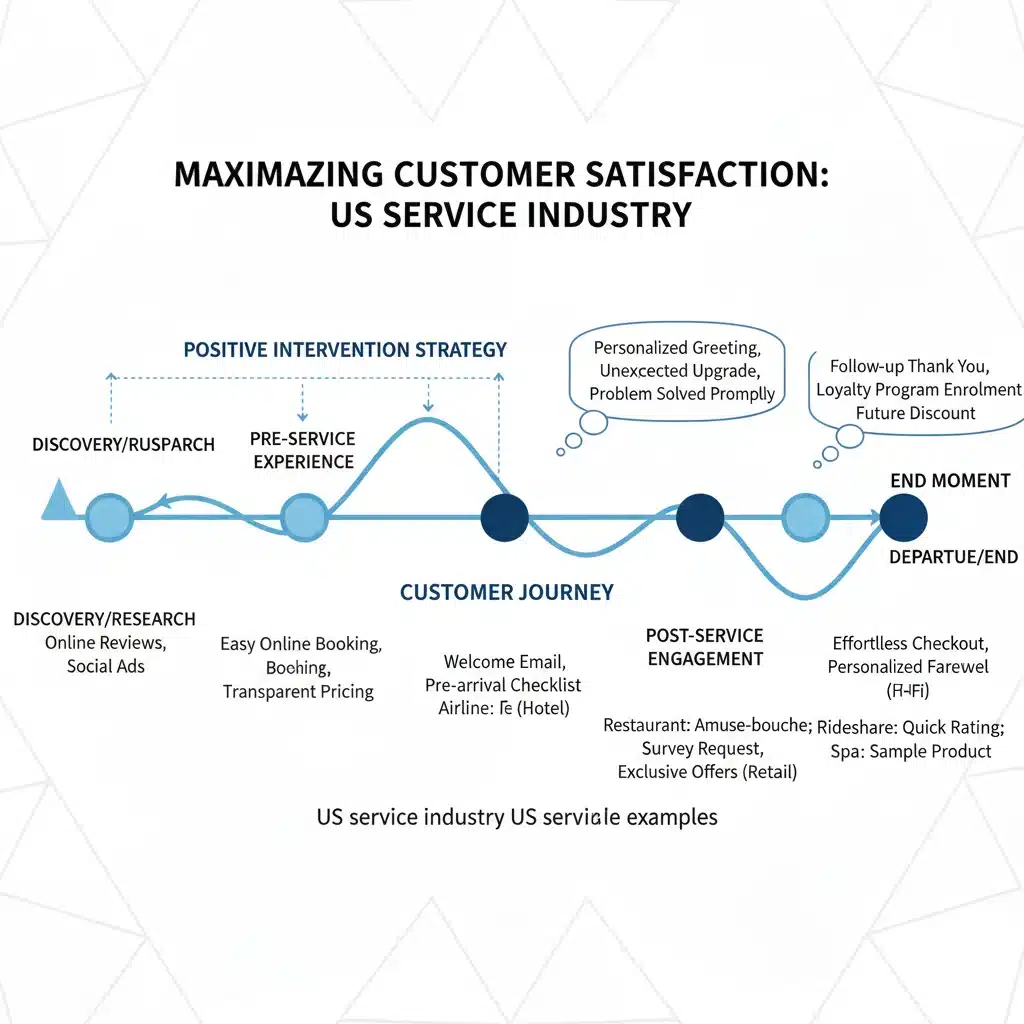
Common Pitfalls to Avoid When Applying the Peak-End Rule
While the Peak-End Rule offers a powerful framework, its misapplication can lead to suboptimal results. Businesses must be mindful of several common pitfalls:
1. Neglecting the ‘Middle’ Entirely
While the Peak-End Rule emphasizes specific moments, it doesn’t advocate for ignoring the rest of the customer journey. A consistently terrible middle, even with a strong peak and end, can still lead to a negative overall perception. The rule is about optimizing impact, not excusing poor service. The journey still needs to be generally acceptable; the peaks and ends simply elevate the experience from good to great, or salvage a potentially average one.
2. Creating Inauthentic Peaks
Customers are savvy. They can detect insincere gestures. A peak moment must feel authentic and genuinely valuable to the customer. Forcing a ‘surprise and delight’ moment that feels contrived or irrelevant will fall flat and could even backfire, leading to cynicism rather than satisfaction. Authenticity is key to the Peak-End Rule Customer Experience.
3. Inconsistent Endings
A strong ending on one interaction but a poor one on another can create confusion and erode trust. Consistency is paramount. Every customer, every time, should experience a well-executed ending, whether it’s a simple transaction or a complex service delivery. Inconsistency undermines the psychological impact of the rule.
4. Focusing Only on Positive Peaks
The Peak-End Rule applies to both positive and negative experiences. Businesses must also identify potential negative peaks (moments of extreme frustration, anger, or disappointment) and work diligently to mitigate or resolve them. Turning a negative peak into a positive resolution can be one of the most powerful applications of this rule.
5. Failing to Empower Frontline Staff
The success of the Peak-End Rule often hinges on the ability of frontline employees to execute it. If staff aren’t trained, empowered, and given the resources to create positive peaks and smooth endings, the strategy will fail. They are the direct implementers of the Peak-End Rule Customer Experience.
By being aware of these potential pitfalls, US service industries can navigate the implementation of the Peak-End Rule more effectively, ensuring they harness its full potential for customer satisfaction.
The Future of Customer Experience: Beyond the Peak-End Rule
While the Peak-End Rule provides a robust framework for enhancing customer satisfaction, the future of customer experience is dynamic and continually evolving. As technology advances and customer expectations shift, businesses will need to integrate the Peak-End Rule with other emerging trends to maintain a competitive edge. The Peak-End Rule Customer Experience will remain a core principle, but its application will become more sophisticated.
Hyper-Personalization at Scale
Leveraging AI and machine learning, businesses will move beyond basic personalization to hyper-personalization, anticipating customer needs and preferences to create even more relevant and impactful peak moments. Imagine a service that not only remembers your past orders but proactively suggests solutions based on your recent activity, creating a truly bespoke experience that feels effortless and intuitive.
Proactive Service and Predictive Analytics
The ability to predict potential issues before they arise will allow businesses to intervene proactively, transforming potential negative peaks into opportunities for exceptional service recovery. For instance, an airline might notify a passenger of a potential delay and offer rebooking options before they even reach the airport, turning a frustrating situation into a demonstration of outstanding care. This proactive approach will redefine the Peak-End Rule Customer Experience.
Omnichannel Consistency
As customers interact across multiple channels – online, mobile, in-person, social media – maintaining consistency in peak and end moments across all touchpoints will become paramount. A seamless transition from a digital inquiry to an in-person resolution, with a consistently positive ending, will be the hallmark of superior CX.
Emotional Intelligence in AI
The development of AI with greater emotional intelligence will enable automated systems to better understand and respond to customer emotions, allowing for more empathetic and effective digital peak and end moments, particularly in customer support and virtual assistance. This will extend the reach of the Peak-End Rule Customer Experience into automated interactions.
Sustainability and Ethical Practices as Peaks
Increasingly, customers are valuing businesses that align with their personal values. Integrating sustainability initiatives or ethical practices into the service delivery, and highlighting these at key moments, can create powerful positive peaks for environmentally or socially conscious consumers, adding another layer to the overall positive experience.
By combining the enduring wisdom of the Peak-End Rule with these future-forward strategies, US service industries can not only achieve the reported 14% increase in satisfaction but also build truly resilient, customer-centric businesses prepared for the challenges and opportunities of tomorrow. The journey to exceptional customer experience is continuous, and the Peak-End Rule Customer Experience provides a timeless compass for navigating its complexities.
Conclusion: Harnessing the Power of the Peak-End Rule for Lasting Success
The Peak-End Rule Customer Experience is more than just a psychological theory; it’s a pragmatic framework for strategically enhancing customer satisfaction and fostering enduring loyalty in the competitive US service industries. By consciously designing and optimizing the most intense and final moments of a customer’s journey, businesses can profoundly influence how their services are perceived and remembered.
We’ve explored how understanding the psychology behind this rule allows businesses to create impactful ‘peaks’ – moments of exceptional service, personalization, or surprise that stand out positively. We’ve also emphasized the critical importance of crafting ‘ends’ that are smooth, appreciative, and leave customers with a lasting, positive impression. From the hospitality of The Ritz-Carlton to the patient-centered care of Cleveland Clinic, and the tech support of Apple’s Genius Bar to the member-centric model of USAA, the efficacy of the Peak-End Rule Customer Experience is evident across diverse sectors.
Implementing this rule requires diligent customer journey mapping, creative engineering of peak moments, meticulous design of flawless endings, and continuous measurement and optimization. By avoiding common pitfalls and embracing future trends in customer experience, US service businesses can not only achieve significant improvements in customer satisfaction – potentially up to 14% – but also cultivate a reputation for excellence that drives growth and sustains success. In an era where every customer interaction is an opportunity to build or break a relationship, mastering the Peak-End Rule is not just an advantage; it’s a necessity for thriving in the modern service economy.