AI’s Evolving Role: 4 Societal Implications to Watch by 2026
The Evolving Role of AI in Daily Life: 4 Societal Implications to Watch in 2026 and Beyond (INSIDER KNOWLEDGE, RECENT UPDATES)
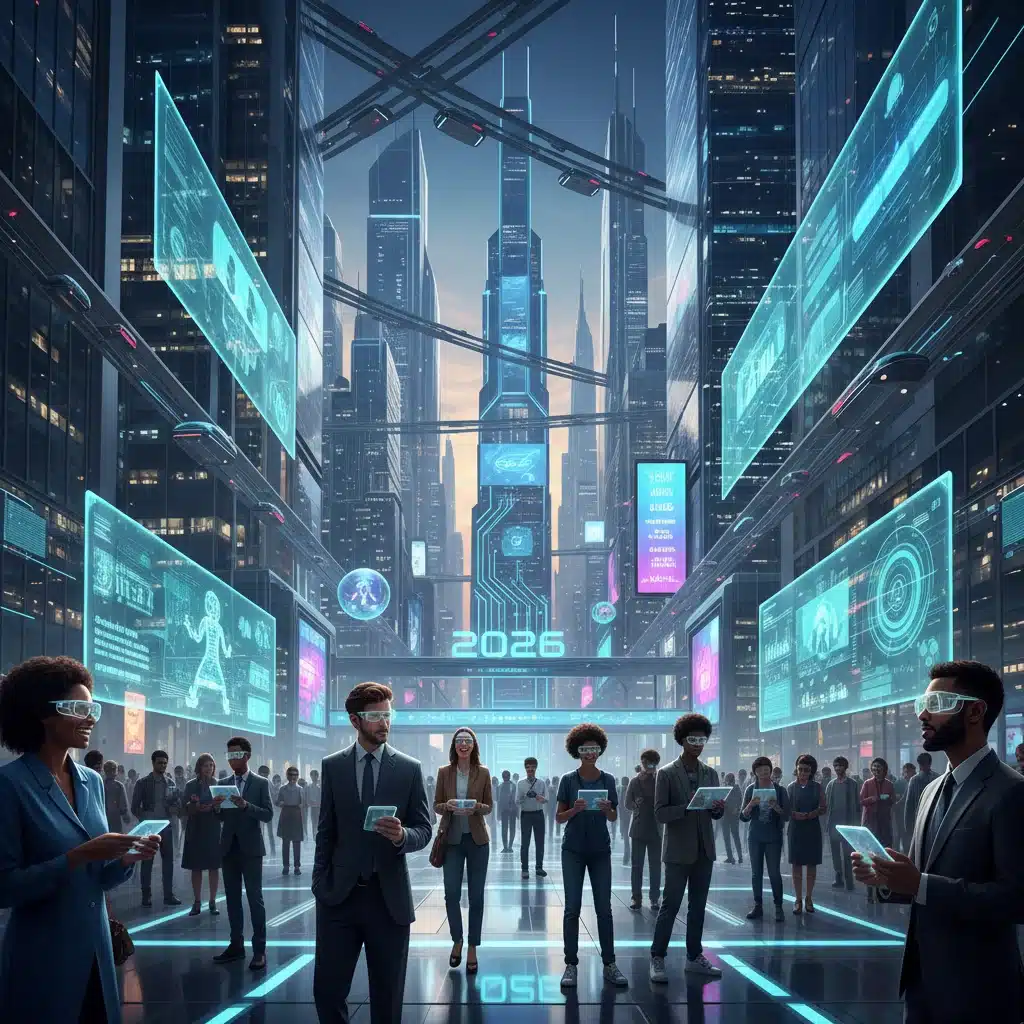
Artificial Intelligence (AI) is no longer a futuristic concept confined to science fiction novels; it is an omnipresent force rapidly reshaping the fabric of our daily lives. From personalized recommendations on streaming platforms to sophisticated predictive analytics driving global economies, AI’s influence is expanding at an unprecedented rate. As we hurtle towards 2026, the AI societal implications are becoming more pronounced, demanding our attention and proactive engagement. Understanding these shifts is not merely an academic exercise; it’s a critical imperative for individuals, businesses, and governments alike to navigate the coming years successfully. This article delves deep into four pivotal societal implications of AI that are set to define our world in the near future, offering insider knowledge and recent updates to provide a comprehensive outlook.
The acceleration of AI development has been nothing short of astonishing. What once took decades to achieve in terms of computational power and algorithmic sophistication now unfolds in mere months. This rapid evolution means that the theoretical societal impacts discussed years ago are now tangible realities. We are at a critical juncture where the decisions made today regarding AI’s deployment and regulation will have lasting repercussions on employment, ethics, privacy, and even the very nature of human interaction. The goal here is not to sensationalize or instill fear, but rather to foster an informed discussion about the challenges and opportunities presented by AI’s relentless march forward. By focusing on key AI societal implications, we aim to equip you with the foresight needed to adapt and thrive in an increasingly AI-driven world.
1. The Reshaping of the Global Workforce and Economic Structures
One of the most immediate and profound AI societal implications is its transformative effect on the global workforce. The narrative often oscillates between alarmist predictions of widespread job displacement and optimistic views of new job creation. The truth, as always, lies somewhere in between, but with a significant lean towards profound restructuring. By 2026, we will see an accelerated shift where routine, repetitive tasks across various sectors – manufacturing, logistics, customer service, and even certain administrative roles – will be increasingly automated. This isn’t just about factory robots; it extends to sophisticated AI software capable of handling complex data analysis, legal research, and even creative content generation.
Insider knowledge suggests that industries are already investing heavily in AI-driven automation not just for cost reduction, but for efficiency, accuracy, and scalability. This means that while some jobs will indeed be rendered obsolete, a far greater number will be augmented or fundamentally changed. The demand for skills that complement AI – such as critical thinking, creativity, complex problem-solving, emotional intelligence, and interdisciplinary collaboration – will skyrocket. Furthermore, entirely new categories of jobs will emerge, focusing on AI development, maintenance, ethics, and human-AI collaboration. Think ‘AI trainers,’ ‘robot ethicists,’ ‘data trust officers,’ and ‘human-AI interface designers.’
Economically, this implies a potential widening of the skills gap, posing significant challenges for education systems and policymakers. Governments and educational institutions must rapidly adapt to provide retraining and upskilling programs to prepare the existing workforce for these new demands. Businesses, on the other hand, will need to embrace a culture of continuous learning and invest in their human capital to stay competitive. The countries that successfully navigate this transition, fostering environments where humans and AI can synergistically enhance productivity, will likely emerge as economic powerhouses. Conversely, those that fail to address these shifts risk exacerbating unemployment and social inequality. The impact of AI societal implications on economic structures will also see a concentration of wealth and power in companies that own and control advanced AI technologies, necessitating discussions around antitrust and fair competition.
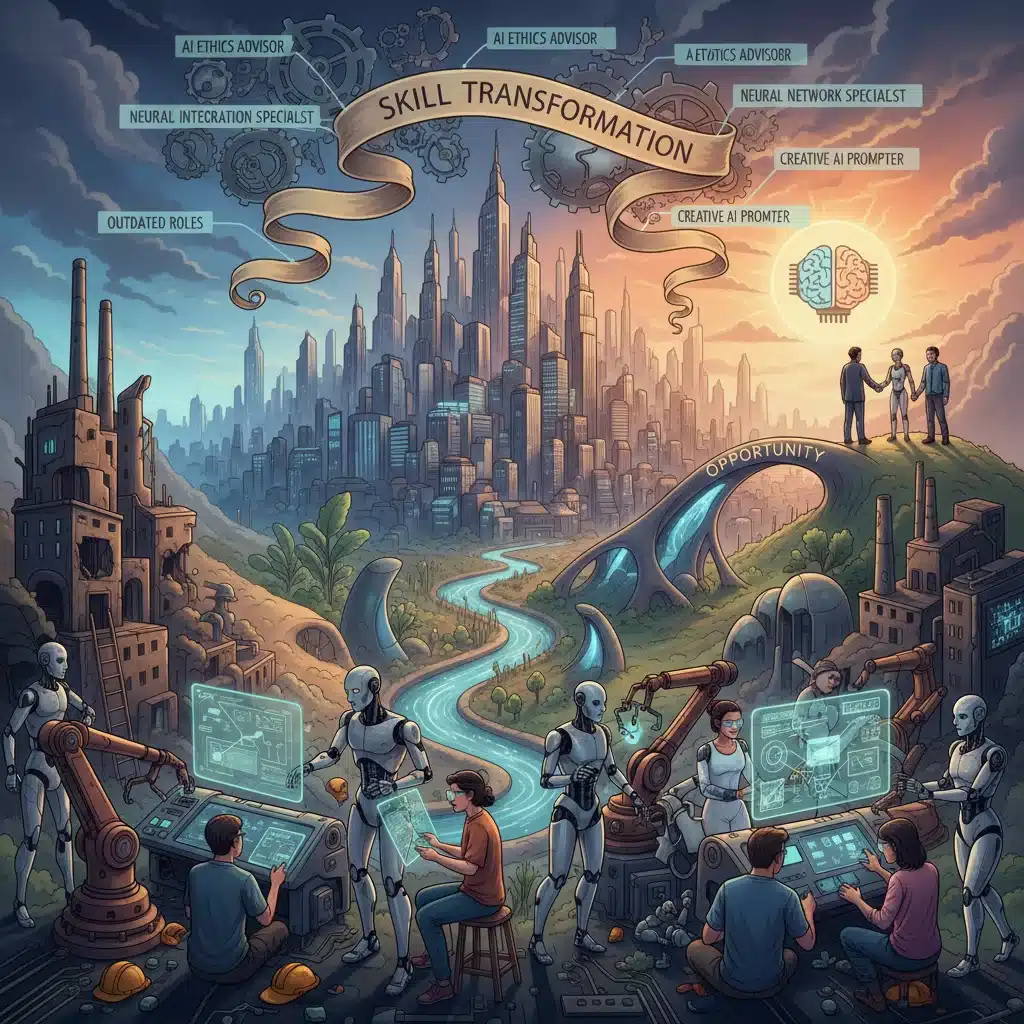
Recent updates from leading economic forums indicate a growing consensus that proactive policy-making is essential. Universal Basic Income (UBI) and other social safety nets are increasingly being discussed as potential mechanisms to cushion the impact of job displacement, though their feasibility and long-term effects remain subjects of intense debate. The underlying message is clear: the global workforce is undergoing a metamorphosis, and ignoring these AI societal implications is not an option. Strategic foresight and adaptive policies are crucial for a just and prosperous transition.
2. Ethical Dilemmas and the Quest for Responsible AI
As AI systems become more autonomous and integrated into critical decision-making processes, the ethical considerations escalate dramatically. The second major area of AI societal implications revolves around ensuring AI is developed and deployed responsibly. By 2026, we will face more frequent and complex ethical dilemmas related to algorithmic bias, privacy, accountability, and the potential for misuse of AI technologies.
Algorithmic Bias: A Persistent Challenge
One of the most pressing concerns is algorithmic bias. AI systems learn from data, and if that data reflects existing societal biases – whether racial, gender, socioeconomic, or otherwise – the AI will not only replicate but often amplify those biases in its decisions. This can lead to unfair outcomes in areas such as hiring, loan applications, criminal justice, and even healthcare. Recent updates have highlighted instances where facial recognition software performs poorly on certain demographics or where AI hiring tools inadvertently discriminate against particular groups. Addressing this requires diverse data sets, rigorous testing, and transparent auditing mechanisms for AI algorithms.
Privacy in an AI-Driven World
The insatiable appetite of AI for data clashes directly with individual privacy rights. As AI systems collect, process, and analyze vast amounts of personal information – often without explicit consent or full understanding from users – the potential for privacy breaches and surveillance increases. By 2026, the line between public and private information will become even more blurred. The development of privacy-preserving AI techniques, such as federated learning and differential privacy, offers some hope, but robust regulatory frameworks like GDPR and CCPA will need continuous refinement and enforcement to keep pace with technological advancements. The challenge lies in balancing the benefits of AI-driven personalization and efficiency with the fundamental right to privacy.
Accountability and Transparency
When an autonomous AI system makes a harmful decision, who is accountable? Is it the developer, the deployer, or the AI itself? Establishing clear lines of accountability for AI actions is a complex legal and ethical challenge. Furthermore, the ‘black box’ nature of many advanced AI models, where their decision-making processes are opaque even to their creators, makes it difficult to understand why certain outcomes occur. The push for explainable AI (XAI) is gaining momentum, aiming to create AI systems that can articulate their reasoning in an understandable way. This transparency is crucial for building public trust and ensuring that AI systems can be audited and corrected when necessary. The AI societal implications here are profound, affecting legal systems, public trust, and the very definition of responsibility.
Misuse of AI and Dual-Use Technologies
The potential for AI to be misused, particularly in areas like autonomous weapons, surveillance, and disinformation campaigns, presents a grave ethical challenge. As AI capabilities advance, the distinction between beneficial and harmful applications becomes increasingly fine. International cooperation and robust ethical guidelines are essential to prevent the weaponization of AI and ensure its use aligns with human values. The dual-use nature of many AI technologies – beneficial in one context, potentially harmful in another – necessitates careful consideration and international agreements.
The quest for responsible AI is a global endeavor, involving technologists, ethicists, policymakers, and civil society. Establishing ethical AI frameworks, promoting AI literacy, and fostering a culture of responsible innovation are critical steps to mitigate the risks and harness the benefits of AI in an ethically sound manner. Without a strong ethical foundation, the long-term AI societal implications could be detrimental.
3. The Transformation of Social Interaction and Human Relationships
Beyond economics and ethics, AI is subtly, yet profoundly, altering how humans interact with each other and with technology, reshaping the very fabric of our social lives. This area of AI societal implications is often overlooked but holds significant long-term consequences.
AI Companionship and Emotional Bonds
The rise of sophisticated chatbots, virtual assistants, and even robotic companions is changing the nature of human interaction. These AI entities are becoming increasingly capable of engaging in seemingly empathetic conversations, offering emotional support, and performing personalized tasks. By 2026, it is plausible that a significant portion of the population will regularly interact with AI companions, some even forming emotional bonds with them. While this can combat loneliness and provide convenience, it raises questions about the authenticity of these relationships, their impact on human-to-human interaction, and the potential for emotional manipulation by AI.
Personalized Experiences vs. Filter Bubbles
AI excels at personalization, from recommending content to tailoring news feeds. While this enhances user experience and efficiency, it also contributes to the creation of ‘filter bubbles’ and ‘echo chambers.’ AI algorithms learn our preferences and feed us information that reinforces our existing beliefs, limiting exposure to diverse perspectives. By 2026, this could further exacerbate societal polarization, making it harder for individuals to engage in constructive dialogue across differing viewpoints. Understanding these AI societal implications is crucial for maintaining a healthy, informed public discourse.
The Blurring Lines of Reality and AI-Generated Content
Generative AI, capable of creating realistic images, videos, and text, is becoming increasingly sophisticated. Deepfakes and AI-generated misinformation pose serious threats to trust in media, political processes, and personal reputations. By 2026, distinguishing between authentic and AI-generated content will become incredibly challenging, potentially eroding shared realities and making it easier for malicious actors to spread propaganda or manipulate public opinion. Developing robust detection methods and promoting critical media literacy are urgent priorities to counter these negative AI societal implications.
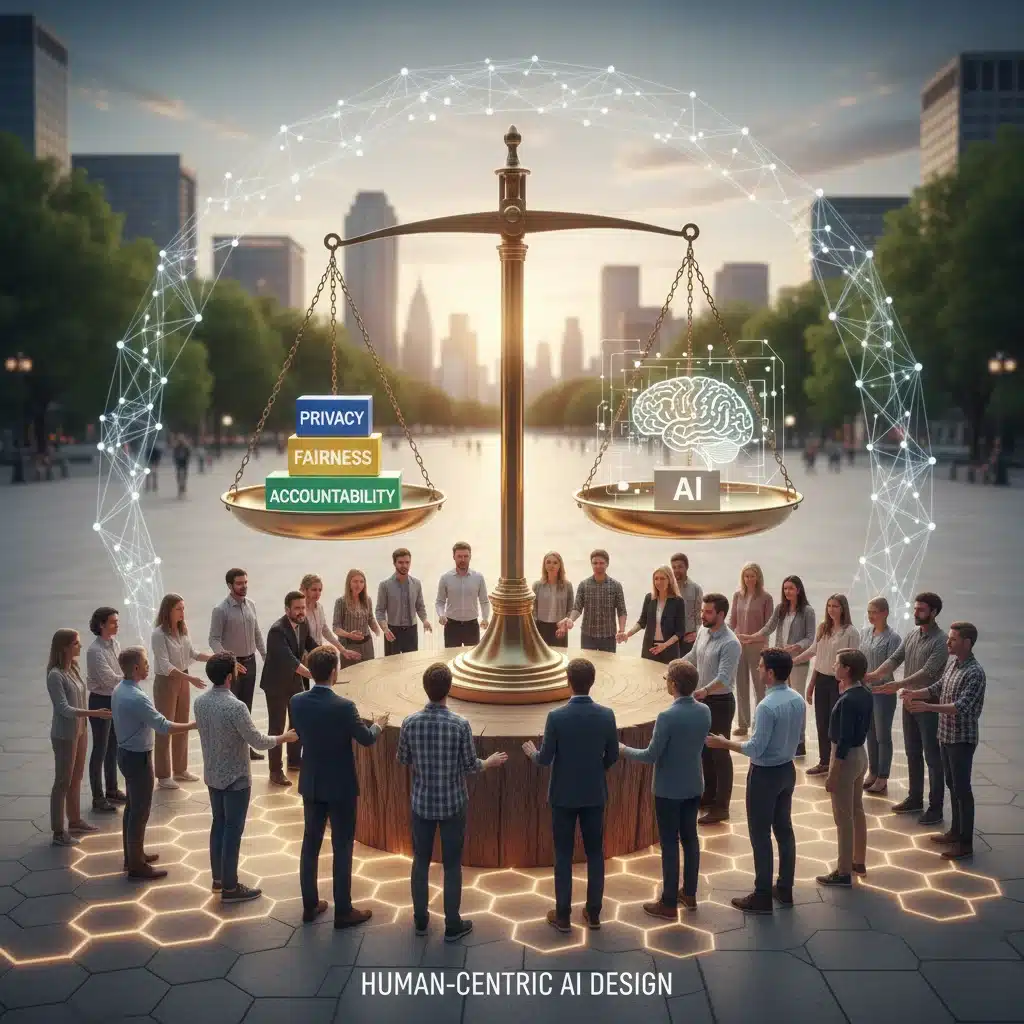
Moreover, AI’s role in social media platforms will continue to evolve, influencing trends, shaping opinions, and mediating interactions. The long-term effects on cognitive development, attention spans, and mental health, particularly among younger generations, are still being studied, but early indications suggest complex challenges. Fostering digital literacy, promoting mindful technology use, and designing AI with human well-being at its core are essential to navigate these social transformations positively.
4. Geopolitical Dynamics and National Security
The fourth critical aspect of AI societal implications lies in its profound impact on geopolitical dynamics and national security. AI is rapidly becoming a strategic asset, influencing the balance of power between nations and introducing new dimensions to warfare and intelligence gathering.
The AI Arms Race
Major global powers are engaged in an intense ‘AI arms race,’ investing heavily in developing advanced AI capabilities for military and intelligence applications. This includes autonomous weapons systems, enhanced surveillance technologies, cyber warfare capabilities, and sophisticated intelligence analysis tools. By 2026, the deployment of such systems will likely be more widespread, raising concerns about escalation, accidental conflict, and the erosion of human control in critical defense decisions. The absence of comprehensive international treaties or norms governing autonomous weapons systems is a significant geopolitical risk.
Economic and Technological Sovereignty
Control over advanced AI technology is increasingly linked to economic competitiveness and national sovereignty. Nations that lead in AI research, development, and deployment stand to gain significant economic advantages, influencing global trade, innovation, and technological standards. This creates a new form of geopolitical competition, where access to talent, data, and computing infrastructure becomes paramount. Countries are implementing policies to foster domestic AI industries, attract AI talent, and protect their technological assets, wary of over-reliance on foreign AI capabilities. The AI societal implications here extend to global supply chains and technological dependencies.
Cybersecurity and AI-Enhanced Threats
AI is a double-edged sword in cybersecurity. While it can enhance defense mechanisms by detecting anomalies and predicting attacks, it also empowers malicious actors to launch more sophisticated and adaptive cyberattacks. AI-powered phishing campaigns, automated malware generation, and intelligent denial-of-service attacks are becoming more prevalent. By 2026, the cybersecurity landscape will be characterized by an escalating arms race between AI-enhanced offense and defense, posing continuous threats to critical infrastructure, government systems, and private data. National security strategies must adapt to this evolving threat landscape, emphasizing resilience, international collaboration, and continuous innovation in AI-driven cybersecurity.
AI in Intelligence and Diplomacy
AI is transforming intelligence gathering and analysis, enabling faster processing of vast amounts of data to identify patterns, predict events, and inform strategic decisions. This can provide significant advantages in diplomacy and conflict prevention by offering deeper insights into geopolitical situations. However, it also raises concerns about the potential for AI-driven surveillance, data manipulation, and the ethical implications of using AI to influence international relations. The responsible use of AI in these sensitive areas requires careful consideration and robust oversight.
The geopolitical AI societal implications underscore the need for international dialogue, arms control discussions, and the establishment of global norms for AI development and deployment. Failure to address these challenges collectively could lead to increased instability and conflict on a global scale.
Conclusion: Navigating the AI-Driven Future
The evolving role of AI in daily life presents a complex tapestry of opportunities and challenges. The four societal implications discussed – the reshaping of the global workforce, the ethical dilemmas surrounding responsible AI, the transformation of social interaction, and the impact on geopolitical dynamics – are not isolated phenomena but interconnected facets of a single, transformative technological revolution. By 2026, these AI societal implications will be even more deeply embedded in our lives, demanding thoughtful consideration and proactive measures.
Successfully navigating this AI-driven future requires a multi-faceted approach. For individuals, it means embracing lifelong learning, developing uniquely human skills, and cultivating critical digital literacy. For businesses, it entails strategic investment in AI, ethical development practices, and a commitment to workforce adaptation. For governments and international bodies, it necessitates agile policy-making, robust regulatory frameworks, and fostering international collaboration on AI governance and ethics. The insider knowledge and recent updates suggest that complacency is the greatest risk.
The journey into an AI-powered world is just beginning. While the challenges are formidable, the potential for AI to enhance human well-being, solve complex global problems, and drive unprecedented innovation remains immense. By understanding and actively shaping the AI societal implications, we can steer this powerful technology towards a future that is equitable, prosperous, and truly beneficial for all of humanity.