Mastering Information Overload: Boost Decision Clarity by 11% for US Professionals

Mastering Information Overload: Boost Decision Clarity by 11% for US Professionals
In the digital age, professionals across the United States are grappling with an unprecedented deluge of data. Emails, notifications, reports, social media, and constant communication channels bombard our senses, creating a phenomenon known as information overload. This relentless influx doesn’t just make us feel stressed; it significantly impairs our ability to make clear, effective decisions. Studies suggest that professionals spend a substantial portion of their day sifting through irrelevant data, leading to decreased productivity, increased anxiety, and ultimately, poorer decision-making outcomes. But what if there was a way to not just cope, but to actively thrive amidst this data tsunami? What if you could measurably improve your decision clarity? This comprehensive guide will explore practical, behavioral strategies specifically designed to help US professionals reduce information overload and enhance their decision-making capabilities, aiming for an impressive 11% improvement in clarity.
The promise of an 11% improvement in decision clarity might seem ambitious, but it’s a realistic and attainable goal when applying consistent, evidence-based behavioral strategies. This isn’t about magically eliminating all information; it’s about developing the skills to filter, process, and act upon information more intelligently. By understanding the psychological underpinnings of information overload and implementing targeted interventions, professionals can reclaim their focus, reduce cognitive fatigue, and make more strategic choices. Let’s delve into the core principles and actionable techniques that will empower you to transform your relationship with information.
Understanding the Impact of Information Overload on Decision Clarity
Before we can effectively reduce information overload, it’s crucial to understand its multifaceted impact. Information overload isn’t merely having too much data; it’s the inability to process and make sense of that data. This cognitive bottleneck manifests in several ways that directly hinder decision clarity:
- Analysis Paralysis: Faced with too many options or too much data, individuals become unable to make a choice, fearing they might miss a crucial piece of information or make the ‘wrong’ decision. This leads to procrastination and missed opportunities.
- Reduced Cognitive Bandwidth: Our brains have limited capacity. Constantly processing vast amounts of information depletes our mental energy, leaving less bandwidth for critical thinking, problem-solving, and creative thought.
- Increased Stress and Anxiety: The feeling of being overwhelmed by information contributes to higher stress levels, which in turn impairs cognitive functions like memory, attention, and executive control – all vital for clear decision-making.
- Lower Quality Decisions: When rushed or fatigued, decisions are often made impulsively or based on superficial analysis, rather than a thorough and thoughtful evaluation of relevant factors.
- Decreased Productivity: Time spent sifting through irrelevant information is time not spent on high-value tasks, significantly impacting overall productivity and the speed of execution.
For US professionals, this translates into tangible business consequences: delayed project approvals, suboptimal strategic choices, missed market trends, and a general feeling of being perpetually behind. The good news is that these negative impacts are not inevitable. By adopting specific behavioral strategies, you can regain control and significantly improve your ability to navigate the information landscape.
Strategy 1: Cultivating a Mindset of Intentional Information Consumption
The first step to effectively reduce information overload is to shift from passive consumption to intentional engagement. This means actively deciding what information you need, when you need it, and how you will process it, rather than letting information dictate your day.
Define Your Information Needs
Before opening your inbox or browsing the internet, ask yourself: What specific information do I need to achieve my current goals? What decisions do I need to make today? This proactive approach helps create a filter. If an email, notification, or article doesn’t directly contribute to answering those questions, it can often be deprioritized or ignored. For instance, if your goal is to finalize a client proposal, information unrelated to that proposal (e.g., general company news that isn’t urgent, social media updates) should be set aside.
Schedule Information Consumption Blocks
Instead of constantly checking emails and notifications, designate specific times for information intake. Treat these blocks like any other important meeting. For example, check emails at 9 AM, 1 PM, and 4 PM. This prevents constant interruptions that break your focus and force your brain to context-switch, a major contributor to cognitive fatigue. During your ‘deep work’ periods, turn off all notifications and close unnecessary tabs. This behavioral change alone can dramatically reduce information overload and enhance concentration.
Practice Selective Attention
Train your brain to focus on what’s important and filter out the noise. This is a skill that improves with practice. When scanning an email or document, look for keywords, summaries, and action items first. Don’t feel obligated to read every word of every communication. Prioritize based on sender, subject line, and perceived urgency/importance. This selective attention is a cornerstone of managing the sheer volume of data.
Strategy 2: Implementing Digital Hygiene and System Optimization
Our digital environments are often chaotic, mirroring and exacerbating information overload. By tidying up your digital workspace and optimizing your tools, you can create a more conducive environment for clear decision-making.
Declutter Your Digital Workspace
Just as you wouldn’t work in a cluttered physical office, your digital space needs organization. This includes:
- Email Management: Unsubscribe from irrelevant newsletters. Use email rules and filters to automatically sort emails into folders (e.g., ‘To Read Later’, ‘FYI’, ‘Action Required’). Aim for ‘inbox zero’ regularly, or at least a ‘decision zero’ where every email has a clear next action.
- Notification Management: Turn off all non-essential notifications on your phone and computer. Only allow notifications for truly urgent matters that require immediate attention. Most notifications are designed to pull your attention away, not to serve your productivity.
- File Organization: Implement a clear, consistent filing system for documents and digital assets. When you need to find information, you shouldn’t have to hunt for it. A well-organized system reduces the cognitive load of searching and retrieving.
Leverage Technology for Filtering and Prioritization
Many tools are designed to help you reduce information overload:
- Task Managers: Use tools like Asana, Trello, or Todoist to capture tasks and ideas, rather than letting them clutter your mental space or inbox. This allows you to process information into actionable items.
- Read-It-Later Apps: For articles or lengthy reports that aren’t urgent but might be valuable, use apps like Pocket or Instapaper. This allows you to save them for scheduled reading times without interrupting your current focus.
- AI-Powered Summarization Tools: Explore tools that can summarize lengthy documents or articles, providing you with the key takeaways without requiring you to read every word. This is particularly useful for staying informed without getting bogged down.

Strategy 3: Practicing Deep Work and Focused Attention
Cal Newport’s concept of ‘deep work’ is incredibly relevant for combating information overload. Deep work is the ability to focus without distraction on a cognitively demanding task. It’s a skill that allows you to quickly master complicated information and produce better results in less time.
Schedule Dedicated Deep Work Blocks
Beyond scheduling information consumption, schedule specific blocks of time for deep work. During these times, eliminate all distractions: close email, silence your phone, and even consider using noise-canceling headphones. Inform colleagues of your unavailability during these periods. Even 60-90 minutes of uninterrupted deep work can be more productive than an entire afternoon of fragmented attention.
Single-Tasking vs. Multi-tasking
True multi-tasking is a myth; what we often do is rapid context-switching, which is highly inefficient and contributes significantly to information overload. Commit to single-tasking during your deep work sessions. Focus on one task, complete it (or reach a natural stopping point), and only then move to the next. This improves the quality of your output and reduces cognitive fatigue.
Mindfulness and Attention Training
Mindfulness practices, even for a few minutes a day, can significantly improve your ability to focus and manage distractions. Techniques like focused breathing or body scans can train your attention muscle, making it easier to stay present with a single piece of information or task and thereby reduce information overload.
Strategy 4: Developing Robust Decision-Making Frameworks
Even with less information, making good decisions requires a structured approach. Developing personal decision-making frameworks can provide clarity and efficiency.
The 80/20 Rule (Pareto Principle) for Information
Apply the Pareto Principle to information: 80% of your valuable insights will come from 20% of the information available. The challenge is identifying that critical 20%. Before diving deep, try to identify the core information needed for a decision. What are the absolute essentials? What can be safely ignored or deferred? This helps you prioritize and reduce information overload by focusing on high-impact data.
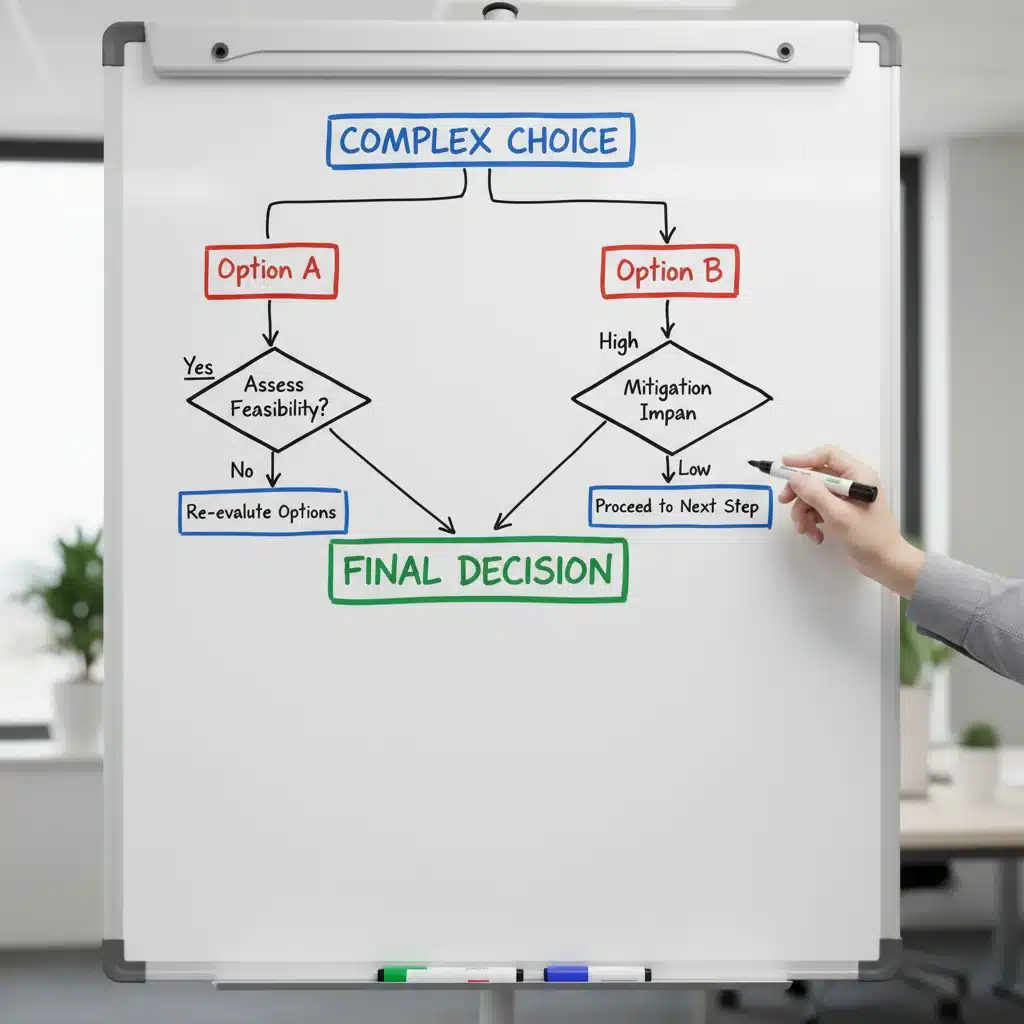
Use a Decision Matrix
For complex decisions, a simple decision matrix can be incredibly powerful. List your options, identify key criteria (e.g., cost, time, risk, impact), and assign weights to each criterion. Then, score each option against the criteria. This structured approach forces you to be explicit about your priorities and provides a clear, objective way to evaluate choices, cutting through subjective noise and reducing the feeling of being overwhelmed.
Set Information Boundaries
Establish personal rules for how much information you will consume before making a decision. For instance, you might decide to review no more than three reports or consult no more than two colleagues on a particular issue. While flexibility is important, having a default boundary prevents endless research and analysis paralysis, directly helping to reduce information overload.
Strategy 5: Enhancing Communication and Collaboration to Streamline Information Flow
Information overload often stems from inefficient communication practices within teams and organizations. By optimizing how information is shared and accessed, US professionals can collectively reduce information overload.
Standardize Communication Channels
Agree with your team or organization on specific channels for different types of communication. For example, use email for formal announcements, a project management tool for task-related updates, and a chat platform for quick, informal discussions. This prevents important information from being scattered across multiple platforms, forcing individuals to check everywhere for updates.
Promote Asynchronous Communication
Encourage asynchronous communication whenever possible. Instead of immediate responses, allow time for thoughtful replies. This reduces the pressure for instant reactions and gives individuals the space to process information without feeling constantly interrupted. Tools that support asynchronous work, such as shared documents with comment features or dedicated discussion forums, are invaluable here.
Improve Meeting Efficiency
Meetings are notorious sources of information overload. To combat this:
- Clear Agendas: Ensure every meeting has a clear agenda with defined objectives.
- Pre-reading: Distribute essential information beforehand, allowing participants to review it at their own pace.
- Actionable Outcomes: Conclude meetings with clear action items and assigned owners, minimizing ambiguity and the need for follow-up clarification.
- Shorter Meetings: Challenge the default meeting length. Can a 60-minute meeting be a 30-minute one?
By making these changes, you not only reduce information overload for yourself but also contribute to a more efficient information ecosystem for everyone around you.
Measuring Your Progress: Aiming for 11% Decision Clarity Improvement
How do you quantify an 11% improvement in decision clarity? While it’s not a precise scientific measurement in daily life, you can track qualitative and quantitative indicators:
- Reduced Decision Time: Are you making decisions more quickly and confidently?
- Improved Decision Outcomes: Are your decisions leading to better results (e.g., projects completed on time, better client satisfaction, higher profits)?
- Decreased Stress Levels: Do you feel less overwhelmed and more in control of your information flow?
- Self-Assessment: Regularly reflect on your decision-making process. On a scale of 1-10, how clear and confident do you feel about your choices? Track this over time.
- Feedback: Seek feedback from colleagues or superiors on the clarity and timeliness of your decisions.
The 11% target serves as a motivating benchmark, encouraging consistent application of these strategies. Even small, incremental improvements accumulate over time, leading to significant gains in overall professional effectiveness and well-being. The key is consistency and a willingness to adapt these strategies to your specific professional context.
Overcoming Challenges in Reducing Information Overload
Implementing these strategies isn’t always easy. Here are some common challenges and how to overcome them:
- Resistance from Others: Colleagues or clients might expect instant responses. Communicate your new boundaries clearly and explain the benefits (e.g., ‘I check emails at specific times to ensure I can give my full attention to important tasks, leading to better outcomes for you’).
- Fear of Missing Out (FOMO): The anxiety of not being ‘in the loop’ is powerful. Trust that by focusing on what’s truly important, you’re gaining more than you’re losing. Most ‘urgent’ information can wait.
- Habit Breaking: Checking notifications constantly is a deeply ingrained habit. Be patient with yourself. Start small, perhaps by turning off notifications for just an hour, and gradually extend the periods.
- Organizational Culture: If your workplace has a culture of constant interruptions and immediate responses, advocate for changes. Share articles like this one, demonstrate the benefits of your new approach, and perhaps even lead by example in a small team.
Remember, the goal is not to eliminate all information, which is impossible in today’s world. The goal is to gain control over it, to make information a tool for empowerment rather than a source of paralysis. By consistently applying these behavioral strategies, US professionals can effectively reduce information overload and significantly improve their decision clarity, ultimately leading to greater success and job satisfaction.
Conclusion: Reclaiming Your Focus and Clarity
The battle against information overload is an ongoing one, but it is a battle you can win. By adopting a proactive mindset, optimizing your digital environment, practicing deep work, implementing robust decision-making frameworks, and fostering efficient communication, you can transform your professional life. The journey to improve decision clarity by 11% begins with small, consistent steps, each designed to empower you to filter the noise and focus on what truly matters. As US professionals continue to navigate an increasingly complex world, the ability to manage information effectively will be a defining factor in achieving sustained success and personal well-being. Start implementing these strategies today, and experience the profound impact of a clearer, more focused mind.