Master Your Future: The 21-Day Habit Blueprint for 2026 Success

The Power of Habits: A 21-Day Blueprint for Sustainable Personal Growth and Goal Achievement in 2026
As we stand on the cusp of 2026, the air is thick with aspirations, resolutions, and the perennial desire for self-improvement. But how many of these grand plans truly translate into lasting change? The answer, more often than not, lies in the subtle yet profound power of habits. Habits are the invisible architects of our daily lives, shaping our productivity, our well-being, and ultimately, our destiny. This article introduces a comprehensive 21-Day Habit Blueprint designed to empower you to cultivate sustainable personal growth and achieve your most ambitious goals in the coming year. We’ll delve into the science behind habit formation, provide actionable strategies, and guide you through a structured 21-day journey to embed powerful, positive routines into the fabric of your life. Imagine stepping into 2026 not just with resolutions, but with a robust system for success already in motion.
Understanding the Science of Habit Formation: Why 21 Days?
The notion that it takes 21 days to form a habit is a widely cited piece of conventional wisdom, often attributed to Dr. Maxwell Maltz, a plastic surgeon in the 1950s. He observed that his patients took approximately 21 days to adjust to a new face or limb after surgery. While modern psychology suggests the actual timeframe can vary significantly from person to person (ranging from 18 to 254 days according to a study by Phillippa Lally and her colleagues), 21 days serves as an excellent, achievable starting point for initiating a new behavior pattern. It’s long enough to feel significant, yet short enough to maintain motivation.
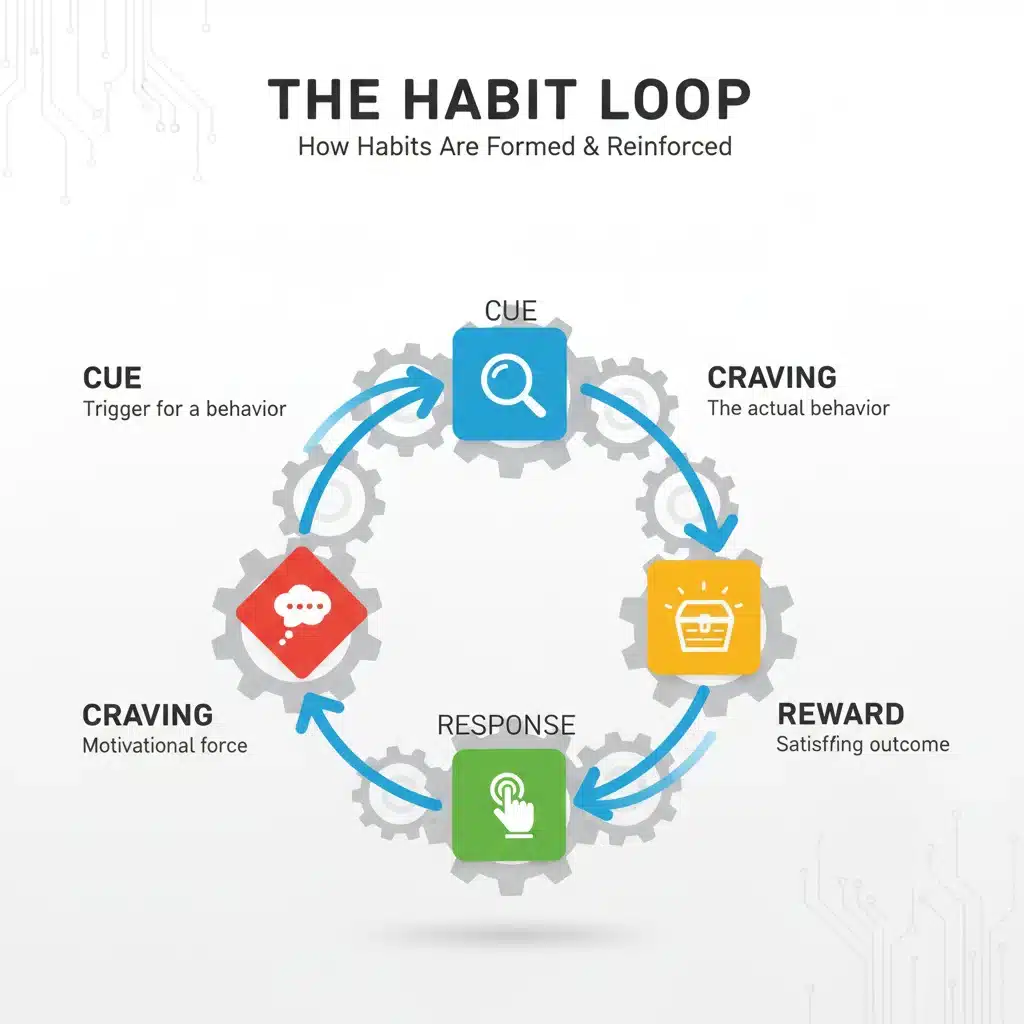
At its core, habit formation is about creating new neural pathways in the brain. When we repeatedly engage in a particular behavior, especially when it’s associated with a reward, our brain strengthens the connections related to that action. This makes the behavior more automatic, requiring less conscious effort over time. This process is often described through the ‘habit loop,’ a concept popularized by Charles Duhigg in ‘The Power of Habit,’ which consists of a cue, a routine, and a reward. Understanding this loop is fundamental to designing an effective 21-Day Habit Blueprint.
The brain, being an energy-efficient organ, loves automation. Habits allow us to conserve cognitive resources, freeing up mental energy for more complex tasks. By intentionally designing our habits, we can essentially program our brains for success, making positive actions our default settings rather than requiring constant willpower. This 21-Day Habit Blueprint will leverage this understanding to help you consciously craft the habits that will serve your 2026 aspirations.
Deconstructing the Habit Loop: Cue, Routine, Reward
Before embarking on our 21-Day Habit Blueprint, it’s crucial to grasp the mechanics of the habit loop. Every habit, good or bad, follows this three-part pattern:
- The Cue: This is the trigger that tells your brain to go into automatic mode and which habit to use. Cues can be anything: a time of day, a specific location, a certain emotion, other people, or an immediately preceding action. For example, the alarm ringing (cue) might trigger you to check your phone (routine).
- The Routine: This is the behavior itself – the physical, mental, or emotional action you take. It could be exercising, meditating, checking social media, or biting your nails. Following our example, checking your phone is the routine.
- The Reward: This is the positive outcome that helps your brain decide if this particular loop is worth remembering for the future. Rewards can be immediate gratification, a sense of accomplishment, stress relief, or pleasure. The reward for checking your phone might be seeing new notifications or feeling connected.
The key to building new habits or breaking old ones lies in manipulating these elements. For new habits, we want to identify clear cues, make the routine easy to perform, and ensure there’s a satisfying reward. For breaking bad habits, we often need to identify the cue and the craving, and then substitute a new, positive routine that delivers a similar reward. Our 21-Day Habit Blueprint will guide you in consciously designing these loops to serve your goals.
Laying the Foundation: Pre-Blueprint Preparation (Days 1-3)
Before diving into the daily execution of your new habits, a solid preparatory phase is essential for the success of your 21-Day Habit Blueprint. This initial period, spanning roughly the first three days, is about introspection, planning, and setting yourself up for success.
Day 1: Identify Your Keystone Habits and 2026 Goals
Start by reflecting on your overarching goals for 2026. What do you truly want to achieve in terms of health, career, relationships, personal development, or finances? Once you have a clear vision, identify the ‘keystone habits’ that will naturally lead to those goals. Keystone habits are small changes or habits that have a ripple effect, leading to other positive changes. For example, exercising regularly might lead to better sleep, healthier eating, and increased productivity. Reading for 15 minutes daily could enhance knowledge, improve focus, and spark creativity. Choose one to three keystone habits that resonate most with your 2026 aspirations for this 21-Day Habit Blueprint.
Day 2: Define Your Habits with SMART Principles
Once you’ve identified your keystone habits, it’s crucial to define them clearly using the SMART criteria: Specific, Measurable, Achievable, Relevant, and Time-bound. Instead of ‘I want to eat healthier,’ try ‘I will eat a serving of vegetables with lunch every weekday.’ Instead of ‘I want to exercise more,’ try ‘I will walk for 30 minutes immediately after waking up, five days a week.’ This specificity is vital for tracking progress and maintaining clarity throughout your 21-Day Habit Blueprint.
Day 3: Design Your Environment and Accountability System
Your environment plays a colossal role in habit formation. Make it easier to do the good habits and harder to do the bad ones. If you want to read more, place a book on your pillow. If you want to exercise, lay out your workout clothes the night before. Remove temptations that hinder your progress. Furthermore, establish an accountability system. This could be a habit tracker (digital or physical), telling a friend or family member about your goals, or joining a community. External accountability significantly increases your chances of success in this 21-Day Habit Blueprint.
The 21-Day Habit Blueprint: A Phased Approach
This 21-Day Habit Blueprint is structured into three distinct phases, each building upon the last, to help you solidify your new habits.
Phase 1: The Initiation – The ‘Why’ and the ‘How’ (Days 4-10)
This phase is about conscious effort and establishing the initial neural pathways. You’re actively engaging with your new habits, often relying on willpower, but also beginning to feel the initial rewards.
- Days 4-6: The Power of the Small Start. Focus on making your chosen habit incredibly easy to start. The goal here is consistency, not intensity. If your habit is to exercise, start with just 5-10 minutes. If it’s to write, aim for one sentence. The idea is to build momentum and prove to yourself that you can show up every day. This initial success is a powerful motivator for the 21-Day Habit Blueprint.
- Days 7-8: Habit Stacking & Cue Identification. Integrate your new habit with an existing, strong habit. This is called habit stacking. For example, ‘After I brush my teeth (existing habit), I will meditate for five minutes (new habit).’ Also, pay close attention to the cues that trigger your new habit. Make them obvious and consistent.
- Days 9-10: Immediate Rewards & Tracking. Ensure there’s an immediate, satisfying reward after performing your new habit. This reinforces the behavior loop. It doesn’t have to be grand; it could be a moment of quiet satisfaction, a checkmark on your tracker, or a small treat. Continue diligently tracking your progress. Seeing your streak grow is a powerful visual reward in itself for this 21-Day Habit Blueprint.
Phase 2: The Integration – Overcoming Resistance (Days 11-17)
Around this time, the initial novelty might wear off, and you might encounter resistance. This phase is crucial for pushing through that dip and integrating the habit more deeply.
- Days 11-13: Anticipate & Plan for Obstacles. Think about what might prevent you from performing your habit (e.g., lack of time, feeling tired, unexpected events). Develop ‘if-then’ plans. ‘If I’m too tired to work out, then I will do 10 minutes of stretching instead.’ This proactive approach is vital for maintaining consistency in your 21-Day Habit Blueprint.
- Days 14-15: Focus on Identity, Not Just Outcomes. Shift your focus from ‘I want to run a marathon’ to ‘I am a runner.’ When you link your habits to your identity, they become less about a task and more about who you are. This intrinsic motivation is far more powerful.
- Days 16-17: Celebrate Small Wins & Re-evaluate. Acknowledge and celebrate your progress. You’re more than halfway through your 21-Day Habit Blueprint! Take a moment to reflect on what’s working well and what needs adjustment. Are your cues clear? Is the reward satisfying enough?
Phase 3: The Automation – Solidifying the Change (Days 18-21)
By this final phase, you should be experiencing less friction. The habit is starting to feel more natural, almost automatic. This is where you cement the change.
- Days 18-19: Increase the Challenge (Gradually). If your habit is consistently easy, consider a slight increase in intensity or duration. If you’ve been meditating for 5 minutes, try 7. If you’ve been writing one sentence, try two. This gradual increase prevents plateaus and strengthens the habit.
- Day 20: Reflect and Reinforce. Look back at your journey. What have you learned? How has this habit already positively impacted your life? Reinforce these positive associations. Journal about your experience.
- Day 21: The Finish Line & Beyond. Congratulations, you’ve completed the initial 21-Day Habit Blueprint! While the habit might not be fully ingrained for life, you’ve built a strong foundation. This is not the end, but a new beginning. Plan how you’ll continue to nurture this habit in the long term.
Strategies for Sustained Habit Formation Beyond 21 Days
While the 21-Day Habit Blueprint provides a fantastic launchpad, true personal growth requires ongoing commitment. Here are strategies to ensure your newly formed habits last well into 2026 and beyond:
1. Never Miss Twice
One missed day is an accident; two missed days start a new habit of missing. If you miss a day, don’t despair. Just make sure you get back on track the very next day. This rule is crucial for maintaining momentum and preventing minor slip-ups from derailing your entire 21-Day Habit Blueprint.
2. Focus on Progress, Not Perfection
There will be days when you can’t perform your habit perfectly. That’s okay. The goal is consistency and showing up, even if it’s for a shorter duration or with less intensity. A bad workout is better than no workout. Five minutes of reading is better than none. Don’t let perfection be the enemy of good.
3. Regularly Review and Adjust
Life changes, and so should your habits. Periodically review your habits and goals. Are they still serving you? Do they need to be tweaked? The 21-Day Habit Blueprint is a dynamic process, not a static one. Be flexible and willing to adapt.
4. Find a Community or Mentor
Surrounding yourself with like-minded individuals or seeking guidance from someone who has achieved what you aspire to can provide invaluable support and motivation. Shared experiences and encouragement can significantly bolster your resolve.
5. Practice Mindfulness and Self-Compassion
Be kind to yourself throughout this journey. There will be setbacks. Instead of self-criticism, practice self-compassion. Understand that forming new habits is a process, and slip-ups are part of it. Mindfulness can help you stay present and aware of your habit cues and rewards, strengthening your control over your actions.

Integrating New Habits into Your Lifestyle for 2026
The true power of the 21-Day Habit Blueprint isn’t just about forming individual habits; it’s about integrating them into a cohesive lifestyle that supports your overall well-being and aspirations for 2026. This means looking at your habits not in isolation, but as interconnected components of a larger system.
The Domino Effect of Positive Habits
Once you successfully establish one keystone habit, you’ll often find that it creates a ‘domino effect,’ making it easier to adopt other positive behaviors. For instance, consistently waking up early (a keystone habit) might naturally lead to having more time for a healthy breakfast, a quick workout, or a few minutes of meditation. This interconnectedness is a powerful accelerator for your personal growth journey in 2026.
Scheduling and Time Blocking
To ensure your new habits become non-negotiable parts of your day, incorporate them into your schedule. Use time blocking to allocate specific slots for your habits. Treat these appointments with yourself as seriously as you would a meeting with a client or a doctor. This structured approach provides a framework for consistency, especially during the initial phases of the 21-Day Habit Blueprint.
Reviewing Your Progress Regularly
Beyond the 21 days, make it a weekly or monthly practice to review your habit progress. What’s working? What challenges are you facing? Are your habits still aligned with your evolving 2026 goals? This continuous feedback loop allows you to refine your approach and ensure your habits remain effective tools for your growth.
Mindset Shifts: From ‘Doing’ to ‘Being’
As you move beyond the initial 21-Day Habit Blueprint, strive for a mindset shift. Instead of merely ‘doing’ your habits, aim to ‘be’ the person who embodies those habits. If you consistently meditate, you are a meditator. If you consistently write, you are a writer. This identity-based approach to habit formation, championed by James Clear in ‘Atomic Habits,’ creates a stronger internal drive and makes your habits feel like an inherent part of who you are, rather than an obligation.
Conclusion: Your Journey to a Transformed 2026 Begins Now
The journey to sustainable personal growth and goal achievement in 2026 is paved with intentional action, and the most powerful tool at your disposal is the cultivation of positive habits. This 21-Day Habit Blueprint offers a structured, science-backed approach to transforming your aspirations into tangible realities. By understanding the habit loop, preparing diligently, committing to a phased implementation, and employing strategies for long-term adherence, you are not just setting resolutions; you are building a resilient system for success.
Remember, consistency trumps intensity, and small, consistent efforts compound over time to create extraordinary results. Don’t wait for motivation to strike; instead, design an environment and a routine that makes positive action inevitable. Embrace the challenges, celebrate every small victory, and approach this journey with curiosity and self-compassion. Your transformed 2026, rich with achieved goals and profound personal growth, is within reach. Start your 21-Day Habit Blueprint today and unlock the incredible power within you to shape the future you desire.