Unpacking the Endowment Effect: Ownership Bias in US Market Valuations

The Endowment Effect: How Ownership Bias Influences US Market Valuations by Up to 12%
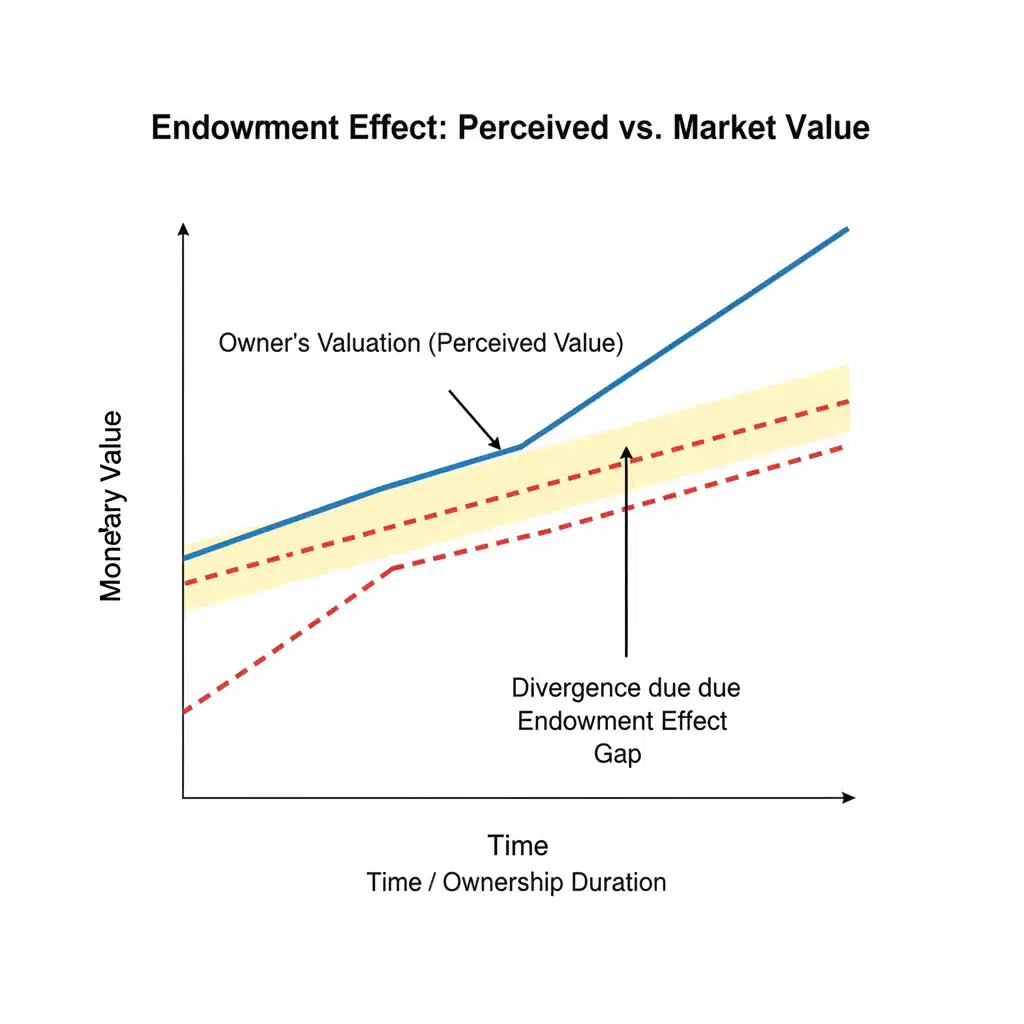
In the intricate world of finance, where rationality is often assumed to be the guiding principle, human psychology frequently introduces subtle yet profound distortions. Among these, the endowment effect market phenomenon stands out as a particularly potent cognitive bias. It describes our tendency to ascribe more value to something merely because we own it. This seemingly innocuous psychological quirk has significant implications, particularly within the dynamic landscape of US market valuations, potentially inflating asset prices by as much as 12%.
Understanding the endowment effect market is not just an academic exercise; it’s a critical tool for investors, analysts, and policymakers seeking to navigate the complexities of financial markets. This comprehensive article delves deep into the mechanics of this bias, explores its pervasive influence on US market valuations, and offers actionable insights into mitigating its effects.
What is the Endowment Effect? A Foundation in Behavioral Economics
At its core, the endowment effect is a concept from behavioral economics that describes an emotional bias. Individuals tend to value items that they own more highly than identical items that they do not own. This bias was famously documented by Nobel laureates Daniel Kahneman and Richard Thaler, among others, through various experiments. One classic example involves mugs: participants given a mug would demand a significantly higher price to sell it than participants who did not own a mug were willing to pay to acquire one. This disparity in valuation, driven simply by the act of ownership, is the hallmark of the endowment effect.
The psychological underpinnings of the endowment effect market are multifaceted. They often relate to loss aversion, a principle stating that the pain of losing something is psychologically more powerful than the pleasure of gaining something of equal value. Once an asset is owned, parting with it is perceived as a loss, triggering a stronger emotional response and a higher perceived value. Furthermore, ownership can foster a sense of identity and attachment, making the asset feel like an extension of oneself, thus increasing its subjective worth.
In the context of financial markets, this means that investors who own a particular stock, bond, or piece of real estate may value it more highly than a rational, objective assessment would suggest. This subjective overvaluation can lead to suboptimal decision-making, impacting everything from individual portfolio performance to broader market dynamics.
The Endowment Effect in Action: How Ownership Skews US Market Valuations
The influence of the endowment effect market on US market valuations is subtle but widespread. Consider an investor who purchased shares of a company several years ago. Over time, they have observed its performance, perhaps even developed a personal connection to its brand or mission. When it comes time to consider selling these shares, the endowment effect can kick in. The investor might demand a price significantly higher than what a non-owner would be willing to pay, or even higher than what the company’s fundamentals objectively suggest.
This bias can manifest in several ways across US markets:
- Overvaluation of Held Assets: Investors may hold onto underperforming stocks for too long, refusing to sell at what they perceive as too low a price, simply because they own them. This can prevent capital from being reallocated to more promising opportunities.
- Resistance to Selling: Even when market conditions change or an asset’s fundamentals deteriorate, the emotional attachment fostered by the endowment effect can make investors reluctant to sell. This can lead to significant losses if the asset continues to decline.
- Inflated Asking Prices: In private markets, such as real estate or small business sales, sellers often price their assets higher than objective valuations would dictate, largely due to their personal attachment and perceived value derived from ownership. This can lead to prolonged negotiations or even failure to sell.
- Impact on Mergers and Acquisitions (M&A): Companies being acquired may demand higher premiums than their objective value, influenced by the incumbent management’s or shareholders’ sense of ownership and attachment to the enterprise.
- Market Inefficiencies: When a significant portion of the market is influenced by the endowment effect, it can lead to systematic overpricing of certain asset classes, creating bubbles or preventing efficient price discovery. Research suggests this bias can account for valuation discrepancies of up to 12% in various asset classes.
The collective impact of these individual biases can create significant distortions in market prices, leading to periods where assets are traded at prices detached from their intrinsic value. This is especially pertinent in emotionally charged markets or during periods of high speculation.
Empirical Evidence and Studies on the Endowment Effect in US Markets
Numerous studies have provided empirical backing for the endowment effect market in financial contexts. For instance, research has shown that individuals demand significantly more to sell a stock they own than they would pay to buy the same stock if they didn’t own it. This ‘selling price’ versus ‘buying price’ disparity is a direct measure of the endowment effect.
One notable study by Odean (1998) found that individual investors tend to hold onto losing stocks too long and sell winning stocks too soon, a phenomenon partly explained by the endowment effect combined with loss aversion. The reluctance to realize a loss on an owned asset (due to the pain of loss) leads to holding it longer, even when selling might be rational.
Furthermore, experimental studies simulating market conditions have consistently demonstrated that participants who are ‘endowed’ with certain assets value them higher, leading to observable price discrepancies. These experiments often quantify the premium associated with ownership, consistently finding it to be a non-trivial percentage, often in the range of 5% to 12% depending on the asset and context.
For example, in real estate, homeowners often set asking prices significantly above market appraisals, particularly if they have lived in the home for a long time and have an emotional connection. While not purely a financial market, this illustrates the powerful hold of ownership bias on valuation. Similarly, in the venture capital world, founders often place a much higher valuation on their companies than external investors, a common negotiation hurdle that can be attributed, in part, to the endowment effect.
These findings underscore that the endowment effect market is not merely a theoretical concept but a tangible force influencing real-world financial decisions and market dynamics.
Distinguishing the Endowment Effect from Related Biases
While the endowment effect market is a distinct bias, it often interacts with, or is confused with, other cognitive biases prevalent in financial decision-making. Understanding these distinctions is crucial for a nuanced perspective:
- Loss Aversion: As mentioned, loss aversion is a key psychological mechanism underlying the endowment effect. It’s the general tendency to prefer avoiding losses over acquiring equivalent gains. The endowment effect specifically applies this to items already owned, where parting with them is perceived as a loss.
- Status Quo Bias: This bias describes a preference for the current state of affairs. People tend to stick with their current choices or holdings simply because doing so requires less effort and avoids potential regret from making a change. While related, the endowment effect is more about the increased value placed on owned items, whereas status quo bias is about inertia.
- Sunk Cost Fallacy: This occurs when individuals continue an endeavor because of invested resources (time, money, effort) that cannot be recovered, rather than considering the future costs and benefits. While holding onto an underperforming stock due to the endowment effect might look similar to the sunk cost fallacy, the endowment effect specifically concerns the overvaluation due to ownership, not just the past investment.
- Confirmation Bias: This is the tendency to search for, interpret, favor, and recall information in a way that confirms one’s pre-existing beliefs or hypotheses. An investor experiencing the endowment effect might actively seek out information that supports their higher valuation of an owned asset, further reinforcing their bias.
Recognizing these interconnected biases helps in developing more robust strategies to counteract their collective influence on investment decisions and market perceptions. The endowment effect market doesn’t operate in a vacuum; it’s part of a complex web of human psychology.
Mitigating the Endowment Effect for Smarter Investment Decisions
Given its potential to distort valuations by up to 12%, mitigating the endowment effect market is paramount for rational investment decision-making. Here are several strategies investors can employ:
1. Adopt an Objective Valuation Framework
Always rely on objective valuation methods (e.g., discounted cash flow, comparable analysis, asset-based valuation) rather than subjective feelings. Before making an investment or considering a sale, conduct a thorough, unbiased analysis of the asset’s intrinsic value. Pretend you don’t own the asset and evaluate it as if you were a new buyer. Would you still acquire it at its current price? Would you sell it at the current market price if you didn’t own it?
2. Implement Pre-Commitment Strategies
Set clear, predefined sell orders or exit strategies before emotional attachment can fully take hold. For instance, define a target price for selling a stock when you buy it, or establish stop-loss orders. This pre-commitment helps override the emotional reluctance to sell when the time comes, as the decision has already been made rationally.
3. Diversify Your Portfolio
A diversified portfolio reduces the emotional impact of any single asset’s performance. When less of your capital is tied to one specific holding, the psychological attachment to that asset may diminish, making it easier to make objective buy/sell decisions.
4. Seek External, Unbiased Opinions
Consult with financial advisors, peers, or mentors who do not have a vested interest in your specific holdings. An outside perspective can offer a crucial reality check, highlighting discrepancies between your perceived value and the market’s objective valuation.
5. Practice Mental Accounting
Mentally separate your investment decisions from your personal identity. View your assets as fungible units of capital rather than extensions of yourself. This can help reduce the emotional friction associated with selling an owned asset.
6. Regular Portfolio Review and Rebalancing
Schedule regular, disciplined portfolio reviews. During these reviews, assess each asset’s performance and alignment with your financial goals, independent of how long you’ve owned it or your initial purchase price. Rebalance your portfolio to maintain desired asset allocations, which often involves selling overperforming (and potentially overvalued due to endowment effect) assets and buying underperforming ones.
7. Understand Market Psychology
Educate yourself about behavioral economics and common cognitive biases. Simply being aware of the endowment effect market and its potential influence can be the first step toward counteracting it. Understanding that your feelings of ownership might inflate your valuation can help you pause and apply more objective criteria.

The Broader Implications of the Endowment Effect on Market Efficiency
The persistent influence of the endowment effect market has broader implications beyond individual investor behavior. It can contribute to market inefficiencies, impacting everything from asset pricing models to the overall liquidity of certain markets.
In a perfectly efficient market, asset prices would reflect all available information, and rational investors would quickly arbitrage away any mispricings. However, the endowment effect, alongside other behavioral biases, introduces friction into this process. When a significant number of investors overvalue their owned assets, it can lead to:
- Reduced Market Liquidity: Owners may be unwilling to sell at rational market prices, leading to fewer transactions and reduced liquidity for certain assets or asset classes.
- Price Bubbles: During periods of speculative fervor, the endowment effect can exacerbate price bubbles. As more people buy into an asset, they become ‘endowed’ with it, further inflating their perceived value and their reluctance to sell, even as prices become unsustainable.
- Inefficient Capital Allocation: Capital may remain tied up in underperforming assets due to owners’ reluctance to sell, rather than flowing to more productive uses. This can hinder economic growth and innovation.
- Challenges for Professional Investors: Even professional fund managers and institutional investors are not immune to these biases, though they often employ stricter methodologies to mitigate them. However, the collective effect of individual investor biases can still create market conditions that diverge from fundamental values.
Recognizing these systemic impacts is crucial for regulators and market participants alike. Policy discussions around investor protection, market transparency, and financial education often touch upon the need to address cognitive biases that can lead to suboptimal market outcomes.
Case Studies: Real-World Examples of the Endowment Effect
While precise quantification of the endowment effect market in real-time can be challenging, anecdotal and research-backed case studies provide compelling evidence of its influence:
- The Housing Market Boom: During periods of rapid appreciation in the housing market, many homeowners develop an inflated sense of their property’s value. This is partly driven by the endowment effect; having lived in and invested emotionally in their homes, they often expect higher selling prices than market comparables might suggest, contributing to slow sales in declining markets.
- Startup Valuations: Founders of successful startups often have a deep emotional and financial investment in their companies. When seeking further funding or considering an acquisition, they frequently place a significantly higher valuation on their enterprise than venture capitalists or potential acquirers. This ‘founder’s premium’ is a clear manifestation of the endowment effect.
- Collectibles and Art Markets: In markets for unique items like art, antiques, or rare collectibles, the endowment effect can be particularly strong. Owners often have a personal history with their items, leading to highly subjective valuations that can diverge significantly from what a new buyer might be willing to pay. This contributes to the often opaque and illiquid nature of these markets.
- Long-Term Stock Holdings: Many individual investors hold onto stocks for decades, even when their performance lags the market or their original investment thesis no longer holds. While sometimes a valid long-term strategy, in other cases, it’s the endowment effect preventing them from realizing losses or reallocating capital. The stock becomes ‘their’ stock, making it harder to part with.
These examples highlight how deeply ingrained the ownership bias is and how it can affect various asset classes and investment scenarios. The endowment effect market is not confined to obscure corners of finance; it’s a pervasive force.
Conclusion: Navigating the Endowment Effect in a Complex Market
The endowment effect market is a powerful cognitive bias that profoundly influences how investors perceive and value assets they own. From individual stock portfolios to broader market valuations, its impact can lead to overvaluation, reduced liquidity, and suboptimal investment decisions, potentially skewing prices by up to 12%.
While completely eliminating psychological biases is an impossible feat, recognizing and actively working to mitigate the endowment effect is a critical step towards more rational and effective financial decision-making. By adopting objective valuation methods, employing pre-commitment strategies, diversifying portfolios, and seeking external advice, investors can build resilience against this pervasive bias.
In an increasingly complex and interconnected global financial system, understanding the nuances of behavioral economics is no longer a niche interest but a fundamental requirement for anyone seeking to achieve sustainable financial success. The endowment effect serves as a powerful reminder that even the most rational-seeming markets are ultimately driven by human psychology, with all its inherent quirks and biases. By mastering the art of self-awareness and disciplined decision-making, investors can turn the tide and ensure that ownership empowers, rather than impairs, their financial journey.