
Scarcity and Urgency: Leveraging Behavioral Triggers to Increase Conversions by 9% in Online Sales This Quarter
In the fiercely competitive landscape of online commerce, capturing customer attention and converting it into sales is the holy grail for businesses. While many factors contribute to a successful online store, two psychological principles consistently stand out for their profound impact on consumer behavior: scarcity and urgency. These aren’t just buzzwords; they are powerful behavioral triggers that, when applied correctly, can significantly boost your conversion rates. Our goal today is to delve deep into how you can effectively leverage scarcity and urgency to see a remarkable 9% increase in your online sales conversions this quarter.
Understanding the human psyche is paramount in marketing. We are inherently wired to respond to certain cues, and the fear of missing out (FOMO) is one of the most potent. Scarcity and urgency directly tap into this fear, prompting potential customers to act quickly before an opportunity vanishes. This article will explore the ‘what,’ ‘why,’ and ‘how’ of implementing these strategies, providing you with actionable insights and practical examples to elevate your e-commerce game.
The Psychology Behind Scarcity and Urgency
Before we dive into implementation, it’s crucial to grasp the psychological underpinnings of scarcity and urgency. Why do these tactics work so well? It boils down to a few core human tendencies:
1. Fear of Missing Out (FOMO)
FOMO is a pervasive social phenomenon, amplified by digital connectivity. When people perceive that an item is limited in quantity or available for a short time, they experience an innate desire to acquire it before it’s gone. This isn’t just about wanting the product; it’s about avoiding the regret of not having it when others do or when it’s no longer accessible. The thought of missing out on a great deal or a unique product can be a powerful motivator, driving immediate action.
2. Perceived Value and Desirability
When something is scarce, its perceived value often increases. Think of limited-edition art, rare collectibles, or exclusive event tickets. The fewer there are, the more desirable they become. This psychological bias suggests that if an item is hard to get, it must be more valuable or of higher quality. By creating an impression of limited availability, you subtly elevate the perceived worth of your products, making them more attractive to potential buyers.
3. Loss Aversion
Humans are generally more motivated by the fear of losing something than by the prospect of gaining something of equal value. When faced with a time-sensitive offer or a product with limited stock, the potential customer isn’t just considering a purchase; they are also contemplating the loss of the opportunity. This loss aversion can be a powerful push factor, compelling them to complete a purchase they might otherwise delay.
4. Social Proof and Validation
Often, when products are shown to be low in stock, it implies that others are buying them. This acts as a form of social proof, signaling that the product is popular, in demand, and therefore, desirable. If many people are purchasing an item, it validates its quality and appeal, making it more appealing to undecided buyers.
Key Scarcity Strategies for Online Sales
Now that we understand the ‘why,’ let’s explore the ‘how.’ Implementing scarcity effectively requires careful planning and execution to ensure it feels genuine and not manipulative. Here are some proven strategies:
1. Limited Stock Notifications
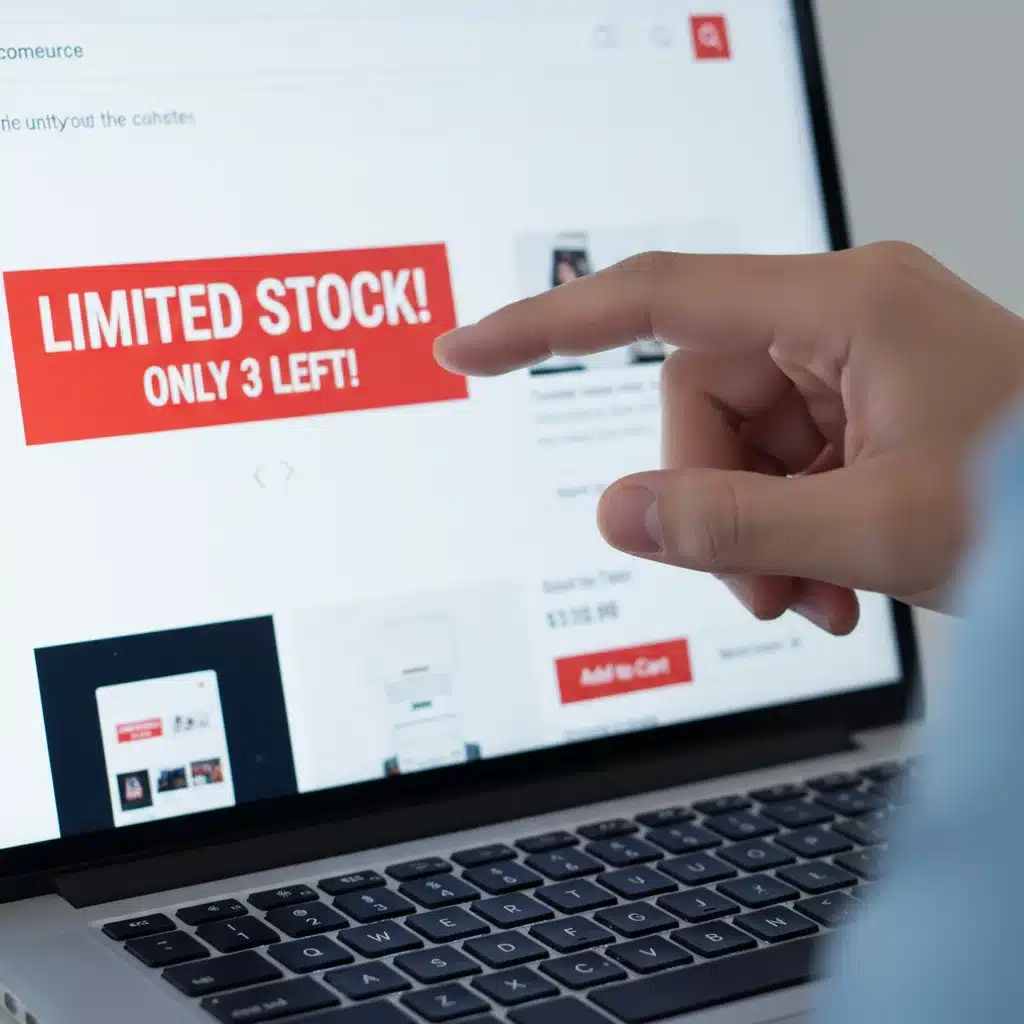
This is perhaps the most straightforward application of scarcity. Displaying the exact number of items left in stock for popular products can create immediate urgency. Phrases like ‘Only 3 left in stock!’ or ‘Low stock – order soon!’ directly communicate scarcity. This works best for products that genuinely have limited availability. Transparency is key here; don’t fake low stock, as it can damage trust.
Implementation Tips:
- Integrate stock counters directly on product pages.
- Use clear, bold text to highlight the remaining quantity.
- Consider different thresholds (e.g., ‘Only 10 left’ for higher stock, ‘Last chance!’ for very low stock).
2. Exclusive or Limited Edition Products
Creating products that are inherently scarce can be a powerful marketing tool. This could be a special color, a unique collaboration, or a product line available only for a specific period. Limited editions foster a sense of exclusivity and desirability, making customers feel like they are part of an elite group if they acquire it.
Implementation Tips:
- Announce limited editions well in advance to build anticipation.
- Use high-quality visuals and compelling storytelling around the exclusivity.
- Clearly state the quantity available or the duration of availability.
3. Seasonal or Holiday-Specific Offers
While not strictly ‘limited stock,’ seasonal offers create a natural scarcity based on the calendar. ‘Black Friday Deals,’ ‘Christmas Specials,’ or ‘Summer Sale’ inherently imply a time limit. This type of scarcity is widely accepted and expected by consumers, making it a highly effective strategy.
Implementation Tips:
- Plan your seasonal campaigns well in advance.
- Create dedicated landing pages for these offers.
- Combine with urgency tactics (see next section) for maximum impact.
4. Batch Releases or Drops
For certain products, especially in fashion, collectibles, or tech, releasing items in limited batches at specific times can generate immense hype. This strategy turns the product launch into an event, encouraging rapid purchases as consumers know they might miss out if they hesitate. This is a common tactic used by popular brands to sell out products in minutes.
Implementation Tips:
- Build anticipation through social media and email marketing before the drop.
- Ensure your website infrastructure can handle traffic spikes.
- Consider a waiting list or ‘notify me’ option for subsequent drops.
Potent Urgency Tactics for Online Sales
Urgency complements scarcity by adding a time-sensitive element, pushing customers to act ‘now.’ While scarcity deals with quantity, urgency deals with time. Here’s how to integrate urgency into your online sales strategy:
1. Countdown Timers
A highly visual and effective urgency tool, countdown timers explicitly show customers how much time they have left to take advantage of an offer. This could be for a sale, a free shipping window, or a special bundle. The ticking clock creates a palpable sense of immediacy, driving quick decisions.
Implementation Tips:
- Place timers prominently on product pages, banners, and checkout pages.
- Ensure the timer is accurate and resets correctly.
- Use for flash sales, limited-time discounts, or expiring cart contents.
2. Flash Sales and Daily Deals
These are short-duration sales events designed to create intense urgency. A flash sale might last only a few hours, while a daily deal expires at the end of the day. The limited window of opportunity compels immediate purchases, often leading to impulse buys.
Implementation Tips:
- Communicate the start and end times clearly.
- Promote heavily through email and social media during the sale.
- Offer significant discounts to justify the urgency.
3. Time-Sensitive Bonuses or Incentives
Instead of just discounting the product, offer a bonus that expires. For example, ‘Get a free gift with purchase if you order in the next 2 hours!’ or ‘Free expedited shipping for orders placed within 24 hours.’ These added incentives sweeten the deal and provide an extra push.
Implementation Tips:
- Ensure the bonus is genuinely valuable to the customer.
- Clearly state the conditions and the expiration time.
- Use pop-ups or banners to highlight these time-sensitive offers.
4. Checkout Process Urgency
Even during the checkout process, you can inject urgency. Messages like ‘Your cart items are reserved for the next 15 minutes’ or ‘Complete your order now to guarantee delivery by [date]’ can reduce cart abandonment by adding a final push towards conversion. This is particularly effective when dealing with high-demand items or seasonal gifts.
Implementation Tips:
- Implement a soft timer for cart reservations.
- Clearly communicate delivery deadlines during peak seasons.
- Avoid overly aggressive tactics that might frustrate customers.

Best Practices for Implementing Scarcity and Urgency
To achieve that 9% conversion increase, simply throwing these tactics onto your site isn’t enough. You need a strategic approach:
1. Be Authentic and Transparent
The golden rule of scarcity and urgency is authenticity. Faking limited stock or creating arbitrary deadlines will quickly erode customer trust. If you say ‘Only 5 left,’ make sure there are indeed only 5 left. If a sale ends at midnight, ensure it actually ends at midnight. Customers are savvy, and once trust is lost, it’s incredibly difficult to regain.
2. Combine Scarcity and Urgency
The most powerful results often come from combining both principles. A ‘Limited Edition product with only 100 units available, and the sale ends in 24 hours!’ creates a double whammy of FOMO. This synergy amplifies the psychological pressure to act, leading to higher conversion rates.
3. Understand Your Audience
Different products and customer segments respond differently to these triggers. High-value, luxury items might benefit more from exclusivity and limited editions, while everyday consumables might respond better to flash sales. Tailor your approach based on your product, target audience, and overall brand positioning.
4. Test and Optimize
A/B testing is your best friend when implementing scarcity and urgency. Test different phrases, timer placements, stock thresholds, and offer durations. What works for one product or campaign might not work for another. Continuously analyze your data to understand what resonates most with your audience and drives the desired conversion increase.
5. Don’t Overuse or Abuse
Like any powerful tool, scarcity and urgency can lose their effectiveness if overused. If every single product on your site is ‘limited stock’ or ‘ending soon,’ customers will become desensitized and skeptical. Reserve these tactics for genuinely special offers, high-demand items, or strategic campaigns to maintain their impact and credibility.
6. Clear Call to Actions (CTAs)
When you’ve successfully created a sense of scarcity and urgency, ensure your call to action is crystal clear. Buttons like ‘Buy Now Before It’s Gone,’ ‘Shop The Sale,’ or ‘Add to Cart – Limited Quantity’ reinforce the message and guide the customer to the desired action.
7. Mobile Optimization
A significant portion of online shopping happens on mobile devices. Ensure that your scarcity and urgency elements, especially countdown timers and stock notifications, are perfectly optimized for mobile viewing. They should be easy to see and interact with, without obstructing other important content.
Measuring Your 9% Conversion Increase
To confirm that your scarcity and urgency tactics are indeed delivering the targeted 9% conversion increase, robust analytics are essential. Here’s how to track your progress:
1. Establish a Baseline
Before implementing any new strategies, know your current conversion rate. This will be your benchmark for measuring success.
2. Segment Your Data
Look at conversion rates for products or campaigns where you’ve applied scarcity and urgency versus those where you haven’t. This comparative analysis will highlight the direct impact of your efforts.
3. Track Key Metrics
- Conversion Rate: The percentage of visitors who complete a desired action (e.g., purchase).
- Average Order Value (AOV): Scarcity and urgency can sometimes encourage customers to buy more or higher-priced items.
- Time to Purchase: Do these tactics reduce the time between a customer’s first interaction and their purchase?
- Cart Abandonment Rate: Ideally, urgency should help reduce the number of abandoned carts.
- Bounce Rate: A high bounce rate on pages with urgency might indicate the message is too aggressive or unclear.
4. Use Analytics Tools
Leverage tools like Google Analytics, your e-commerce platform’s built-in analytics, or dedicated CRO (Conversion Rate Optimization) software to meticulously track these metrics. Set up specific goals and events to monitor interactions with your scarcity and urgency elements.
Real-World Examples of Scarcity and Urgency Done Right
- Amazon: Often shows ‘Only X left in stock – order soon’ or ‘Deal of the Day ends in X hours.’
- Booking.com/Expedia: Frequently uses ‘Only 1 room left at this price!’ or ‘X people are looking at this property right now!’
- Zara/H&M: Known for their fast fashion model, creating a sense of urgency as new collections arrive and old ones quickly disappear.
- Nike SNKRS App: Uses batch releases and countdowns for highly anticipated sneaker drops, leading to instant sell-outs.
Conclusion: Harnessing Behavioral Triggers for Significant Growth
Scarcity and urgency are not just fleeting trends; they are timeless principles rooted in human psychology. When integrated thoughtfully and ethically into your online sales strategy, they possess the remarkable power to transform hesitant browsers into decisive buyers. By applying the strategies outlined in this guide – from transparent limited stock notifications and exclusive product drops to compelling countdown timers and time-sensitive incentives – you are well-positioned to leverage these behavioral triggers effectively.
Remember to prioritize authenticity, test rigorously, and maintain a customer-centric approach to build trust and long-term relationships. By doing so, you won’t just see a temporary spike in sales; you’ll foster a responsive customer base eager to seize opportunities. Aim for that 9% conversion increase this quarter, and watch your online sales flourish by mastering the art and science of scarcity urgency conversions. The time to act is now – don’t miss out on this opportunity to elevate your e-commerce success!