Framing Effects on Public Policy: Citizen Behavior in 2026 US Initiatives
Framing Effects on Public Policy: Analyzing the Impact on Citizen Behavior in 2026 US Initiatives
The landscape of public policy is a complex tapestry woven from legislative intent, economic realities, and, crucially, public perception. In the United States, as we look towards 2026 and the upcoming policy initiatives, understanding the psychological underpinnings of citizen behavior becomes paramount. Central to this understanding are framing effects in public policy – the ways in which the presentation of information influences individuals’ choices and judgments. This article delves deep into how subtle shifts in language, context, and emphasis can profoundly alter how citizens perceive, evaluate, and ultimately react to government proposals, with a specific focus on the anticipated initiatives of 2026.
Public policy is rarely a neutral endeavor. Every proposal, every legislative act, and every public statement is, by its very nature, ‘framed’ in a particular way. This framing is not just about rhetoric; it’s about shaping reality for the audience. Whether it’s a new healthcare reform, environmental regulations, economic stimulus packages, or social justice initiatives, the way these policies are communicated to the public can dictate their success or failure. For policymakers, understanding these effects is not merely an academic exercise; it is a critical tool for effective governance and democratic engagement. For citizens, an awareness of framing can empower more informed decision-making, allowing them to look beyond the presentation to the substance of the policy itself.
What Are Framing Effects? A Psychological Foundation
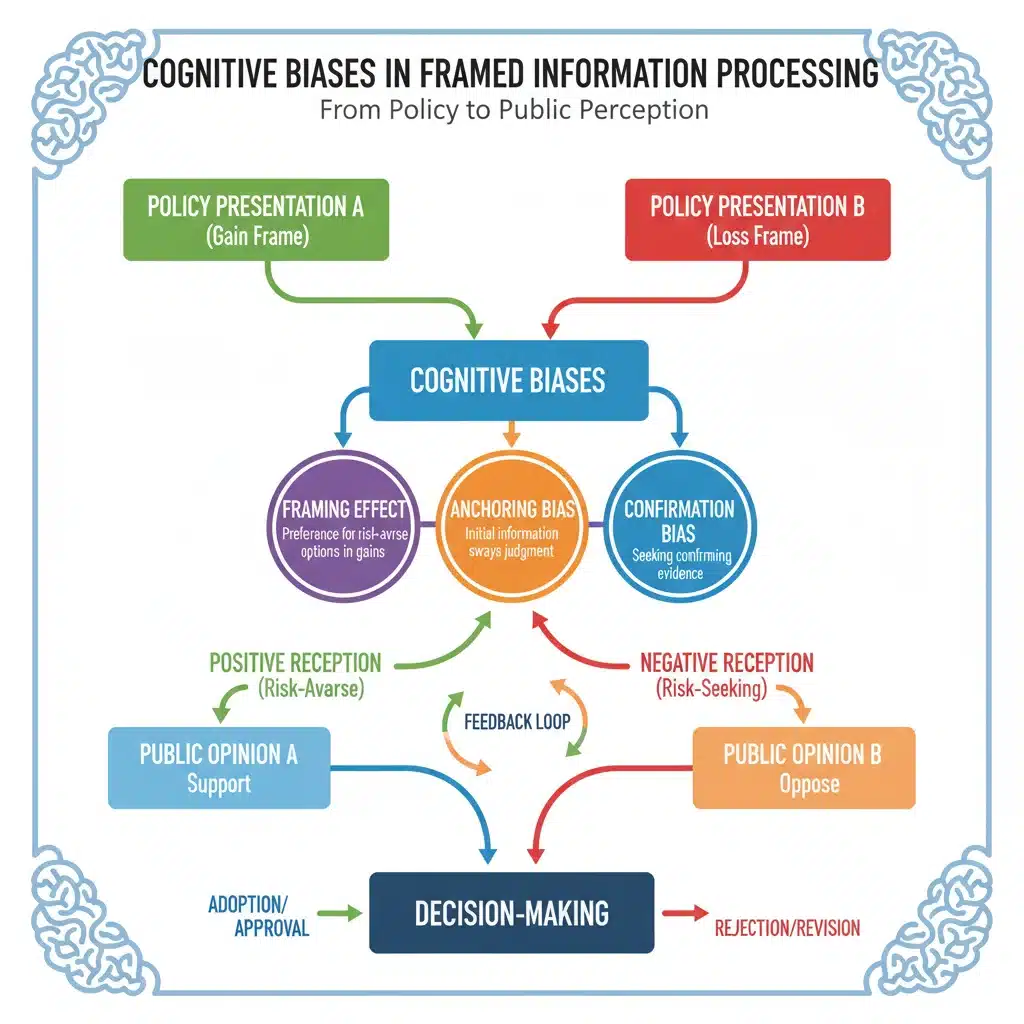
At its core, a framing effect occurs when equivalent information is presented in different ways, leading to different judgments or decisions. This phenomenon, extensively studied in cognitive psychology and behavioral economics, demonstrates that human rationality is often bounded. Instead of processing all information objectively, individuals rely on heuristics and mental shortcuts, which are heavily influenced by how information is framed. Daniel Kahneman and Amos Tversky’s prospect theory, for instance, highlights how people react differently to choices framed as gains versus choices framed as losses, even if the objective outcome is the same. This foundational understanding is crucial when considering framing public policy.
Gain vs. Loss Framing in Policy
Consider a policy initiative aimed at reducing carbon emissions. If framed as ‘saving the planet for future generations’ (gain frame), it might evoke a different response than if framed as ‘avoiding catastrophic climate change’ (loss frame). While both convey urgency, the emotional and cognitive responses they trigger can differ significantly. A gain frame might inspire hope and collective action, while a loss frame might induce fear and a desire to avoid negative outcomes. In the context of 2026 US initiatives, imagine a new tax policy. If it’s presented as ‘an investment in national infrastructure that will create jobs and boost the economy’ (gain), it will likely be received differently than if it’s presented as ‘a necessary burden to cover rising national debt’ (loss). The former emphasizes positive outcomes, encouraging acceptance, while the latter highlights sacrifice, potentially fostering resistance.
Attribute Framing and Goal Framing
Beyond gain and loss, other types of framing effects are equally relevant to public policy. Attribute framing focuses on describing a particular characteristic of an object or issue in either a positive or negative light. For example, a new agricultural policy might be described as ‘supporting sustainable farming practices’ (positive attribute) or ‘restricting traditional farming methods’ (negative attribute). Both statements might be factually accurate, but their impact on public opinion will vary. Goal framing, on the other hand, emphasizes the consequences of performing or not performing a certain action. For a public health campaign, framing a vaccine as ‘protecting you and your community from illness’ (positive consequence of action) is different from framing it as ‘avoiding the risk of severe disease’ (negative consequence of inaction). Policymakers in 2026 will undoubtedly leverage these subtle distinctions to garner public support for their proposed reforms and programs.
The Mechanics of Framing: How it Works in Practice
The effectiveness of framing public policy lies in its ability to activate specific cognitive schemas or mental models in the minds of citizens. When a policy is framed, it doesn’t just present information; it suggests a particular interpretation, a way of thinking about the issue. This can involve:
- Selecting certain aspects of a perceived reality: Highlighting specific data points or consequences while downplaying others.
- Making them more salient: Using vivid language, metaphors, and examples to make certain aspects more prominent and memorable.
- Promoting a particular problem definition, causal interpretation, moral evaluation, and/or treatment recommendation: Guiding citizens towards a specific understanding of the problem, its origins, its ethical implications, and the proposed solution.
For instance, when discussing immigration policy, framing it as a ‘national security issue’ evokes different concerns and priorities than framing it as a ‘humanitarian crisis’ or an ‘economic opportunity’. Each frame calls upon a distinct set of values, beliefs, and emotional responses, leading to divergent policy preferences among the public. In the context of 2026, as the US grapples with complex issues like technological regulation, climate change adaptation, and social welfare reforms, the strategic choice of framing will be a powerful determinant of public acceptance and political feasibility.
Case Studies and Anticipated 2026 US Initiatives
Historically, framing has been a potent force in US public discourse. The ‘war on terror’ framed a series of military and domestic policies, while the ‘affordable care act’ framed healthcare reform around accessibility. As we approach 2026, several key areas are likely to see significant policy initiatives, where framing will play a crucial role:
Environmental Policy and Climate Change
With increasing urgency around climate change, 2026 is likely to see new environmental policies. How these are framed will be critical. Will they be presented as ‘investments in a green future’ (gain, economic opportunity) or ‘necessary regulations to prevent ecological collapse’ (loss, risk aversion)? The former might appeal to economic growth advocates, while the latter might resonate with environmental activists. A policy involving carbon taxes, for example, could be framed as a ‘polluter pays principle’ (justice frame) or a ‘revenue source for renewable energy’ (investment frame). Each evokes different public sentiments and political alignments.
Economic Policy and Taxation
Economic policies, especially those related to taxation and fiscal spending, are always ripe for framing battles. A proposed wealth tax could be framed as ‘ensuring fairness and reducing inequality’ (equity frame) or ‘punishing success and hindering economic growth’ (disincentive frame). Similarly, infrastructure spending could be framed as ‘modernizing America’s backbone’ (national pride, progress) or ‘irresponsible government spending’ (fiscal conservatism). The 2026 economic landscape will undoubtedly feature debates where the chosen frame will significantly influence public support and opposition.
Healthcare Reform and Public Health
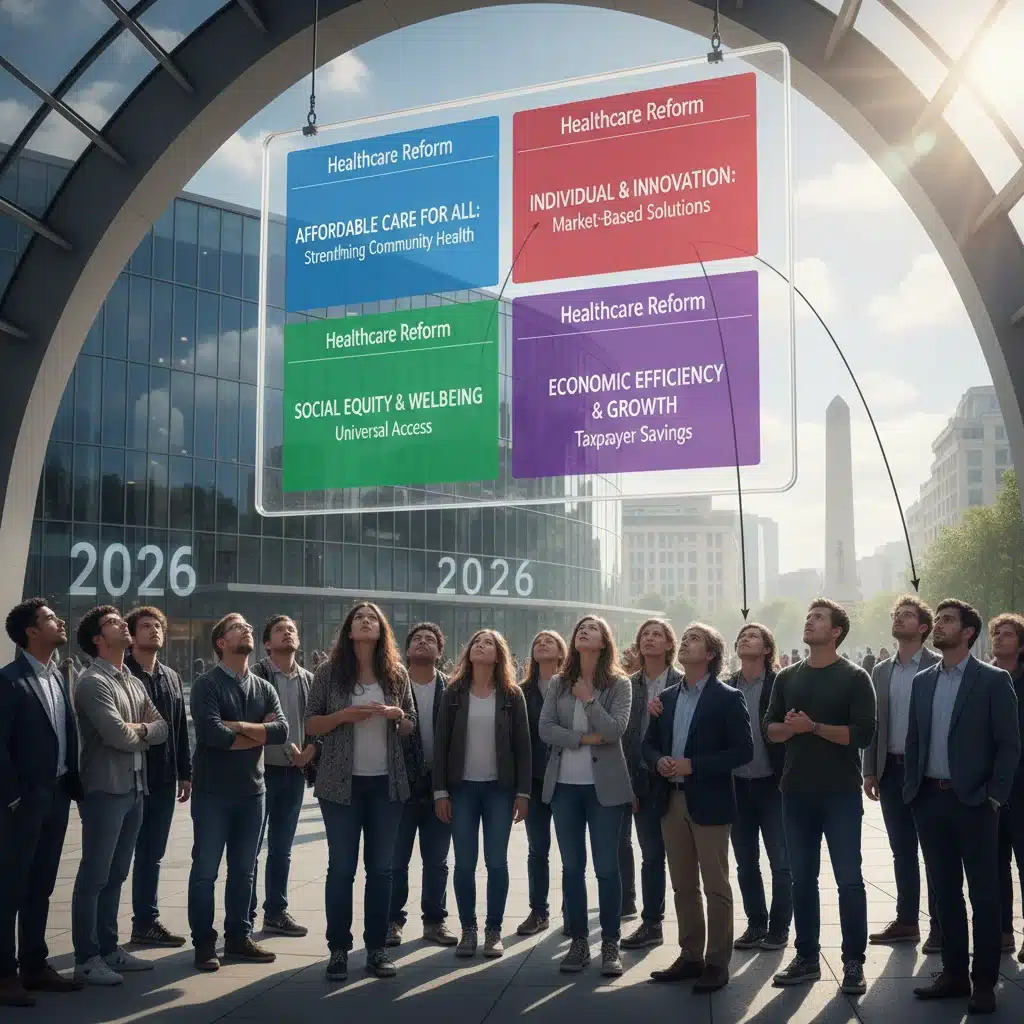
Healthcare remains a perennial topic. New initiatives in 2026 might focus on mental health access, prescription drug costs, or preventative care. Framing mental health support as ‘building a resilient society’ (societal benefit) versus ‘addressing a costly public health burden’ (economic cost) can alter perception. Policies aimed at controlling drug prices could be framed as ‘protecting consumers from corporate greed’ (consumer protection) or ‘stifling pharmaceutical innovation’ (economic impact). The empathetic and ethical dimensions of healthcare make it particularly susceptible to powerful framing effects, directly impacting citizen willingness to adopt new practices or support reforms.
Technology Regulation and Digital Rights
As technology continues to evolve rapidly, 2026 is likely to bring new policies on data privacy, artificial intelligence, and social media regulation. Framing here is complex. Data privacy legislation could be framed as ‘safeguarding individual liberties in the digital age’ (freedom, security) or ‘impeding technological advancement and innovation’ (economic progress). Regulations on AI might be framed as ‘ensuring ethical development and preventing misuse’ (safety, ethics) or ‘over-regulating a nascent industry’ (economic constraint). These frames will shape public discourse on the balance between innovation, individual rights, and societal protection.
The Role of Media and Political Actors
The media plays a powerful role as an amplifier and, often, an originator of frames. News outlets, social media platforms, and political commentators often adopt and disseminate particular frames, which then become dominant in public discourse. Political actors, including politicians, advocacy groups, and lobbyists, are acutely aware of the power of framing and actively employ it to advance their agendas. They strategically choose language, metaphors, and narratives that resonate with their target audiences and undermine the arguments of their opponents. This constant battle over narrative control is central to how framing public policy unfolds in a democratic society.
In the lead-up to 2026, expect sophisticated campaigns by various stakeholders to frame policy debates in ways that benefit their interests. This could involve using emotionally charged language, appealing to specific values (e.g., freedom, security, equality), or selectively presenting evidence. Citizens must be vigilant, recognizing that the information they consume is often pre-processed through a particular frame, influencing their understanding before they even reach a conclusion.

Implications for Citizen Behavior and Democratic Engagement
The impact of framing effects on citizen behavior is profound. It can influence:
- Policy Preferences: Citizens may support or oppose policies based on how they are framed, rather than solely on their objective merits.
- Political Participation: Framing can mobilize or demobilize voters, influencing their willingness to engage in political processes.
- Trust in Institutions: Consistent negative framing of government actions can erode public trust, while positive framing can bolster it.
- Social Cohesion: Divisive framing can exacerbate societal cleavages, while unifying framing can foster common ground.
For democratic engagement in 2026, recognizing these effects is crucial. An informed citizenry is one that can critically evaluate the frames presented by politicians, media, and interest groups. This involves asking: What aspects of the issue are being highlighted? What is being downplayed or omitted? What values are being appealed to? What alternative frames might exist? By engaging in this kind of critical analysis, citizens can move beyond superficial reactions to a deeper understanding of policy implications.
Strategies for Ethical Framing and Critical Reception
Given the power of framing public policy, it’s essential to consider ethical implications. While framing is an inherent part of communication, its manipulative use can undermine democratic processes. Policymakers have a responsibility to frame issues accurately and transparently, avoiding misleading or emotionally exploitative language. The goal should be to inform and persuade based on facts and reasoned arguments, not to obscure or distort reality.
For Policymakers:
- Transparency: Be clear about the underlying goals and assumptions behind a policy.
- Multi-framing: Present issues from multiple perspectives to provide a more holistic view.
- Evidence-based communication: Ground frames in factual data and research.
- Public engagement: Listen to how different groups frame issues and adjust communication accordingly.
For Citizens:
- Media literacy: Develop skills to critically analyze news and political messages.
- Seek diverse sources: Consume information from a variety of outlets to encounter different frames.
- Question assumptions: Actively identify the underlying assumptions and values embedded in policy discussions.
- Focus on substance: Prioritize understanding the objective details and potential consequences of policies, rather than just their presentation.
Conclusion: Navigating the Framed Future of 2026
As the United States moves towards its 2026 policy initiatives, the influence of framing public policy on citizen behavior will be undeniable. From environmental regulations to economic reforms and technological governance, the language and context used to present these policies will significantly shape public perception and acceptance. Understanding framing effects is not just an academic pursuit; it is a practical necessity for both those who craft policy and those who are affected by it.
For policymakers, mastering ethical and effective framing strategies is crucial for building consensus and ensuring successful implementation. For citizens, developing a critical awareness of how issues are framed is vital for informed democratic participation and resisting manipulation. By recognizing the subtle yet powerful ways in which information is presented, we can all contribute to a more transparent, rational, and ultimately, more effective public discourse in the years to come. The future of 2026 US initiatives will not only be defined by their content but also by the narrative frames that shape their journey from proposal to public acceptance.