Healthcare Access 2026: Policy Reforms & Financial Impact on 80% of Americans

Healthcare Access in 2026: A Look at 2 Major Policy Reforms and Their Impact on 80% of Americans (RECENT UPDATES, FINANCIAL IMPACT)
The landscape of American healthcare is perpetually in flux, a dynamic environment shaped by legislative decisions, technological advancements, and shifting societal needs. As we look towards 2026, two significant policy reforms are poised to redefine healthcare access 2026 for a vast majority of the population – approximately 80% of Americans. Understanding these reforms, their recent updates, and their profound financial implications is not merely academic; it is crucial for individuals, families, and healthcare providers alike to navigate the evolving system effectively. This comprehensive analysis will delve deep into these anticipated changes, offering insights into what the future of American healthcare truly holds.
The United States healthcare system, renowned for its innovation and advanced medical treatments, simultaneously grapples with challenges of affordability, equity, and accessibility. Millions of Americans continue to face barriers to receiving timely and appropriate care, leading to disparities in health outcomes and significant financial burdens. It is against this backdrop that new policy initiatives emerge, aiming to address these systemic issues. While the specifics of legislative processes can be intricate and subject to ongoing debate, the overarching objectives of these two major reforms center on expanding coverage, controlling costs, and enhancing the quality of care. Our focus on healthcare access 2026 highlights the critical juncture at which these policies are expected to manifest their full effects.
The journey to 2026 involves a complex interplay of political will, economic realities, and public health imperatives. Policy reforms rarely occur in a vacuum; they are often the culmination of years of advocacy, research, and negotiation. The reforms we will discuss are not merely theoretical constructs; they are actively being shaped, refined, and implemented, with recent updates providing clearer indicators of their trajectory. For 80% of Americans, these changes could mean fundamental shifts in how they interact with the healthcare system, from selecting insurance plans to accessing specialized medical services. The financial impact, in particular, will be a defining feature, influencing household budgets, employer costs, and the overall economic health of the nation.
This article aims to provide a clear, detailed, and accessible overview of these transformations. We will explore the core tenets of each reform, analyze the latest developments, and project their potential impact on different segments of the American population. By the end of this discussion, readers should have a robust understanding of the future of healthcare access 2026 and be better equipped to prepare for the changes ahead. The information presented here is vital for anyone seeking to comprehend the evolving landscape of healthcare in the United States.
Policy Reform 1: Expanding Subsidies and Strengthening the Affordable Care Act (ACA)
The Affordable Care Act (ACA) has been a cornerstone of American healthcare policy since its enactment, significantly expanding health insurance coverage to millions. However, its implementation has not been without challenges, particularly concerning affordability for those not eligible for robust subsidies. The first major policy reform anticipated by 2026 focuses on a significant expansion of ACA subsidies and a broader strengthening of the act’s provisions, aiming to make health insurance more attainable for a larger portion of the middle class and low-income individuals. This initiative directly addresses the core issue of healthcare access 2026 by reducing the financial burden of premiums and out-of-pocket costs.
Recent Updates and Legislative Momentum
Recent legislative actions have already laid the groundwork for this expansion. For instance, temporary enhancements to ACA subsidies, introduced during the COVID-19 pandemic, have proven highly effective in lowering insurance costs for millions. These enhancements broadened eligibility for subsidies and increased the amount of financial assistance available, making marketplace plans more affordable than ever before. The current policy reform seeks to make these expanded subsidies permanent or at least extend them significantly beyond their original expiration dates. This move is driven by a recognition of their positive impact on coverage rates and a desire to stabilize the individual insurance market.
Discussions in Congress and among policy think tanks continue to explore mechanisms for long-term funding and implementation. Key proposals include adjusting the income cap for subsidy eligibility, which currently stands at 400% of the federal poverty level, and increasing the generosity of subsidies for those at lower income levels. Furthermore, there’s a push to address the ‘family glitch,’ a loophole that prevents some families from receiving ACA subsidies if one member has access to ‘affordable’ employer-sponsored coverage, even if that coverage is prohibitively expensive for the entire family. Rectifying this glitch would significantly improve healthcare access 2026 for millions of families.
Impact on 80% of Americans: Who Benefits and How?
The expansion of ACA subsidies primarily targets individuals and families who purchase insurance through the health insurance marketplaces. This group represents a substantial portion of the 80% of Americans affected by these reforms. Specifically, those earning between 100% and 400% of the federal poverty level (FPL) will experience substantial reductions in their monthly premiums. For many, this could mean moving from paying a significant percentage of their income for health insurance to a much more manageable amount, freeing up financial resources for other essential needs.
Beyond direct premium reductions, this reform is expected to have several ripple effects. Increased enrollment in marketplace plans could lead to a more stable risk pool, potentially driving down overall premium costs for everyone in the individual market. It also means fewer uninsured individuals, which can reduce the burden on emergency rooms for primary care and improve public health outcomes across communities. For employers, particularly small businesses, a robust individual market with affordable options could reduce pressure to offer expensive employer-sponsored plans, offering more flexibility.
The strengthening of the ACA also includes efforts to enhance consumer protections, such as preventing insurers from imposing annual or lifetime limits on essential health benefits and ensuring coverage for pre-existing conditions. These provisions are critical for maintaining a baseline of quality and security in health coverage, directly contributing to improved healthcare access 2026 for vulnerable populations. The cumulative effect is a more inclusive and financially accessible healthcare system for a significant majority of Americans.
Policy Reform 2: Advancements in Telehealth Integration and Digital Health Infrastructure
The second major policy reform shaping healthcare access 2026 centers on the rapid advancement and institutionalization of telehealth and digital health infrastructure. While telehealth gained unprecedented prominence during the COVID-19 pandemic, its long-term integration into the standard healthcare delivery model requires sustained policy support, regulatory clarity, and significant investment in digital infrastructure. This reform aims to move beyond emergency measures, establishing telehealth as a permanent and integral component of accessible, high-quality care.
Recent Updates and Regulatory Frameworks
Post-pandemic, many of the temporary waivers that facilitated widespread telehealth adoption have been made permanent or extended. This includes broader Medicare and Medicaid reimbursement for telehealth services, allowing providers to be compensated for virtual visits at rates comparable to in-person appointments. States are also actively revising their licensing laws to permit out-of-state practitioners to provide telehealth services, addressing a critical barrier to expanding access, especially in rural or underserved areas.
Furthermore, there is a strong policy push for interoperability of electronic health records (EHRs). This means ensuring that patient data can be seamlessly shared between different healthcare providers and systems, regardless of their location or technological platform. Improved interoperability is foundational for effective telehealth, allowing providers to access comprehensive patient histories and coordinate care efficiently. Investments in broadband infrastructure, particularly in rural and remote regions, are also a key part of this reform, recognizing that reliable internet access is a prerequisite for effective digital health equity. These ongoing developments are crucial for solidifying healthcare access 2026 through digital means.
Impact on 80% of Americans: Bridging Gaps and Enhancing Convenience
The institutionalization of telehealth and digital health infrastructure will profoundly impact 80% of Americans by significantly enhancing convenience, reducing geographical barriers, and potentially lowering healthcare costs. For individuals in rural areas, telehealth means access to specialists who might otherwise be hundreds of miles away, eliminating the need for arduous travel and time off work. For urban dwellers, it offers the convenience of virtual consultations for routine check-ups, medication management, and mental health services, saving time and reducing exposure to infectious diseases in waiting rooms.
The financial impact is multi-faceted. For patients, reduced travel costs, fewer missed workdays, and potentially lower co-pays for virtual visits can translate into significant savings. For healthcare systems, telehealth can improve efficiency, optimize resource allocation, and reduce overheads associated with physical infrastructure. It also allows for more proactive and preventative care, potentially averting more expensive emergency interventions down the line. Mental health services, in particular, have seen a massive expansion through telehealth, making therapy and psychiatric consultations more accessible and destigmatizing mental healthcare for many.
Moreover, digital health infrastructure supports remote patient monitoring (RPM) for chronic conditions, allowing healthcare providers to track vital signs and other health data from patients’ homes. This proactive approach can lead to earlier interventions, better disease management, and improved quality of life for individuals with chronic illnesses, directly contributing to better healthcare access 2026. The integration of AI and machine learning into digital health platforms also promises more personalized care plans and predictive analytics for health risks, further empowering both patients and providers.
Synergies and Overlapping Impacts: A Holistic View of Healthcare Access 2026
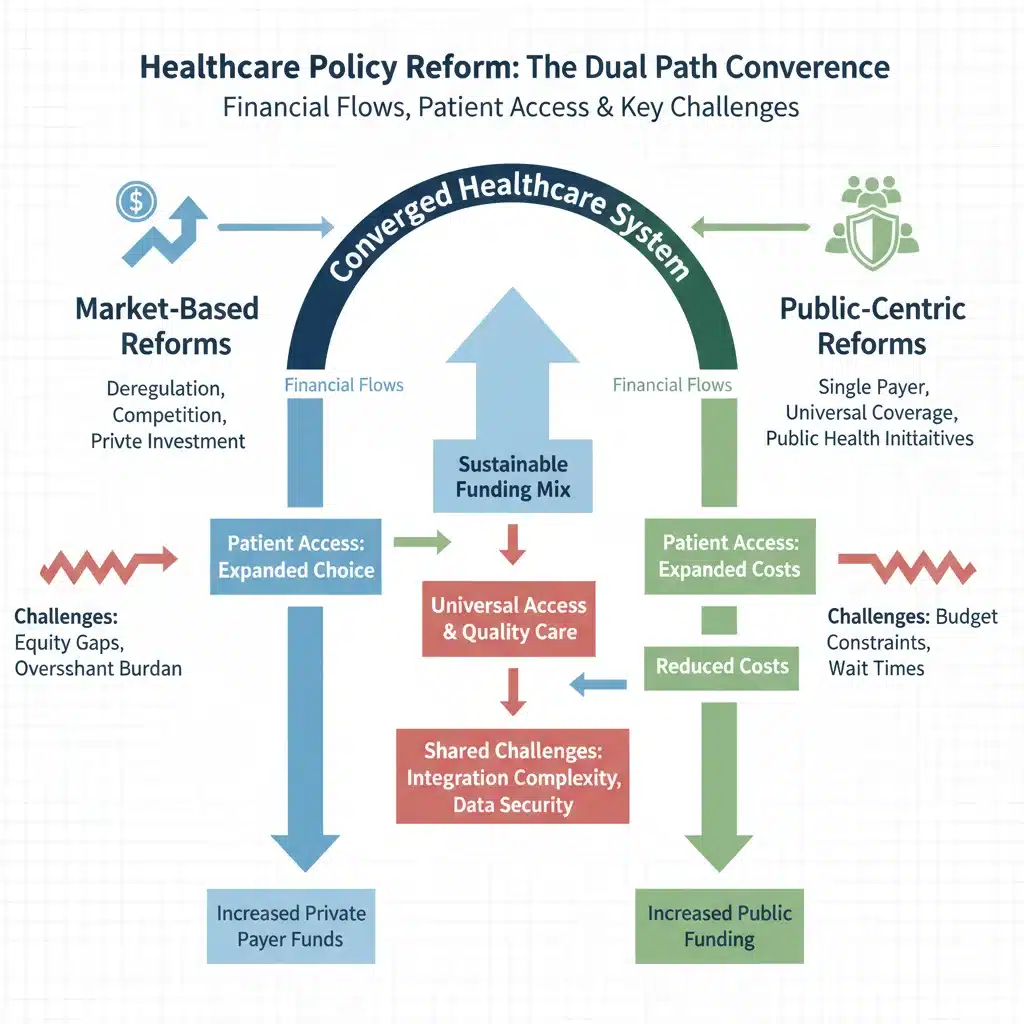
While discussed as distinct reforms, the expansion of ACA subsidies and the integration of telehealth are not isolated initiatives. They are highly synergistic, with their combined effects expected to create a more robust and accessible healthcare ecosystem by 2026. For example, increased insurance coverage through expanded ACA subsidies makes telehealth services more affordable and widely utilized, as more individuals will have insurance plans that cover virtual care. Conversely, the convenience and cost-effectiveness of telehealth can make health insurance, even with subsidies, a more attractive and valuable investment for consumers.
Consider a scenario where an individual in a rural area, previously uninsured due to high costs, now has access to an affordable ACA plan thanks to enhanced subsidies. This individual can then leverage telehealth to consult with specialists in urban centers without the prohibitive cost or time commitment of travel. This dual benefit significantly improves their healthcare access 2026, addressing both financial and geographical barriers simultaneously. The reforms also collectively aim to reduce health disparities, ensuring that socioeconomic status or geographical location does not dictate the quality or availability of care.
Financial Impact on Households and the Broader Economy
The financial implications for 80% of Americans are substantial. For households, the primary benefit will be reduced out-of-pocket healthcare expenditures, both in terms of premiums and direct service costs. This can lead to increased disposable income, reduced medical debt, and greater financial stability. For many, the fear of catastrophic medical bills, a leading cause of bankruptcy in the U.S., will be significantly mitigated. This financial relief will be particularly pronounced for middle-income families who often struggle to afford coverage without robust subsidies.
On a broader economic scale, a healthier population is a more productive population. Improved healthcare access 2026 can lead to fewer sick days, enhanced workforce participation, and a reduction in premature deaths. The economic savings from preventative care and better management of chronic diseases can be immense, reducing the overall burden on the healthcare system and government budgets. While there will be initial costs associated with funding expanded subsidies and digital infrastructure, the long-term economic benefits in terms of productivity and public health are expected to outweigh these investments.
However, it is also important to acknowledge potential challenges. Funding these expansions will require ongoing political commitment and potentially new revenue streams. The healthcare industry itself will need to adapt, with providers investing in new technologies and training to effectively integrate telehealth into their practices. Ensuring equitable access to broadband internet, especially in remote areas, remains a critical infrastructure challenge that must be addressed for the full benefits of digital health to be realized.
Challenges and Considerations for Effective Implementation
While the prospects for enhanced healthcare access 2026 are promising, the path to full and equitable implementation of these reforms is not without obstacles. Addressing these challenges proactively will be key to realizing the intended benefits for 80% of Americans.
Addressing Health Equity and Digital Divide
Despite the potential of telehealth to bridge geographical gaps, a significant challenge remains: the digital divide. Not all Americans have reliable access to high-speed internet or the necessary digital literacy to utilize telehealth services effectively. Low-income communities, certain minority groups, and older adults disproportionately face these barriers. Policies must explicitly address these disparities, perhaps through targeted programs for digital literacy training, subsidized internet access, and the provision of necessary devices. Without such efforts, the expansion of telehealth could inadvertently exacerbate existing health inequities rather than resolve them.
Similarly, while ACA subsidies aim to make insurance affordable, some populations may still struggle with enrollment processes, understanding complex plan options, or navigating the healthcare system once insured. Continued investment in navigators and community outreach programs is essential to ensure that eligible individuals successfully enroll and utilize their benefits, translating expanded access into actual care.
Workforce Development and Provider Adaptation
The integration of telehealth requires a significant shift in healthcare delivery models and demands new skills from the healthcare workforce. Providers need training in virtual care best practices, including effective communication through digital platforms, appropriate use of remote diagnostic tools, and managing the technological aspects of virtual visits. Healthcare systems must invest in robust IT infrastructure, cybersecurity measures, and technical support to ensure seamless and secure telehealth operations. The successful implementation of healthcare access 2026 will hinge on the willingness and capacity of the healthcare workforce to adapt to these new modalities.
Moreover, there’s a need to ensure an adequate supply of healthcare professionals, particularly in primary care and mental health, to meet the increased demand that expanded insurance coverage and easier access through telehealth will generate. Workforce shortages, especially in underserved areas, could limit the effectiveness of these reforms if not addressed concurrently.

Maintaining Quality and Patient Safety
As healthcare delivery evolves, maintaining high standards of quality and ensuring patient safety remain paramount. For telehealth, this involves developing clear guidelines for appropriate use, ensuring continuity of care, and establishing mechanisms for addressing technical failures or misdiagnoses in a virtual setting. Regulatory bodies will need to continuously monitor outcomes, gather patient feedback, and adapt policies to ensure that convenience does not come at the expense of quality. The balance between innovation and patient protection will be a critical aspect of shaping healthcare access 2026.
For expanded ACA coverage, ensuring that plans offer comprehensive, high-quality benefits is vital. While affordability is a key goal, plans must not become so lean that they fail to provide adequate protection when serious health issues arise. Ongoing oversight of insurance markets will be necessary to balance consumer choice, affordability, and benefit adequacy.
Conclusion: A More Accessible, Equitable Future for Healthcare Access 2026
The anticipated policy reforms concerning expanded ACA subsidies and the robust integration of telehealth and digital health infrastructure represent a transformative moment for American healthcare. By 2026, these initiatives are projected to significantly improve healthcare access 2026 for approximately 80% of Americans, addressing long-standing issues of affordability, geographical barriers, and convenience. The financial impact on households is expected to be largely positive, reducing burdens and fostering greater economic security, while the broader economy stands to benefit from a healthier and more productive population.
While challenges related to health equity, workforce adaptation, and quality assurance remain, proactive and thoughtful policy design, coupled with continued investment and collaboration across sectors, can mitigate these obstacles. The vision for 2026 is one where a larger segment of the American population can access the care they need, when they need it, without facing insurmountable financial or logistical hurdles. As these reforms continue to unfold, staying informed and engaged will be essential for all stakeholders to navigate the evolving landscape and contribute to a more accessible and equitable future for healthcare in the United States.
The journey towards optimized healthcare access 2026 is ongoing, but the direction is clear: a concerted effort to leverage policy and technology to create a system that serves the needs of the many, not just the few. These two major reforms are not just legislative changes; they are catalysts for a fundamental shift in how Americans experience and interact with their healthcare, promising a future where health and well-being are within reach for a significantly larger portion of the population. The coming years will demonstrate the full extent of their impact, shaping the health and financial security of millions.