
In an increasingly complex world, the sheer volume of choices we face daily can be overwhelming. From selecting a health insurance plan to deciding what to eat for lunch, our environments are constantly shaping our decisions, often without us even realizing it. This phenomenon is precisely what the field of choice architecture seeks to understand and leverage. By strategically designing the context in which people make choices, we can significantly influence their decisions, ultimately leading to improved outcomes for individuals and society as a whole. This article delves into the profound impact of choice architecture, exploring how its principles can be applied to boost consumer welfare in the US market by an estimated 8%.
The concept of choice architecture, popularized by Nobel laureate Richard Thaler and Cass Sunstein in their seminal book ‘Nudge,’ is rooted in behavioral economics. It acknowledges that humans are not always rational actors and that subtle cues and defaults in our environment can have a profound effect on our choices. Rather than restricting options, choice architecture focuses on presenting choices in a way that encourages desired behaviors while still preserving freedom of choice. This approach holds immense potential for driving positive change across various sectors, from public health to financial planning and environmental sustainability.
Understanding the Foundations of Choice Architecture Design
At its core, choice architecture design involves organizing the context in which people make decisions. This includes the number of options presented, the order in which they appear, the default settings, the framing of information, and the presence of social norms. The goal is not to manipulate, but to ‘nudge’ individuals towards decisions that are in their best long-term interest, or the best interest of society, without removing their autonomy. The power of this design lies in its ability to harness predictable human biases and cognitive shortcuts for good.
Key Principles of Choice Architecture
- Defaults: One of the most powerful tools in a choice architect’s arsenal. When individuals are presented with a pre-selected option, they are far more likely to stick with it. Examples include opt-out organ donation programs or automatic enrollment in retirement savings plans.
- Framing: How information is presented can significantly alter perception and choice. Presenting a choice as a gain versus a loss, or highlighting specific attributes, can sway decisions.
- Anchoring: People tend to rely heavily on the first piece of information offered (the ‘anchor’) when making decisions. This can influence pricing perceptions or the evaluation of options.
- Salience: Making certain information or options more prominent or noticeable increases the likelihood of them being chosen.
- Feedback: Providing immediate and clear feedback on choices can help individuals learn and adjust their future behavior.
- Structure of Complex Choices: Breaking down complex decisions into smaller, more manageable steps can reduce cognitive load and improve decision-making.
- Social Norms: Highlighting what others are doing can influence individual choices, especially when there’s uncertainty.
By understanding and applying these principles, designers, policymakers, and businesses can create environments that subtly guide individuals towards more beneficial choices. This isn’t about coercion; it’s about making the ‘good’ choice the easy choice.
The Economic Impact: Boosting US Consumer Welfare by 8%
The potential economic benefits of effective choice architecture design are substantial. Research suggests that well-implemented choice architecture interventions can lead to significant improvements in various aspects of consumer welfare. For instance, studies have shown that defaults in retirement savings plans can dramatically increase participation rates, leading to greater financial security for individuals. Similarly, choice architecture applied to energy consumption can encourage more efficient habits, reducing utility bills and environmental impact.
Estimates suggest that across various sectors within the US market, a comprehensive and ethical application of choice architecture could improve overall consumer welfare by as much as 8%. This improvement would manifest in several ways:
- Improved Financial Health: Increased savings rates, better investment decisions, and reduced debt.
- Enhanced Public Health: Healthier food choices, higher vaccination rates, and increased participation in preventative care programs.
- Greater Environmental Sustainability: Reduced energy consumption, increased recycling, and more sustainable purchasing habits.
- More Efficient Market Functioning: Reduced decision fatigue, better allocation of resources, and increased consumer satisfaction.
Consider the cumulative effect of these small, positive nudges across a population of over 330 million people. The aggregate impact on individual well-being and national economic productivity could indeed be transformative. For businesses, this translates to more satisfied customers, higher engagement, and often, more sustainable business models. For policymakers, it offers a powerful, low-cost tool to address complex societal challenges without resorting to mandates or heavy-handed regulations.
Real-World Applications of Choice Architecture
The principles of choice architecture design are already at play in many aspects of our daily lives, often unnoticed. Recognizing and intentionally applying them can amplify their positive effects.
Healthcare Decisions
In healthcare, choice architecture can guide patients towards healthier behaviors. For example, making appointments for preventative screenings the default, with an option to opt-out, can increase participation. Presenting medication adherence information clearly and simply, perhaps with visual aids or reminders, can improve compliance. Even the layout of a hospital cafeteria, with healthier options placed more prominently, can influence dietary choices among staff and visitors.
Financial Services
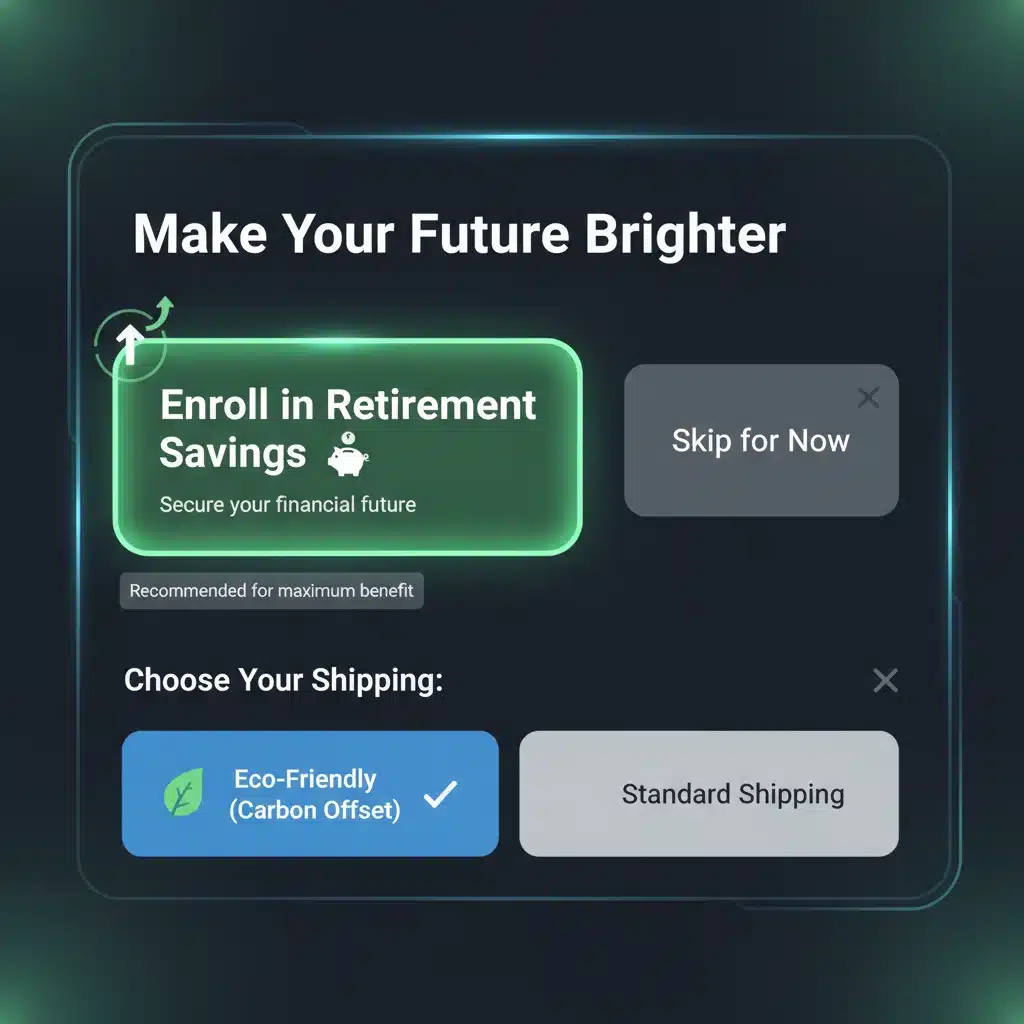
The financial sector is ripe for choice architecture interventions. Automatic enrollment in 401(k) plans with an opt-out feature has been incredibly successful in boosting retirement savings. Similarly, simplifying complex financial product disclosures, offering clear comparisons, and setting beneficial defaults for savings accounts can help consumers make more informed and financially sound decisions. Imagine a banking app that defaults to a savings transfer after payday, with an easy option to adjust or cancel.
Retail and E-commerce
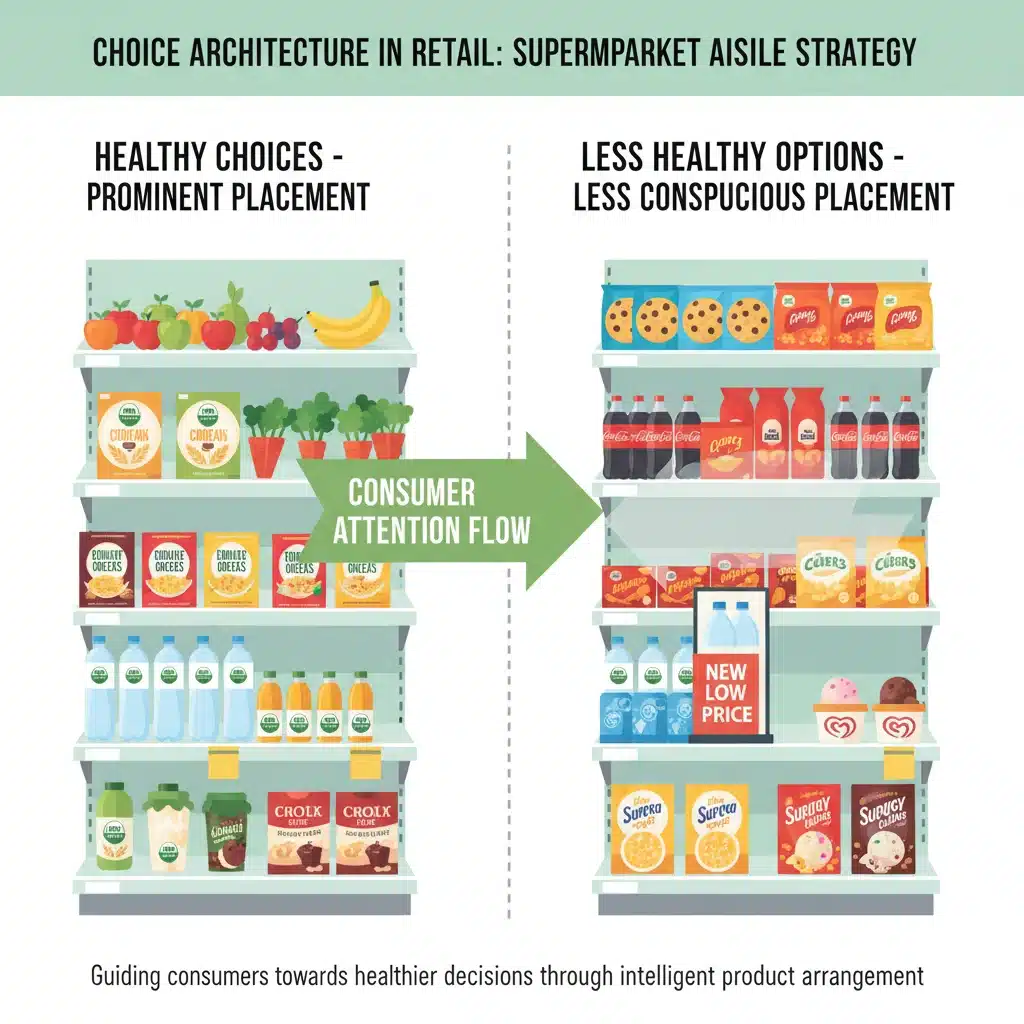
Retailers frequently employ choice architecture, often to their own benefit. However, these same techniques can be used to enhance consumer welfare. Placing healthier food options at eye level in supermarkets, or offering ‘green’ product recommendations prominently online, are examples. Defaulting to reusable bags at checkout (with a small fee for plastic) can encourage sustainable habits. Online, the order of search results, product filtering options, and even the phrasing of product descriptions can all be designed to guide consumers towards choices that align better with their values or long-term well-being.
Public Policy and Governance
Governments can use choice architecture to encourage civic engagement and healthier lifestyles. For instance, simplifying voter registration processes, sending timely reminders, or defaulting to organ donation can increase participation in these vital civic duties. Energy companies can provide personalized feedback on consumption compared to neighbors, nudging households towards more efficient energy use. These interventions are often less costly and more politically palatable than traditional regulations or taxes.
Designing for Better Choices: Practical Steps
Implementing effective choice architecture design requires a systematic approach. It’s not about randomly changing elements but about a thoughtful, evidence-based process.
1. Define the Desired Outcome
Before designing, clearly articulate what constitutes a ‘better’ choice. Is it increased savings, healthier eating, reduced energy consumption, or something else? This outcome must be specific, measurable, achievable, relevant, and time-bound (SMART).
2. Understand the Decision Context
Thoroughly analyze the current decision-making environment. What are the existing choices? What information is available? What are the common biases or pain points that prevent individuals from making the desired choice? This often involves user research, surveys, and behavioral audits.
3. Identify Behavioral Levers
Based on the understanding of the context, identify which choice architecture principles are most likely to be effective. Should a default be introduced? How can framing be used? Is there an opportunity to leverage social norms or provide better feedback?
4. Design and Implement Interventions
Develop and implement the specific choice architecture interventions. This could involve redesigning forms, altering product displays, changing default settings, or revamping communication strategies. It’s crucial that these interventions are subtle and preserve freedom of choice.
5. Test and Iterate
The effectiveness of choice architecture interventions should always be tested, ideally through A/B testing or randomized controlled trials. What works in one context might not work in another. Data collection and analysis are vital for refining the design and maximizing its impact. This iterative process ensures that the interventions are truly improving welfare.
Ethical Considerations in Choice Architecture
While the potential for positive impact is immense, the ethical implications of choice architecture design cannot be overlooked. The line between ‘nudging’ and ‘manipulating’ can sometimes appear blurry, and responsible design is paramount.
Transparency and Disclosure
Choice architects should strive for transparency. While not every subtle cue needs to be explicitly stated, the overall intent to guide beneficial choices should be defensible and, where appropriate, disclosed. Consumers should not feel tricked or coerced.
Preservation of Freedom of Choice
A fundamental tenet of choice architecture is that it preserves freedom of choice. Individuals must always have the option to opt-out of a default, choose a less prominent option, or disregard a nudge. If choices are restricted or removed, it ceases to be choice architecture and becomes coercion.
Avoiding Exploitation and Harm
Choice architecture should never be used to exploit vulnerabilities, promote harmful products, or serve purely corporate interests at the expense of consumer well-being. The ethical compass must always point towards improving welfare, not just increasing profits.
Accountability
Choice architects, whether in government or private industry, should be accountable for the outcomes of their designs. This means monitoring impacts, being open to feedback, and adjusting interventions if they lead to unintended negative consequences.
By adhering to these ethical guidelines, choice architecture can be a powerful force for good, fostering environments where individuals are empowered to make decisions that lead to happier, healthier, and more prosperous lives.
The Future of Choice Architecture in the US Market
As our understanding of human behavior continues to evolve, so too will the sophistication of choice architecture design. The US market, with its diverse consumer base and complex regulatory landscape, presents both challenges and opportunities for widespread implementation. We can expect to see an increased integration of choice architecture principles in:
- Personalized Nudges: Leveraging big data and AI to deliver highly personalized nudges that are relevant to individual consumers’ unique situations and preferences, while respecting privacy.
- Digital Interface Design: As more of our lives move online, the design of websites, apps, and digital platforms will increasingly incorporate choice architecture to guide users towards beneficial actions, from managing finances to interacting with public services.
- Public-Private Partnerships: Collaboration between government agencies and private companies to design and implement choice architecture interventions that address societal challenges, such as improving health outcomes or promoting sustainable consumption.
- Education and Awareness: A greater emphasis on educating the public about how choices are influenced, empowering individuals to become more conscious decision-makers and ‘choice architects’ of their own lives.
- Ethical Frameworks and Regulation: As the field matures, there will likely be increased discussion and development of ethical guidelines and potentially even regulations to ensure that choice architecture is used responsibly and transparently.
The journey towards an 8% improvement in consumer welfare through choice architecture is not a monolithic effort but a sum of countless small, intelligent design decisions. Each thoughtful default, each clear framing, and each well-placed piece of feedback contributes to an environment where individuals can more easily make choices that serve their best interests. This ongoing evolution promises a future where environments are not just functional, but also intelligently designed to foster well-being.
Conclusion
Choice architecture design offers a compelling and effective pathway to significantly enhance consumer welfare in the US market. By understanding the nuances of human decision-making and strategically structuring the contexts in which choices are made, we can ‘nudge’ individuals towards more beneficial outcomes without compromising their freedom. From improving financial literacy and public health to fostering environmental sustainability, the applications are vast and the potential for positive impact is profound. Achieving an 8% increase in consumer welfare is an ambitious yet attainable goal, one that requires thoughtful design, ethical considerations, and a commitment to continuous iteration and improvement. As we move forward, embracing the principles of choice architecture will be crucial in building a society where better choices are not just possible, but inherently easier to make.