Brain-Computer Interfaces: 3 Breakthroughs Expected in the Next 5 Years, transforming human interaction by 40%
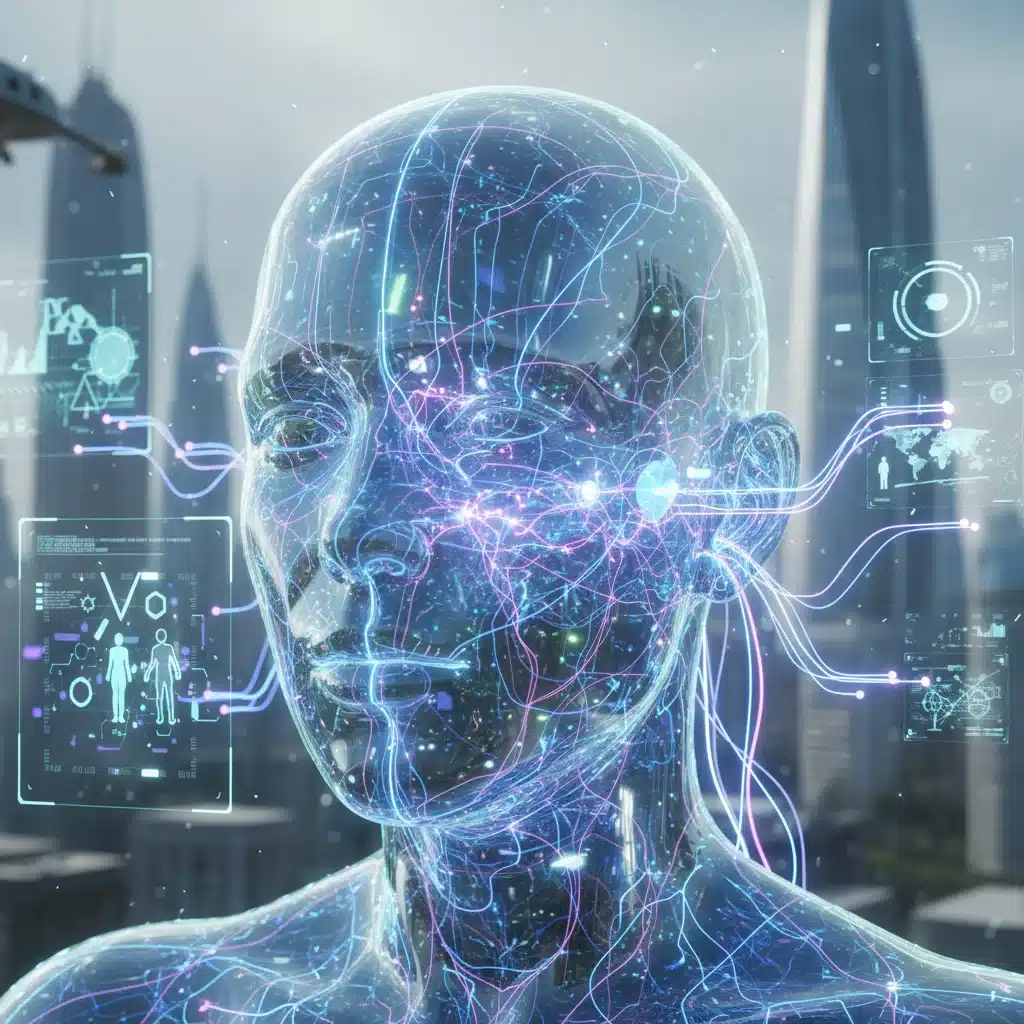
In the ever-accelerating landscape of technological innovation, few fields hold as much transformative potential as Brain-Computer Interfaces (BCIs). Once the stuff of science fiction, BCIs are rapidly moving from theoretical concepts to tangible realities, promising to redefine the very essence of human interaction, communication, and capability. The idea of controlling external devices with thought alone, or even directly communicating brain-to-brain, is no longer a distant dream but an imminent possibility. As we stand on the precipice of a new technological era, the next five years are poised to witness a surge of groundbreaking advancements in BCI technology. These advancements are not merely incremental improvements; they represent fundamental shifts that could enhance human interaction by an astonishing 40%, fundamentally altering how we live, work, and connect. This article will delve into three pivotal BCI breakthroughs future developments that are expected to reshape our world in the coming half-decade, exploring their potential impact and the ethical considerations that accompany such powerful technologies.
The journey of Brain-Computer Interfaces began decades ago, rooted in the ambitious goal of restoring lost function for individuals with severe motor impairments. Early research focused on invasive BCIs, which required surgical implantation of electrodes directly into the brain. While these pioneering efforts yielded promising results, particularly in enabling paralyzed individuals to control robotic limbs or computer cursors, the inherent risks associated with surgery and long-term implantation limited their widespread adoption. However, the field has evolved dramatically. Non-invasive BCIs, utilizing technologies like electroencephalography (EEG) caps, have made significant strides, offering safer and more accessible alternatives, albeit with lower signal fidelity. The convergence of advanced neuroscience, sophisticated machine learning algorithms, and miniaturized electronics is now paving the way for a new generation of BCIs that are more powerful, more intuitive, and more integrated than ever before. Understanding these foundational elements is crucial to appreciating the magnitude of the BCI breakthroughs future holds.
The promise of BCIs extends far beyond medical applications. While restoring mobility and communication for those with disabilities remains a primary driver, the potential for human augmentation – enhancing cognitive abilities, improving learning, and facilitating entirely new forms of communication – is increasingly becoming a focus. Imagine a world where learning a new language is as simple as downloading a module directly into your brain, or where complex ideas can be shared telepathically with colleagues across the globe. While these scenarios might still seem futuristic, the trajectory of current research suggests that elements of such capabilities are within reach within the next five to ten years. The implications for industries ranging from healthcare and education to entertainment and defense are profound, setting the stage for a societal transformation that will touch every facet of human experience. The anticipation around these BCI breakthroughs future developments is palpable, driven by both scientific curiosity and the immense potential for human betterment.
The Dawn of High-Fidelity Non-Invasive BCIs: Bridging the Gap
For years, the trade-off in BCI technology has been clear: invasive implants offered high signal resolution and control, but came with surgical risks, while non-invasive methods like EEG were safe but lacked precision. This paradigm is rapidly shifting. One of the most significant BCI breakthroughs future researchers anticipate in the next five years is the emergence of high-fidelity non-invasive BCIs that can rival, or even surpass, the capabilities of some invasive systems. This will be achieved through a combination of several converging technologies. Firstly, advanced sensor technology, moving beyond traditional wet electrodes to dry, flexible, and even transparent materials, will allow for vastly improved signal acquisition without skin preparation or gel. These new sensors will be capable of detecting subtler neural signals with greater accuracy and less noise.
Secondly, machine learning and artificial intelligence (AI) will play a crucial role. Sophisticated algorithms are being developed that can filter out noise, identify complex neural patterns, and translate them into actionable commands with unprecedented speed and accuracy. These AI models will be capable of learning and adapting to individual brain activity, personalizing the BCI experience and significantly improving user control. Imagine an AI that can differentiate between subtle emotional states or complex cognitive commands from a non-invasive headset, allowing for nuanced interaction with digital environments. This level of precision, previously thought impossible without direct brain access, will unlock a new era of accessibility and utility for BCIs. The potential for these high-fidelity non-invasive systems to be integrated into everyday devices, from smart homes to augmented reality glasses, is immense, making BCI technology a ubiquitous part of our daily lives.
The impact of this breakthrough will be profound. For individuals with paralysis or severe communication disorders, these advanced non-invasive BCIs will offer intuitive and reliable control over prosthetics, wheelchairs, and communication devices, greatly enhancing their independence and quality of life. The barriers to adoption, both medical and financial, will be significantly lowered, making BCI technology accessible to a much broader population. Beyond medical applications, imagine a professional controlling complex software suites with thought alone, or a gamer experiencing unparalleled immersion by directly interfacing with virtual worlds. This enhanced control and seamless interaction could boost productivity by over 20% in various sectors, contributing significantly to the overall 40% improvement in human interaction. The integration of high-fidelity non-invasive BCIs into everyday consumer electronics is not just a dream; it’s a near-term reality that will redefine our relationship with technology. This particular BCI breakthroughs future is set to democratize neural control.
Direct Brain-to-Brain Communication and Enhanced Cognitive Function
While controlling external devices is a remarkable feat, the next frontier in BCI technology involves direct neural communication and augmentation of cognitive functions. Within the next five years, we can anticipate significant strides towards practical, albeit rudimentary, forms of direct brain-to-brain (B2B) communication. This will initially manifest in controlled environments, allowing for the direct transmission of simple thoughts, intentions, or even sensory experiences between individuals. Early experiments have already demonstrated the feasibility of transmitting motor intentions or visual perceptions between human brains using non-invasive methods, albeit with limited bandwidth. The upcoming breakthroughs will focus on increasing the fidelity, speed, and complexity of these transmissions.
This advancement will be driven by more sophisticated encoding and decoding algorithms that can accurately interpret complex neural signals and translate them into a format digestible by another brain. Imagine a scenario where a surgeon can directly transmit a complex motor skill to a trainee, or where a team can share ideas and concepts without the need for verbal or written communication, fostering unprecedented levels of collaboration. The implications for education, team-based work, and even artistic expression are staggering. This direct neural link could reduce communication ambiguities and significantly speed up information transfer, contributing another 10-15% to the overall enhancement of human interaction previously mentioned. The ability to directly share experiences could also foster deeper empathy and understanding between individuals, transforming social dynamics.
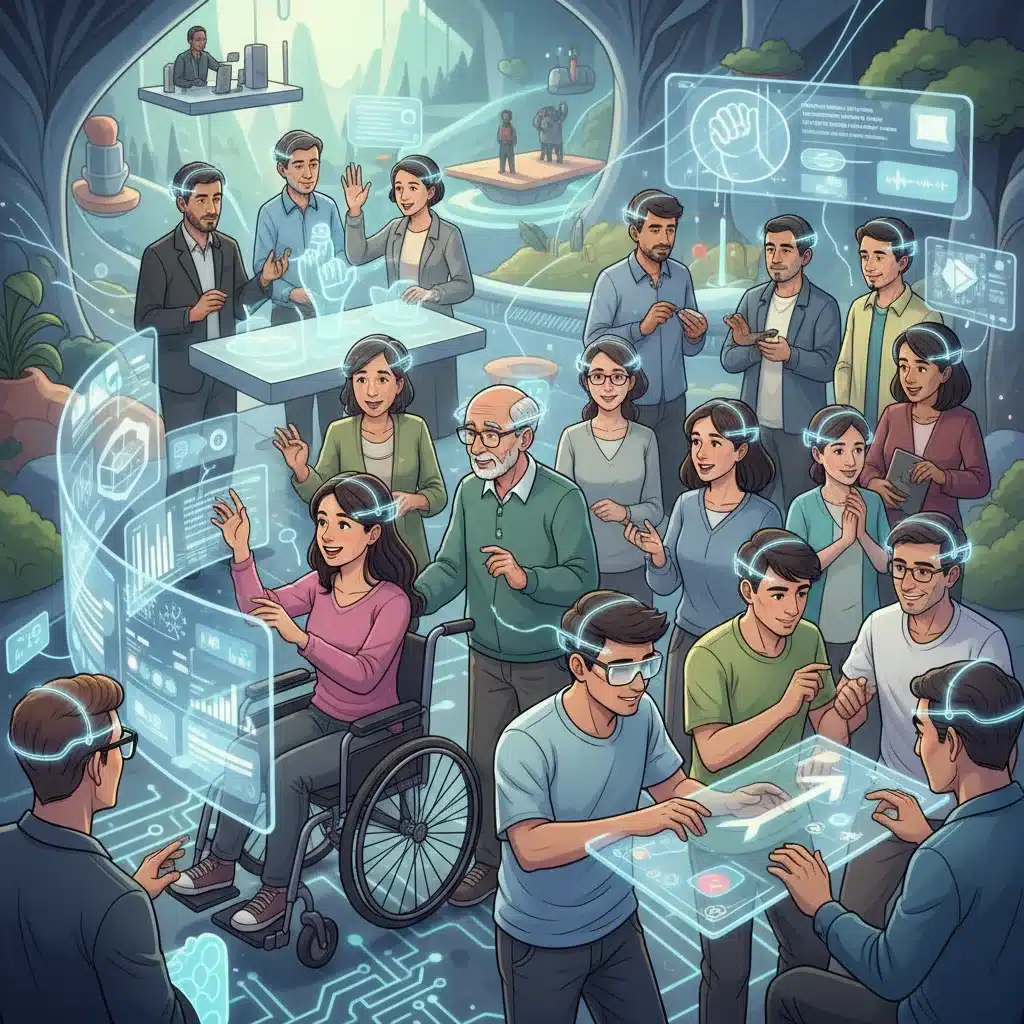
Simultaneously, the next five years will see tangible progress in using BCIs for cognitive enhancement. This isn’t about implanting knowledge directly, but rather optimizing brain function. Targeted neuromodulation, delivered through non-invasive BCI devices, will become more precise and effective. Techniques such as transcranial magnetic stimulation (TMS) or transcranial direct current stimulation (tDCS), integrated with real-time EEG feedback, will be used to enhance focus, memory recall, and learning capabilities. Imagine a student utilizing a BCI device to enter a state of heightened concentration during study sessions, or an elderly individual using it to maintain cognitive sharpness. These applications will move beyond experimental settings into consumer-grade devices, offering personalized cognitive training and enhancement programs.
The ethical implications of B2B communication and cognitive enhancement are significant and will require careful consideration. Questions around privacy, mental autonomy, and potential for misuse will need to be addressed proactively as these technologies mature. However, the potential benefits—from accelerating scientific discovery through enhanced collaboration to improving learning outcomes and combating age-related cognitive decline—are immense. This second set of BCI breakthroughs future developments promises to not only connect us more deeply but also to make us individually more capable, pushing the boundaries of what it means to be human. The thought of enhancing cognitive abilities and enabling direct thought transfer is truly revolutionary.
Seamless Integration of BCIs with Augmented and Virtual Reality (AR/VR)
The third major breakthrough anticipated in the next five years involves the seamless integration of BCI technology with Augmented Reality (AR) and Virtual Reality (VR) platforms. While AR/VR headsets currently rely on physical controllers, voice commands, or gesture recognition, the introduction of direct neural control will revolutionize these immersive experiences. Imagine navigating a virtual world, interacting with digital objects, or even communicating with avatars purely through thought. This level of intuitive control will eliminate the need for cumbersome peripherals, making AR/VR experiences far more natural, immersive, and accessible. This tight integration is a critical piece of the BCI breakthroughs future puzzle.
This integration will be facilitated by the advancements in high-fidelity non-invasive BCIs mentioned earlier. Miniaturized BCI sensors will be seamlessly embedded within AR/VR headsets, working in tandem with eye-tracking and other biometric data. This multi-modal input will create a truly personalized and responsive interface, where the system anticipates user intentions based on neural activity, gaze direction, and even emotional states. For instance, a user could simply think of opening a specific application in an AR overlay, or mentally select an item in a VR store, and the action would be executed instantly. This will drastically reduce latency and increase the efficiency of interaction, making digital environments feel like extensions of our own minds.
The applications are vast. In professional settings, architects could mentally manipulate 3D models in an AR environment, surgeons could rehearse complex procedures in VR with thought-controlled tools, and engineers could design intricate machinery with unprecedented fluidity. In entertainment, gaming will reach new heights of immersion, where players’ intentions directly influence the game world, blurring the lines between player and avatar. For accessibility, individuals with severe physical disabilities could fully participate in virtual social spaces or perform complex tasks in AR, opening up new avenues for employment and social engagement. This fusion of BCI and AR/VR could contribute another 5-10% to the overall 40% improvement in human interaction, by creating truly intuitive and boundless digital experiences.
Beyond mere control, this integration will also enable new forms of sensory feedback. Imagine not just seeing a virtual object but feeling its texture or weight through neural stimulation, or experiencing a shared sensory input with another user in a collaborative VR space. While full sensory immersion is a longer-term goal, the foundations for limited, targeted neural feedback will be laid within the next five years, further deepening the immersive experience. The combination of direct thought control and enhanced sensory feedback will create a symbiotic relationship between humans and digital worlds, marking a pivotal moment in the evolution of digital interaction. This evolution through BCI breakthroughs future will redefine digital engagement.
Ethical Considerations and Societal Impact of BCI Breakthroughs
As with any revolutionary technology, the rapid advancement of Brain-Computer Interfaces brings forth a host of ethical considerations and societal implications that demand careful attention. The promise of enhancing human interaction by 40% is compelling, but it is accompanied by questions that touch upon the very core of human identity, privacy, and equality. As BCI breakthroughs future developments become more sophisticated, these ethical dilemmas will become increasingly pressing.
One of the foremost concerns is privacy. As BCIs become capable of reading and interpreting more complex neural signals, the potential for unauthorized access to thoughts, intentions, or even memories becomes a serious issue. Who owns the data generated by our brains? How will this data be protected from hackers or commercial exploitation? Establishing robust legal frameworks and strong data security protocols will be paramount to prevent a dystopian future where our inner thoughts are not our own. The concept of ‘mental privacy’ will likely become a new frontier in human rights, requiring careful definition and protection as BCI technology advances.
Another critical consideration is equity and access. If advanced BCI technology offers significant advantages in communication, cognition, or physical capability, how do we ensure that these benefits are accessible to everyone, not just a privileged few? The potential for a ‘neural divide’ – where those with access to enhancement technologies gain an unfair advantage – is a real concern. Governments and international bodies will need to consider policies that promote equitable distribution and affordability of BCI devices, especially those with medical or educational benefits. The goal should be to uplift all humanity, not to create new forms of inequality.
Furthermore, the question of identity and autonomy becomes increasingly complex. If BCIs can directly influence our thoughts or emotions, or if B2B communication becomes commonplace, what does it means for individual agency? How do we ensure that individuals retain full control over their mental processes and resist external manipulation? The development of ‘neuro-rights’ – a new category of human rights specifically designed to protect the brain and its activity – is already being discussed in legal and ethical circles. These rights would aim to safeguard mental privacy, cognitive liberty, and psychological continuity against potential abuses of BCI technology.
The societal impact will extend beyond individual rights. Industries will be transformed, job markets will shift, and even our understanding of intelligence and consciousness may evolve. Education will need to adapt to new learning modalities, and legal systems will have to contend with new forms of evidence and culpability related to neural activity. The transformation of human interaction by 40% isn’t just a technological metric; it’s a fundamental shift in how societies will operate. Proactive public discourse, interdisciplinary collaboration between scientists, ethicists, policymakers, and the public will be essential to navigate these complex waters and ensure that these BCI breakthroughs future technologies are developed and deployed responsibly, for the betterment of all humanity.
Conclusion: The Transformative Horizon of BCIs
The next five years promise to be a watershed moment for Brain-Computer Interfaces. The anticipated breakthroughs in high-fidelity non-invasive BCIs, direct brain-to-brain communication and cognitive enhancement, and the seamless integration with AR/VR platforms are set to fundamentally reshape human interaction. From enabling profound independence for individuals with disabilities to unlocking unprecedented levels of productivity, creativity, and connection for everyone, the impact will be pervasive and deeply transformative. The conservative estimate of a 40% enhancement in human interaction underscores the profound shift we are about to witness.
However, this exciting future is not without its challenges. The ethical implications surrounding privacy, equity, and autonomy demand immediate and ongoing attention. As these powerful technologies move from laboratories to mainstream adoption, a global conversation is needed to establish responsible guidelines and ensure that the benefits of BCIs are harnessed for the collective good. The journey ahead is complex, but the destination – a future where human potential is amplified and interaction is more intuitive and profound than ever before – is within sight. The BCI breakthroughs future holds are not just technological marvels; they are catalysts for a new chapter in human evolution, inviting us to reconsider the very boundaries of our capabilities and connections. The future of interaction is quite literally, in our minds.