Space Tourism & Colonization: 2026 Outlook and $1 Billion Market Growth
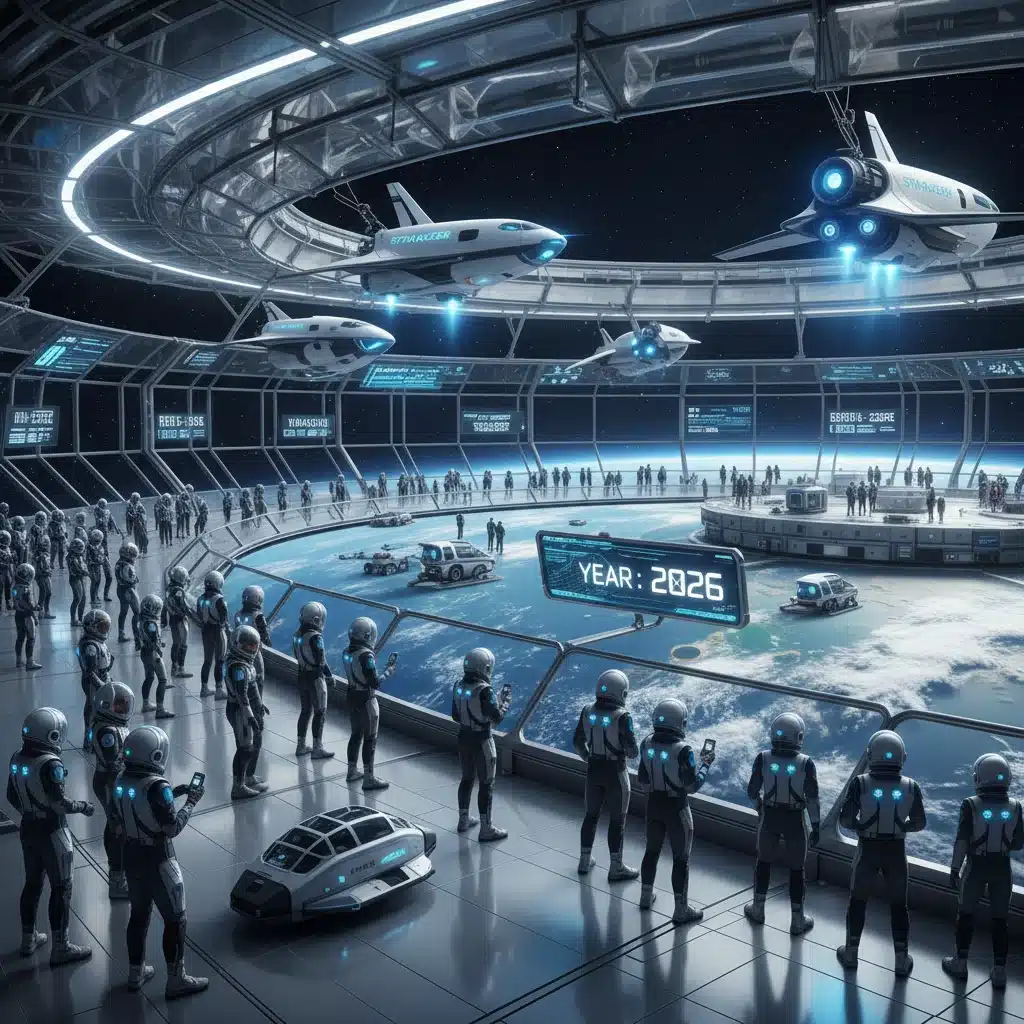
Space Tourism and Colonization: A 2026 Outlook on Commercial Flights and a $1 Billion Market Growth
The cosmos, once the exclusive domain of government-funded astronauts and scientists, is rapidly opening its doors to a new breed of explorer: the space tourist. As we cast our gaze towards 2026, the convergence of technological innovation, private sector investment, and an insatiable human desire for discovery is propelling the space tourism and colonization market into an unprecedented era of growth. This isn’t merely a futuristic fantasy; it’s a tangible reality, with projections indicating a staggering $1 billion market expansion by the middle of this decade. Understanding the intricate dynamics of this burgeoning industry, from the pioneering commercial flights to the nascent whispers of off-world settlements, is crucial for anyone looking to grasp the future of human endeavor.
The concept of venturing beyond Earth’s atmosphere for leisure or settlement has captivated humanity for generations. What was once science fiction is now becoming a viable economic sector, attracting visionary entrepreneurs, engineers, and investors. The year 2026 stands as a pivotal point, a horizon where initial experimental flights mature into more regular commercial operations, and the groundwork for sustained extraterrestrial presence begins to solidify. This article will delve deep into the multifaceted landscape of Space Tourism 2026, examining the key drivers of its growth, the technological marvels making it possible, the regulatory frameworks taking shape, and the ethical considerations that accompany such monumental leaps. We will explore how commercial flights are becoming increasingly accessible, albeit still exclusive, and how this initial accessibility is paving the way for more ambitious long-term goals of human colonization beyond our home planet. The journey to a multi-planetary future is underway, and 2026 offers a compelling glimpse into its accelerating trajectory.
The Dawn of Commercial Spaceflights: What to Expect by 2026
By 2026, the landscape of commercial spaceflight will be significantly more defined than it is today. Several key players, having conducted initial test flights and suborbital journeys, will be moving towards more frequent, potentially even routine, operations. Companies like Virgin Galactic, Blue Origin, and SpaceX are at the forefront, each offering distinct pathways to the final frontier. Virgin Galactic, with its SpaceShipTwo, focuses on suborbital flights that offer passengers several minutes of weightlessness and breathtaking views of Earth from the edge of space. Blue Origin’s New Shepard rocket provides a similar experience, launching vertically and returning its capsule via parachute. Both aim to increase their flight cadence, making the dream of reaching space a reality for more individuals, albeit at a premium price point.
SpaceX, on the other hand, is pushing the boundaries further with its orbital capabilities, primarily through the Crew Dragon spacecraft and the ambitious Starship program. While Crew Dragon is currently used for NASA missions to the International Space Station, its potential for private orbital tourism is immense. Indeed, the Inspiration4 mission in 2021 demonstrated the viability of all-civilian orbital spaceflight. By 2026, we can expect to see more dedicated private orbital missions, potentially offering longer stays in orbit or even journeys around the Moon. The sheer scale and reusability goals of Starship, if fully realized, could revolutionize space travel, drastically reducing costs and opening up possibilities for mass transit to Earth orbit, the Moon, and Mars. The advancements in these commercial flights are not just about spectacle; they represent critical steps in developing reliable, repeatable, and eventually affordable access to space, laying the foundational infrastructure for the broader Space Tourism 2026 market.
The increasing reliability and frequency of these commercial missions will be a major catalyst for the projected market growth. As more people experience space, even for short durations, the demand for varied and extended space experiences will naturally increase. This demand, in turn, fuels further investment and innovation, creating a virtuous cycle. The year 2026 is expected to see a noticeable shift from experimental and proof-of-concept flights to more established and scheduled services, marking a significant maturation of the commercial space tourism sector. This period will also be critical for refining safety protocols and establishing a clearer regulatory framework, which are essential for long-term sustainability and public confidence in space travel.
Market Projections: Unpacking the $1 Billion Growth by 2026
The projection of a $1 billion market growth in space tourism and colonization by 2026 might seem audacious, but it is underpinned by several converging factors. Firstly, the high net worth individual (HNWI) market is robust and growing, with a segment eager to spend significant sums on unique, once-in-a-lifetime experiences. While current ticket prices are in the hundreds of thousands or even millions of dollars, the exclusivity and novelty appeal strongly to this demographic. As more providers enter the market and technologies mature, a slight downward pressure on prices, coupled with increased capacity, will naturally expand the accessible market.
Secondly, ancillary industries are beginning to emerge and contribute to this growth. This includes specialized training programs, space-focused luxury accommodations on Earth (pre-flight), bespoke space apparel and gear, and even insurance tailored for space travelers. These supporting services create an ecosystem that enhances the overall space tourism experience and generates additional revenue streams. Furthermore, the public relations and marketing value derived from successful space tourism missions is immense, generating widespread interest and inspiring future generations of travelers and innovators. The ‘halo effect’ of these high-profile ventures extends far beyond direct ticket sales, boosting brand recognition and attracting talent and investment into the broader aerospace sector.
Thirdly, the investment landscape is incredibly dynamic. Venture capital firms and private equity are pouring billions into space tech startups, recognizing the long-term potential of this new frontier. This capital infusion accelerates research and development, enables the construction of new launch vehicles and facilities, and supports the expansion of operational capabilities. Governments, too, are playing a role, not just through traditional space agencies but also by fostering a regulatory environment that encourages private sector innovation while ensuring safety. The synergy between private capital, technological advancement, and a growing consumer base is the engine driving the Space Tourism 2026 market towards its impressive billion-dollar valuation. This growth is not linear; it’s exponential, fueled by a collective global aspiration to reach for the stars.
Technological Advancements Fueling the Expansion
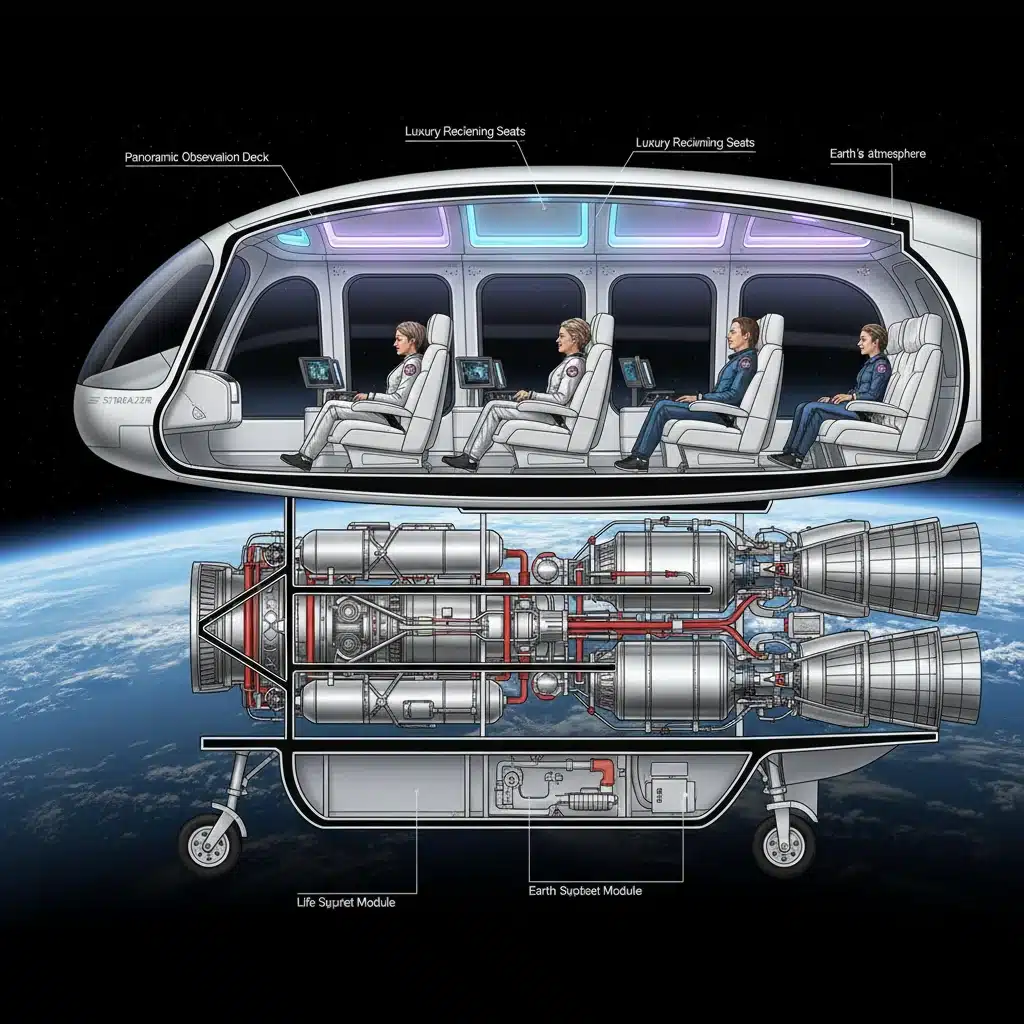
The rapid expansion of space tourism and the nascent steps towards colonization are inextricably linked to breathtaking technological advancements. By 2026, we will see the maturation of several critical technologies that make space travel safer, more efficient, and more sustainable. Reusable rocket technology, pioneered by SpaceX and now adopted by others, is perhaps the most significant game-changer. By dramatically reducing the cost per launch, reusability makes space access economically viable for a wider range of activities, including tourism. This innovation alone is a cornerstone of the projected market growth.
Beyond propulsion, advancements in materials science are leading to lighter, stronger spacecraft components, improving performance and safety. Autonomous systems and artificial intelligence are enhancing mission control, navigation, and even in-flight experiences, reducing the reliance on human intervention for routine operations and increasing overall mission reliability. Life support systems are becoming more compact and efficient, crucial for longer-duration orbital stays and future deep-space missions. These systems are not just about sustaining life but also about enhancing comfort and well-being in the challenging space environment.
Furthermore, significant progress is being made in the development of advanced manufacturing techniques, such as 3D printing in space. This technology holds immense promise for lunar and Martian colonization, allowing for the construction of habitats and infrastructure using local resources, minimizing the need to transport materials from Earth. Robotics and automation will also play a pivotal role in these early colonization efforts, performing hazardous construction tasks and resource extraction before significant human presence. These technological leaps are not isolated; they are interconnected, each advancement building upon another to create a robust foundation for the future of Space Tourism 2026 and beyond. The pace of innovation in this sector is astounding, constantly pushing the boundaries of what is possible and redefining humanity’s relationship with the cosmos.
The Road to Colonization: Early Steps and Future Visions
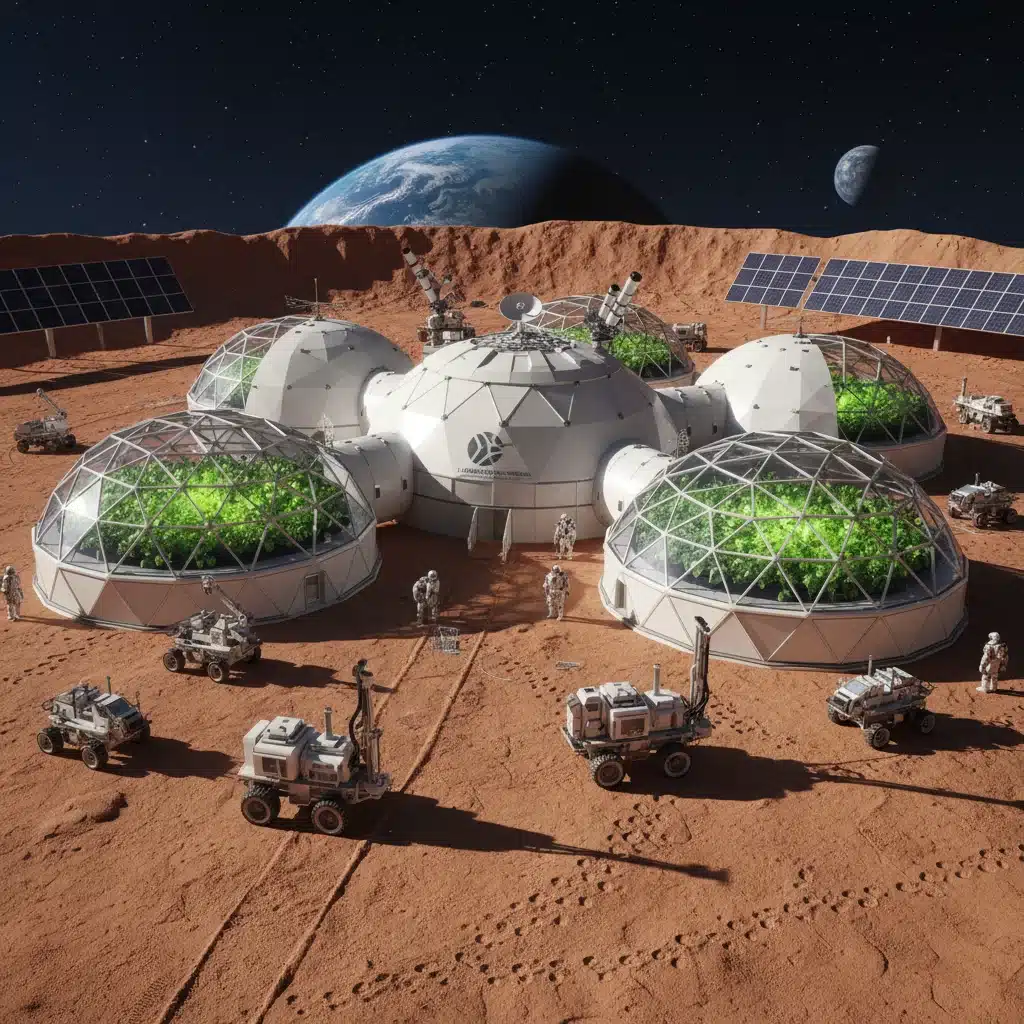
While space tourism focuses on temporary visits, the ultimate aspiration for many in the industry is human colonization beyond Earth. By 2026, while full-fledged colonies may still be a distant dream, significant foundational steps will be underway. The focus will be on establishing a sustained human presence on the Moon, often viewed as a crucial stepping stone to Mars and beyond. International collaborations, such as NASA’s Artemis program with its commercial partners, aim to return humans to the lunar surface and establish a ‘Gateway’ orbital outpost around the Moon. These initiatives are not just about scientific exploration; they are about developing the technologies and operational procedures necessary for long-term extraterrestrial living.
Private companies are also heavily invested in lunar ambitions. Companies like Astrobotic and Intuitive Machines are developing lunar landers and rovers to deliver payloads to the Moon, laying the groundwork for future infrastructure. SpaceX’s Starship is designed with lunar and Martian landings in mind, potentially offering the heavy-lift capacity needed to transport large amounts of cargo and eventually hundreds of people for settlement. The initial phases of colonization will likely involve modular habitats, resource utilization experiments (e.g., extracting water ice from lunar poles), and developing closed-loop life support systems. These early missions are critical for understanding the challenges of living and working in an extraterrestrial environment and for refining the technologies required for self-sufficiency.
The ethical and societal implications of colonization are also beginning to be debated. Questions surrounding property rights in space, governance of off-world settlements, and the environmental impact of human activity on celestial bodies are complex and require careful consideration. By 2026, these discussions will intensify as the prospect of permanent human presence becomes more tangible. The journey to colonization is a multi-generational endeavor, but the next few years will see critical milestones achieved, moving us from merely visiting space to beginning to inhabit it. The vision of a multi-planetary species, once confined to the pages of science fiction, is slowly but surely taking shape, with Space Tourism 2026 playing a vital role in funding and developing the necessary capabilities.
Regulatory Frameworks and Safety Concerns in 2026
As the space tourism market expands, the need for robust regulatory frameworks and stringent safety protocols becomes paramount. By 2026, we can expect to see further evolution in how governments and international bodies approach the commercialization of space. Currently, regulations vary significantly by country, with the U.S. Federal Aviation Administration (FAA) overseeing commercial space launches and re-entries. However, the unique nature of space tourism – transporting paying passengers – necessitates specific considerations beyond traditional cargo or government missions.
Key areas of focus for regulators will include passenger safety standards, crew training and certification, liability in the event of accidents, and the environmental impact of increased launch frequency. While companies are driven by profit, they also understand that a major incident could severely set back the entire industry. Therefore, self-regulation and industry best practices will continue to play a significant role, often working in tandem with government oversight. The development of common international standards will also be crucial as space tourism becomes a global phenomenon, involving launch sites and passengers from various nations.
Furthermore, the legal implications of space colonization will begin to take shape. The Outer Space Treaty of 1967, while foundational, was not designed for a future with private individuals owning property on the Moon or Mars. By 2026, international discussions will likely address issues such as resource ownership, waste management in space, and the legal status of individuals living in off-world settlements. Ensuring the safety of space tourists and future colonists is not just a technical challenge; it’s a complex legal and ethical one that will require ongoing dialogue and adaptation as humanity ventures further into the cosmos. The credibility and long-term success of Space Tourism 2026 hinge on the industry’s ability to demonstrate a commitment to safety and responsible growth, fostering public trust and confidence in this revolutionary new mode of travel.
The Economic and Societal Impact of an Expanding Space Economy
The growth of the space tourism and colonization market, particularly the projected $1 billion expansion by 2026, will have profound economic and societal impacts far beyond direct ticket sales. Economically, it stimulates innovation across a multitude of sectors. Aerospace engineering, advanced manufacturing, materials science, robotics, and artificial intelligence all benefit from the intensive research and development required for space travel. This creates high-skilled jobs, fosters technological spin-offs that can benefit terrestrial industries (e.g., new medical devices, advanced computing, climate monitoring), and drives economic growth in regions with spaceport facilities and aerospace companies.
The ‘new space’ economy is also democratizing access to space-related careers and entrepreneurship. No longer solely the domain of government agencies, the private sector is creating new opportunities for engineers, scientists, business professionals, and even creatives to contribute to humanity’s expansion into space. This diversification of talent and investment fuels further innovation and competition, accelerating the pace of progress.
Societally, the impact is equally significant. Space tourism inspires a new generation, igniting interest in STEM fields and encouraging scientific literacy. Witnessing civilians travel to space can shift perceptions of what is possible, fostering a sense of global unity and shared human endeavor. The ‘overview effect’ – the cognitive shift reported by astronauts who view Earth from space, often leading to a profound understanding of the planet’s fragility and interconnectedness – could, with increased civilian access, become a more widespread phenomenon, potentially influencing environmental consciousness and global cooperation.
However, the expanding space economy also raises questions about equity and access. While Space Tourism 2026 will remain largely exclusive, the hope is that technological advancements and increased competition will eventually drive down costs, making space travel more accessible to a broader demographic. The long-term vision of colonization also brings with it discussions on creating equitable and sustainable societies off-world, avoiding the replication of terrestrial inequalities. The journey into space is not just about technology; it’s about shaping the future of human civilization, both on Earth and beyond.
Looking Beyond 2026: The Future of Human Presence in Space
While 2026 marks a significant milestone for space tourism and the initial steps towards colonization, it is merely a waypoint on a much longer journey. Looking beyond this near-term horizon, the trajectory of human presence in space becomes even more ambitious and transformative. The advancements made in the current decade will serve as a springboard for truly revolutionary developments in the 2030s and beyond. We can anticipate the establishment of permanent lunar bases, not just for scientific research but also as hubs for resource extraction and manufacturing. These lunar outposts will become crucial proving grounds for technologies and human adaptation necessary for more distant destinations.
Mars colonization will transition from conceptual designs to active mission planning and, eventually, the deployment of initial human crews. This will involve overcoming immense logistical, technological, and biological challenges, including long-duration space travel, radiation protection, and creating self-sustaining Martian ecosystems. The development of advanced in-situ resource utilization (ISRU) capabilities will be critical for both lunar and Martian settlements, enabling colonists to ‘live off the land’ and reduce reliance on costly resupply missions from Earth.
Furthermore, the concept of space hotels and dedicated orbital habitats will likely evolve beyond simple modules attached to the ISS. Private companies are already designing commercial space stations that could offer extended stays, unique microgravity experiences, and even serve as scientific research platforms. The expansion of space infrastructure will include space tugs, propellant depots, and advanced communication networks, making travel and operations within the Earth-Moon system more efficient and routine.
The long-term vision also includes asteroid mining, harnessing the vast resources of the asteroid belt for materials that are becoming scarce on Earth. This could fuel further industrialization in space and create new economic paradigms. The ethical and governance frameworks established during the Space Tourism 2026 era will continue to evolve, addressing the complexities of a multi-planetary civilization. The future of human presence in space is not just about where we go, but how we live, govern ourselves, and interact with the cosmos, transforming humanity into a truly spacefaring species.
Conclusion: A New Era of Exploration and Opportunity
The year 2026 stands as a testament to humanity’s enduring spirit of exploration and innovation. The projected $1 billion growth in the space tourism and colonization market is not just a financial indicator; it represents a profound shift in our relationship with the cosmos. Commercial flights are transitioning from novelty to regularity, making the dream of space travel a tangible reality for a growing number of individuals. These pioneering efforts, while still in their infancy, are laying the essential groundwork for more ambitious endeavors, including the long-term vision of human colonization beyond Earth.
The confluence of technological breakthroughs, significant private investment, and an increasing global appetite for extraterrestrial experiences is propelling this industry forward at an unprecedented pace. From reusable rockets and advanced life support systems to the initial planning for lunar bases and Martian outposts, the innovations driven by Space Tourism 2026 are reshaping our future. While challenges remain – from regulatory complexities and safety concerns to the ethical considerations of off-world settlement – the momentum is undeniable.
The expanding space economy promises not only economic prosperity and job creation but also profound societal impacts, inspiring new generations and fostering a deeper appreciation for our planet. As we look towards 2026 and beyond, we are witnessing the dawn of a new era, one where humanity is not just observing the stars but actively reaching for them, transforming science fiction into an awe-inspiring reality. The journey has truly begun, and the opportunities it presents are as boundless as space itself.