Circular Economy Models: 5 Strategies for U.S. Businesses to Adopt by 2027
Circular Economy Models: 5 Strategies for U.S. Businesses to Adopt by 2027, Reducing Waste by 35%
The global economic landscape is undergoing a profound transformation, driven by increasing environmental awareness, resource scarcity, and evolving consumer demands. For U.S. businesses, this shift presents both significant challenges and unparalleled opportunities. The traditional linear ‘take-make-dispose’ model is proving unsustainable, leading to excessive waste generation, depletion of natural resources, and significant environmental degradation. In response, the concept of the circular economy strategies has emerged as a powerful paradigm shift, offering a regenerative approach to production and consumption.
A circular economy aims to keep resources in use for as long as possible, extract the maximum value from them whilst in use, then recover and regenerate products and materials at the end of each service life. This fundamental reorientation from linearity to circularity is not merely an environmental imperative but a strategic business advantage, promising enhanced resilience, reduced costs, and new revenue streams. By embracing robust circular economy strategies, U.S. businesses can not only meet ambitious waste reduction targets – such as a 35% cut by 2027 – but also foster innovation, strengthen supply chains, and build a more sustainable future.
This article delves into five crucial circular economy strategies that U.S. businesses should prioritize for adoption by 2027. We will explore each strategy in detail, providing actionable insights, real-world examples, and outlining the benefits and potential challenges. The goal is to equip business leaders with the knowledge and tools necessary to navigate this transition effectively, ensuring their organizations thrive in a resource-constrained, environmentally conscious world.
The move towards a circular economy is not a niche movement; it is becoming a mainstream business imperative. Governments, investors, and consumers are increasingly demanding greater transparency and accountability regarding environmental impact. Businesses that proactively integrate circular economy strategies will be better positioned to attract investment, enhance brand reputation, and comply with evolving regulations. Moreover, the economic benefits are substantial, including cost savings from reduced material use, new market opportunities for circular products and services, and increased supply chain resilience against price volatility and resource shortages.
1. Product Design for Longevity, Repair, and Disassembly
One of the most impactful circular economy strategies begins at the very first stage of a product’s life: design. The linear economy often prioritizes planned obsolescence, where products are designed with a limited lifespan, encouraging frequent replacement. In contrast, a circular economy champions ‘design for circularity,’ focusing on longevity, durability, ease of repair, and ultimate recyclability or biodegradability.
Embracing Durability and Longevity
Designing products to last longer reduces the frequency of consumption and the amount of waste generated. This involves selecting high-quality, robust materials and employing manufacturing techniques that enhance product lifespan. For example, a furniture company might choose solid wood and traditional joinery over particle board and glue, offering a product that can withstand decades of use and potentially be passed down through generations. This approach not only reduces material consumption but also builds trust with consumers who value quality and sustainability.
Facilitating Repair and Maintenance
The ability to easily repair a product is a cornerstone of circular design. This means designing products with modular components, accessible parts, and clear instructions for repair. Companies like Patagonia have long championed this, offering repair services and encouraging customers to fix their gear rather than replace it. This extends product life, reduces waste, and fosters a loyal customer base that appreciates the brand’s commitment to sustainability. The ‘right to repair’ movement is gaining traction in the U.S., with several states enacting legislation to make repair easier and more accessible, pushing businesses to adopt this strategy.
Designing for Disassembly and Material Recovery
When a product eventually reaches the end of its useful life, its components and materials should be easily recoverable for reuse or recycling. This requires designing products that can be readily disassembled, separating different materials without damage. For instance, electronics companies can design devices where batteries are easily removable, and components are fastened with screws rather than permanent adhesives. This facilitates the recovery of valuable metals and plastics, preventing them from ending up in landfills and reducing the need for virgin resources. Interface, a leading manufacturer of modular carpet tiles, is a prime example of this, designing their products for easy removal and recycling of materials.
Implementing design for circularity requires a shift in mindset and investment in research and development. However, the long-term benefits, including reduced material costs, enhanced brand reputation, and compliance with future regulations, make it an indispensable component of effective circular economy strategies.
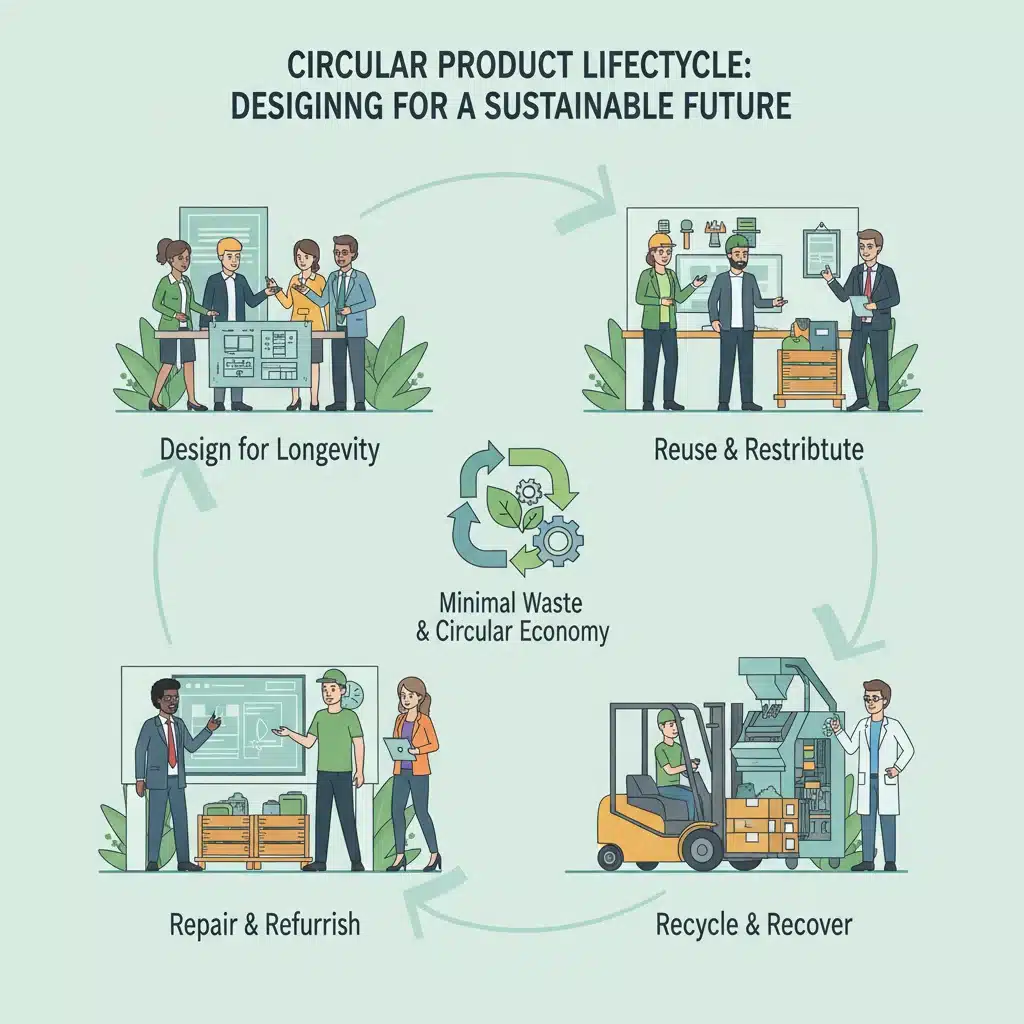
2. Implementing Product-as-a-Service (PaaS) Models
Traditionally, businesses sell products outright, transferring ownership to the consumer. In a Product-as-a-Service (PaaS) model, the business retains ownership of the product and sells its functionality or utility to the customer. This fundamental shift aligns business incentives with circularity, as the manufacturer is motivated to design durable, repairable products to maximize their lifespan and profitability.
Benefits for Businesses
PaaS models offer numerous advantages for businesses. Firstly, they create recurring revenue streams, moving away from one-off sales to a more stable income model. Secondly, by retaining ownership, businesses gain full control over the product’s lifecycle, enabling them to optimize for repair, refurbishment, and recycling. This reduces waste and material costs in the long run. Thirdly, it fosters closer relationships with customers, as the service provider maintains ongoing engagement throughout the product’s usage. For example, a company offering office lighting as a service will ensure their lights are energy-efficient and long-lasting, as they bear the cost of maintenance and energy consumption.
Examples Across Industries
The PaaS model is gaining traction across various sectors. Michelin offers ‘tires as a service’ to trucking fleets, charging for the mileage driven rather than the tires themselves. This incentivizes Michelin to produce highly durable, fuel-efficient tires that can be retreaded multiple times, reducing material consumption and operational costs for their clients. Similarly, companies like Philips are offering ‘light as a service,’ where customers pay for illumination rather than light fixtures. This encourages Philips to design highly efficient, long-lasting LED systems that are easy to maintain and upgrade.
Overcoming Challenges
Transitioning to a PaaS model can present challenges, such as the initial capital investment required to build and maintain product fleets, and the need for robust logistics and service infrastructure. However, the long-term benefits of increased customer loyalty, reduced environmental impact, and stable revenue streams make PaaS a compelling circular economy strategy for forward-thinking U.S. businesses. It encourages a shift from selling products to selling solutions, aligning economic success with resource efficiency.
3. Developing Robust Reverse Logistics and Take-Back Programs
Effective circular economy strategies necessitate a departure from the linear supply chain. Instead of products moving in one direction from manufacturer to consumer and then to landfill, a circular system requires robust reverse logistics – the process of moving goods from their typical final destination for the purpose of capturing value or proper disposal. This is often implemented through comprehensive take-back programs.
The Importance of Reverse Logistics
Reverse logistics ensures that products, components, and materials are efficiently collected, sorted, and transported back into the value chain for reuse, repair, refurbishment, or recycling. Without an efficient system for collection, even the most durable and recyclable products will end up as waste. This involves establishing collection points, developing sorting and processing facilities, and managing transportation networks that bring end-of-life products back to the manufacturer or specialized recyclers.
Implementing Take-Back Programs
Take-back programs encourage consumers to return used products to the manufacturer or retailer. These programs can be voluntary or mandated by regulations, such as electronic waste (e-waste) directives. For instance, many electronics retailers now offer in-store recycling for old devices, while companies like Dell and HP have established extensive take-back programs for their computers and peripherals, facilitating the recovery of valuable materials and reducing e-waste.
Challenges and Solutions
The primary challenges in reverse logistics include the cost of collection and transportation, the variability in the condition of returned products, and the complexity of sorting different materials. Businesses can overcome these by:
- Strategic Partnerships: Collaborating with specialized recycling companies, logistics providers, and even competitors to create shared collection and processing infrastructure.
- Incentives for Consumers: Offering discounts on new purchases, store credit, or deposits for returned items to encourage participation.
- Standardization: Developing industry standards for material identification and product disassembly to streamline the recycling process.
By investing in robust reverse logistics and take-back programs, U.S. businesses can effectively close material loops, reduce reliance on virgin resources, and demonstrate a strong commitment to sustainable practices. This is a critical component of any comprehensive set of circular economy strategies.
4. Fostering Industrial Symbiosis and Material Exchanges
Industrial symbiosis is a powerful circular economy strategy that involves businesses collaborating to exchange by-products, waste streams, and utilities. In this model, the ‘waste’ of one industry becomes a valuable input for another, creating a network of resource efficiency and minimizing overall waste generation. This goes beyond simple recycling; it’s about creating interconnected industrial ecosystems.
How Industrial Symbiosis Works
Imagine a scenario where a power plant’s waste heat is used to warm greenhouses, or its fly ash is used as a raw material in cement production. The sludge from a water treatment plant could be used as fertilizer in agriculture, or spent grains from a brewery could become animal feed. These are all examples of industrial symbiosis, where resource flows are optimized across multiple businesses, often located in geographical proximity to reduce transportation costs.
Benefits for Participating Businesses
The advantages of industrial symbiosis are multifaceted:
- Cost Reduction: Businesses save money on waste disposal fees and reduce expenses on purchasing virgin raw materials.
- New Revenue Streams: Selling by-products or waste can generate additional income.
- Environmental Benefits: Significant reductions in landfill waste, greenhouse gas emissions, and consumption of natural resources.
- Enhanced Innovation: Fosters collaboration and innovation as businesses seek creative ways to utilize each other’s outputs.
- Community Development: Can lead to the creation of ‘eco-industrial parks’ that attract businesses and create local jobs.
The Kalundborg Symbiosis in Denmark is a world-renowned example, where multiple public and private enterprises exchange resources like water, energy, and materials, creating significant economic and environmental benefits for all participants.
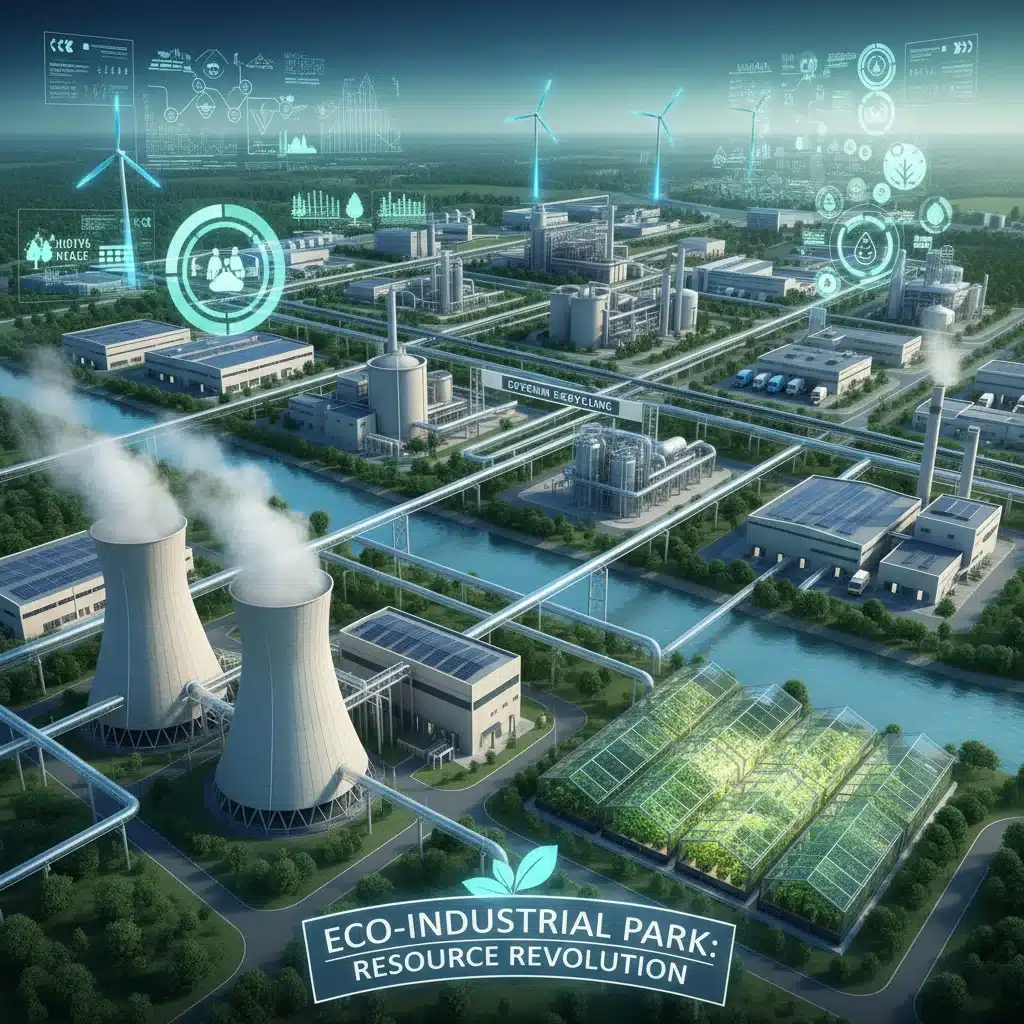
For U.S. businesses, fostering industrial symbiosis requires proactive engagement, mapping of material flows, and identifying potential partners. Government incentives and regional development agencies can play a crucial role in facilitating these connections. By embracing this collaborative approach, businesses can unlock significant efficiencies and contribute to a more resilient and sustainable industrial landscape, making it a cornerstone of advanced circular economy strategies.
5. Investing in Renewable Energy and Energy Efficiency
While often discussed in the context of climate change mitigation, the transition to renewable energy and enhanced energy efficiency is an integral part of comprehensive circular economy strategies. A truly circular system is not only regenerative in its material flows but also in its energy sources. Relying on fossil fuels to power circular processes undermines the overall sustainability goal.
Powering Circularity with Renewables
The energy required for manufacturing, transportation, repair, and recycling processes within a circular economy should ideally come from renewable sources such as solar, wind, hydro, and geothermal. This eliminates the environmental impact associated with fossil fuel extraction and combustion, significantly reducing carbon footprints. U.S. businesses are increasingly investing in on-site renewable energy generation or purchasing renewable energy credits to power their operations. Companies like Google and Apple have made significant commitments to power their operations entirely with renewable energy, demonstrating leadership in this area.
Maximizing Energy Efficiency
Beyond sourcing renewable energy, maximizing energy efficiency across all operations is paramount. This includes:
- Optimizing Production Processes: Implementing lean manufacturing principles to reduce energy consumption in factories.
- Smart Building Management: Utilizing sensors and automation to optimize lighting, heating, and cooling in facilities.
- Efficient Logistics: Optimizing transportation routes, utilizing electric vehicles, and consolidating shipments to reduce fuel consumption.
- Upgrading Equipment: Investing in energy-efficient machinery and appliances.
Energy efficiency measures not only reduce environmental impact but also lead to substantial cost savings, enhancing the economic viability of circular business models. For example, a company that refurbishes electronics will also focus on making its refurbishment facility as energy-efficient as possible to minimize its overall environmental footprint and operational costs.
Integrating renewable energy and energy efficiency into circular economy strategies creates a holistic approach to sustainability. It ensures that the move towards material circularity is not negated by a continued reliance on finite, polluting energy sources. This dual focus is essential for achieving true environmental and economic regeneration.
Conclusion: Paving the Way for a Circular Future by 2027
The transition to a circular economy is not merely an option but a strategic imperative for U.S. businesses aiming for long-term resilience, profitability, and positive environmental impact. The five circular economy strategies outlined – design for longevity, PaaS models, robust reverse logistics, industrial symbiosis, and renewable energy investment – provide a comprehensive framework for this transformation.
By adopting these strategies, U.S. businesses can collectively achieve significant milestones, such as the ambitious target of reducing waste by 35% by 2027. This journey will require innovation, collaboration, and a fundamental shift in how value is created and maintained. It will challenge traditional business models but also unlock unprecedented opportunities for growth in new markets, enhanced brand loyalty, and increased operational efficiencies.
The time for action is now. Business leaders who proactively embrace these circular economy strategies will not only secure their competitive advantage in an evolving global market but also play a pivotal role in building a more sustainable and prosperous future for all. The benefits extend beyond individual companies, contributing to national resource security, job creation, and a healthier planet. By integrating circular principles deeply into their core operations, U.S. businesses can lead the charge towards a truly regenerative economy.