Behavioral Cybersecurity: Reducing Human Error by 20% with Nudges

Behavioral Cybersecurity: Reducing Human Error by 20% in 2026 Through Strategic Nudges
In the ever-evolving landscape of cybersecurity, technological advancements often take center stage. Firewalls, intrusion detection systems, artificial intelligence, and machine learning are all critical components of a robust defense. However, one element consistently remains the weakest link: the human factor. Studies repeatedly show that human error accounts for a staggering percentage of data breaches and security incidents. From falling for phishing scams to neglecting software updates, employee actions, or inactions, can inadvertently compromise even the most sophisticated security infrastructures. This reality has propelled the cybersecurity community to look beyond purely technical solutions and delve into the fascinating realm of behavioral science. The goal? To proactively address and significantly reduce human error. This article explores how embracing behavioral cybersecurity nudges can lead to a demonstrable 20% reduction in human error by 2026, creating a more resilient and secure organizational environment.
The Pervasive Problem of Human Error in Cybersecurity
Before we delve into solutions, it’s crucial to understand the scope and nature of the problem. Human error isn’t a sign of malice; it’s a byproduct of cognitive biases, habits, distractions, and sometimes, a lack of adequate understanding or motivation. Employees are often juggling multiple tasks, operating under pressure, and making quick decisions. In such environments, even well-intentioned individuals can make mistakes that have severe security implications. Phishing remains one of the most prevalent attack vectors, exploiting human trust and urgency. Misconfigurations, weak password practices, and the unauthorized sharing of sensitive information also contribute significantly to the threat landscape. Traditional security awareness training, while necessary, often falls short in changing ingrained behaviors. It typically focuses on informing rather than influencing, and while knowledge is power, it doesn’t always translate into consistent secure actions. This is where behavioral cybersecurity nudges offer a paradigm shift, moving from punitive measures or exhaustive training to subtle, context-aware interventions that guide users towards better security choices.
Understanding Behavioral Science and Nudge Theory
At its core, behavioral science studies how individuals make decisions and why they behave in certain ways. Nudge theory, popularized by Richard Thaler and Cass Sunstein in their book ‘Nudge: Improving Decisions on Health, Wealth, and Happiness’, posits that subtle interventions, or ‘nudges’, can steer people towards making better choices without restricting their freedom of choice. A nudge is any aspect of the choice architecture that alters people’s behavior in a predictable way without forbidding any options or significantly changing their economic incentives. To count as a mere nudge, the intervention must be easy and cheap to avoid. Nudges are not mandates; they are gentle pushes in the right direction. In the context of cybersecurity, this means designing environments and interactions that make the secure option the easiest, most obvious, or most appealing one, thereby reducing the cognitive load associated with making secure decisions.
Key Principles of Nudge Theory Applicable to Cybersecurity:
- Default Options: People tend to stick with default settings. Making secure settings the default can drastically improve security posture.
- Feedback: Providing immediate, clear, and actionable feedback on security-related actions can help users learn and adjust their behavior.
- Salience: Making important security information or risks more noticeable and prominent can capture attention and encourage action.
- Framing: How information is presented can significantly impact decision-making. Framing security as protecting personal data, rather than just corporate assets, can increase engagement.
- Social Norms: Highlighting that most peers adopt secure practices can encourage others to conform.
- Simplification: Reducing complexity in security processes makes them easier to follow and less prone to error.
By leveraging these principles, organizations can create a ‘security-by-design’ environment that subtly influences employee behavior, making security an intuitive part of their daily workflow rather than an arduous task.
Implementing Strategic Behavioral Cybersecurity Nudges
The journey to a 20% reduction in human error by 2026 requires a structured and thoughtful approach to implementing behavioral cybersecurity nudges. This isn’t a one-time fix but an ongoing strategy that adapts to evolving threats and organizational culture. Here’s a roadmap for effective implementation:
1. Assess Current Human Error Vulnerabilities:
Before implementing any nudges, it’s crucial to understand where human errors are most prevalent and impactful within your organization. This involves:
- Incident Analysis: Review past security incidents to identify common human factors involved (e.g., phishing clicks, unauthorized data sharing, weak passwords).
- User Behavior Analytics: Employ tools to monitor and analyze user interactions with systems, identifying risky behaviors without singling out individuals.
- Surveys and Interviews: Gather qualitative data from employees about their perceptions of security, common frustrations, and areas where they feel less confident.
- Simulated Phishing Campaigns: Regularly test employee susceptibility to phishing to identify weaknesses and measure improvement over time.
This assessment provides a baseline against which the effectiveness of nudges can be measured and helps prioritize areas for intervention.
2. Design Targeted Nudges:
Once vulnerabilities are identified, design specific nudges to address them. This requires creativity and an understanding of the psychological principles at play. Here are some examples:
- Phishing Awareness Nudges:
- Contextual Warnings: When an employee clicks on a suspicious link, instead of just blocking it, display a brief, educational pop-up explaining why it was suspicious and what to look for next time.
- Report Phishing Button: Make it extremely easy and prominent for users to report suspicious emails, reinforcing positive behavior.
- Social Proof: After a successful phishing simulation, inform users how many of their colleagues successfully identified and reported the phishing attempt, leveraging social norms.
- Password Security Nudges:
- Strength Meters with Suggestions: When setting a password, provide real-time feedback on its strength and suggest ways to improve it (e.g., ‘Add a number’, ‘Use a phrase’).
- Forced Multi-Factor Authentication (MFA) Defaults: Make MFA the default for all accounts, with clear instructions on how to set it up.
- Periodic Reminders: Gently remind users to review and strengthen their passwords, perhaps linking it to a security score.
- Data Handling Nudges:
- Data Classification Prompts: Before sending an email with an attachment or uploading a file, prompt users to classify the data’s sensitivity, making them consciously aware of its implications.
- Secure Sharing Defaults: Make secure sharing options (e.g., encrypted links, time-limited access) the default for sensitive documents.
- Software Update Nudges:
- Simplified Update Process: Make updates as easy as possible, ideally automatic, with minimal disruption.
- Clear Benefits: Frame update notifications in terms of benefits (e.g., ‘New features and enhanced security’) rather than just ‘required update’.
The key is to make the secure choice effortless and the insecure choice slightly more difficult or noticeable.
3. Integrate Nudges into Existing Workflows:
For behavioral cybersecurity nudges to be effective, they must be seamlessly integrated into employees’ daily work routines. Interruptions or overly complex interventions will be ignored. This means working closely with IT, HR, and even marketing teams to ensure nudges are:
- Contextual: Appear at the precise moment a security decision needs to be made.
- Non-intrusive: Avoid disrupting workflow unnecessarily.
- User-friendly: Easy to understand and act upon.
- Consistent: Applied uniformly across different systems and platforms.
Early involvement of stakeholders and user testing can help refine nudges for maximum impact and minimal friction.

Measuring the Impact: Towards a 20% Reduction by 2026
Establishing a target of a 20% reduction in human error by 2026 is ambitious but achievable with a data-driven approach to behavioral cybersecurity nudges. Measurement is critical to demonstrate ROI, refine strategies, and gain continued buy-in from leadership. Here’s how to measure success:
1. Define Clear Metrics and KPIs:
Before implementing nudges, establish clear Key Performance Indicators (KPIs) directly related to human error. These might include:
- Phishing Click-Through Rate (CTR): A direct measure of susceptibility to phishing.
- Reported Phishing Rate: The percentage of suspicious emails reported by users.
- MFA Adoption Rate: Percentage of users who have enabled MFA.
- Password Strength Scores: Average strength of user passwords.
- Software Update Compliance: Percentage of devices running the latest software versions.
- Incident Response Time for Human-Caused Incidents: How quickly human errors are identified and mitigated.
- Number of Data Loss Incidents Due to Human Error: Tracking actual breaches or near-misses.
2. Baseline Measurement:
Collect data for all defined KPIs before implementing any new behavioral interventions. This baseline will serve as the starting point for measuring improvement.
3. Continuous Monitoring and Analysis:
Regularly collect and analyze data after nudges are introduced. Look for trends, correlations, and statistically significant changes in behavior. A/B testing different nudge designs can also provide valuable insights into what works best for your organization.
4. Iteration and Optimization:
Based on the data, continuously refine and optimize your nudges. Some nudges may be highly effective, while others may need to be adjusted or replaced. Behavioral science is an iterative process; what works today might need tweaking tomorrow as user behaviors evolve or threats change.
5. Reporting and Communication:
Regularly report progress to leadership and employees. Celebrate successes, highlight areas of improvement, and explain the ongoing strategy. Showing tangible results, such as a reduction in phishing clicks or an increase in MFA adoption, reinforces the value of the behavioral cybersecurity nudges program and encourages continued participation.
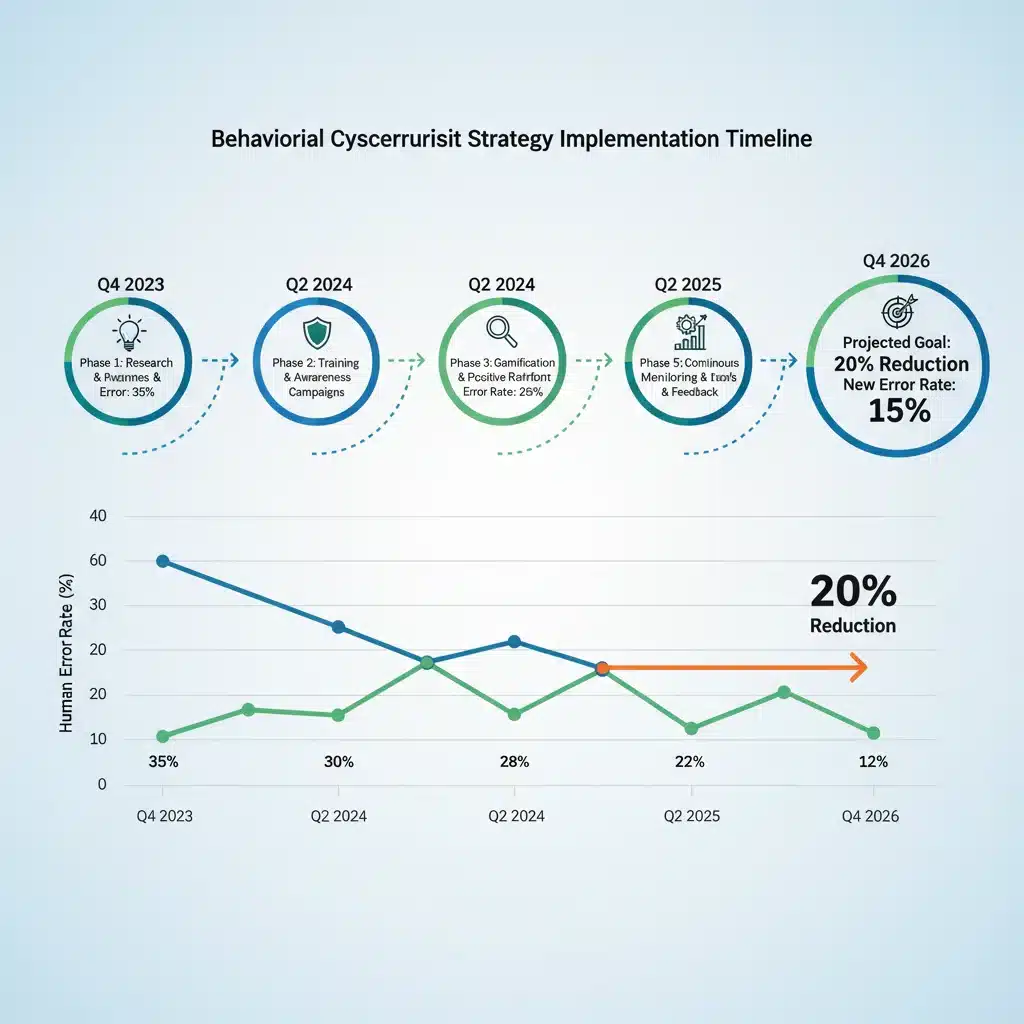
Achieving a 20% reduction in human error by 2026 means setting incremental targets. For example, aiming for a 5% reduction annually over four years, or a 10% reduction in the first two years, followed by another 10% in the subsequent two. This allows for realistic planning and celebrates smaller victories along the way.
Challenges and Considerations for Behavioral Cybersecurity
While the promise of behavioral cybersecurity nudges is significant, organizations must be aware of potential challenges:
- Ethical Concerns: Nudges should always be transparent and aimed at improving user well-being and organizational security, not manipulating users for other purposes. They should preserve freedom of choice.
- ‘Nudge Fatigue’: Too many nudges, or poorly designed ones, can lead to users ignoring them, similar to alert fatigue. Nudges must be timely, relevant, and not overly intrusive.
- Cultural Resistance: Some employees might initially resist changes, perceiving nudges as micromanagement. Clear communication about the benefits and purpose of nudges is essential.
- Measurement Complexity: Attributing specific behavioral changes solely to nudges can be challenging, as multiple factors influence human behavior. Careful experimental design and control groups can help.
- Evolving Threat Landscape: Cyber threats are constantly evolving, requiring nudges to be dynamic and adaptable to new attack vectors and human vulnerabilities.
Addressing these challenges requires a holistic approach, strong leadership support, and a commitment to continuous learning and adaptation.
The Future of Cybersecurity: A Human-Centric Approach
The integration of behavioral science into cybersecurity is not just a trend; it’s a fundamental shift towards a more human-centric approach to security. By understanding the psychology behind human error, organizations can move beyond reactive defenses to proactive, preventative strategies. Behavioral cybersecurity nudges empower employees to make better security decisions, not through fear or mandate, but through subtle guidance and intuitive design. This creates a culture where security is not seen as a burden but as an integrated, natural part of everyone’s role.
Imagine a future where:
- Phishing emails are instinctively reported due to well-placed, easy-to-use reporting mechanisms and positive reinforcement.
- Strong, unique passwords are the norm, effortlessly created with intelligent password managers and intuitive strength feedback.
- Data classification and secure sharing become second nature, prompted by context-aware system nudges.
- Software updates are seamlessly integrated, with users understanding their value to overall security.
This future is not a distant dream but an attainable goal. By setting a clear objective, like reducing human error by 20% by 2026, and strategically deploying behavioral cybersecurity nudges, organizations can significantly enhance their resilience against cyber threats, turning their greatest vulnerability – human behavior – into a powerful line of defense.
Conclusion
The journey to a truly secure digital environment is a continuous one, and addressing the human element is paramount. While technology provides the tools, it’s human actions that determine their effectiveness. Embracing behavioral cybersecurity nudges offers a scientifically-backed, empathetic, and effective strategy to mitigate human error. By systematically identifying vulnerabilities, designing targeted interventions, integrating them seamlessly into workflows, and rigorously measuring their impact, organizations can realistically aim for a 20% reduction in human-caused security incidents by 2026. This proactive, human-centric approach will not only strengthen an organization’s security posture but also foster a culture of collective responsibility and awareness, ultimately building a more secure and resilient digital future for everyone.